Average Living Room Dimensions: A Practical Baseline for Space Planning
Explore the typical footprint of a living room and how to apply these averages to layout, furniture sizing, and traffic flow. This guide uses What Dimensions analysis to define practical baselines for homeowners, students, and designers.


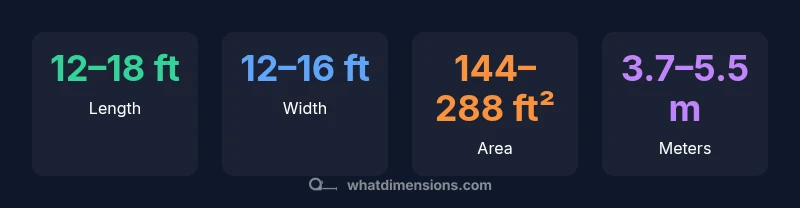
On average, living rooms measure about 12–18 feet long and 12–16 feet wide, roughly 3.7–5.5 meters by 3.7–4.9 meters. These ranges reflect typical residential layouts across common home styles. What Dimensions analyses show that variation in shape and function drives the exact size, but the 12–18 by 12–16 footprint is a practical baseline.
What the phrase average living room dimensions captures
When homeowners hear the term average living room dimensions, they imagine a baseline footprint that supports everyday activities—relaxing, entertaining guests, watching television, and sometimes home work. In practice, the phrase refers to a range of lengths and widths observed across many homes rather than a single fixed size. According to What Dimensions, most living rooms fall within a domestic envelope that allows comfortable seating with sufficient circulation space around furniture. The real value of this metric is in providing a practical starting point that translates into real-world layouts, wall openings, door placements, and window positions. This section clarifies what the metric means, how it’s used in planning, and why context matters. You’ll learn to measure your own space, compare it to the baseline, and adapt to your lifestyle. The goal is a usable baseline that remains flexible as you select sofas, coffee tables, and storage pieces.
How What Dimensions calculates these averages
The averages you’ll see in furniture planning come from aggregating data across typical residential layouts. What Dimensions analyzes space usage, furniture footprints, and circulation paths from a wide cross-section of home styles. The methodology emphasizes consistency in units (feet and meters) and a clear distinction between overall room length, width, and usable area after fixed features like built-ins are accounted for. Because homes vary by region, age, and design trends, the resulting baselines are presented as ranges rather than precise you-must-fit numbers. The intent is to equip designers, students, and shoppers with reliable reference points for planning, while encouraging on-site measurement to tailor the plan to a specific space.
Shape matters: rectangular, square, and open-plan spaces
Room shape heavily influences how the average footprint is applied. Rectangular layouts often prioritize length as the driving dimension, while square rooms emphasize balanced proportions and seating symmetry. Open-plan spaces—where living areas merge with dining or kitchens—tend to require longer sightlines and more flexible furniture placement. The baselines adapt to these realities by suggesting proportional relationships rather than fixed grids. For example, in rectangular rooms a sofa might align with a fireplace wall or a central axis, leaving clearances on both sides. In open plans, longer rooms benefit from distinct seating zones and clear traffic corridors that respect the 3–4 foot (about 1 meter) clearance around major pieces for comfortable movement. These adjustments maintain the integrity of the average while honoring the room’s unique geometry.
Practical guidelines for planning furniture around the average
A practical plan starts with the baseline: roughly 12–18 ft by 12–16 ft. From there, translate these numbers into furniture footprints and clearance needs. Common seating pieces influence the layout: a typical sofa runs about 6–8 feet in length, a loveseat roughly 5–6 feet, and a coffee table about 3–4 feet long. Allow at least 2–3 feet of walking clearance around major furniture pieces to prevent crowding and to support natural movement between zones like the TV wall, coffee table, and seating cluster. Rug sizes should extend beyond seating to unify the space, while ensuring sufficient space for floor lamps, side tables, and coffee table accessories. Finally, integrate built-ins, outlets, and window areas into the plan so that the average baseline remains practical in your specific room.
Traffic flow and clearance: ensuring comfortable movement
Human movement through a living room should feel natural and unobstructed. Designers commonly aim for clear paths of at least 3 feet (about 1 meter) around seating clusters and between entry points. In practice, this means mapping a circulation route that avoids tight corridors and ensures doors, shelves, and media niches do not intrude on seating zones. If your room supports multiple seating groups or a media wall, consider a flexible arrangement that preserves at least one primary path through the space. Maintaining consistent clearance around furniture also supports accessibility needs and reduces the risk of accidents. By prioritizing movement, you preserve the functional value of the average footprint while accommodating your daily activities and entertaining needs.
Case studies: small, medium, and large living rooms
To translate the baseline into real rooms, consider three representative scales. Small living rooms (approximately 12–14 ft by 12–14 ft) benefit from compact furniture and a centralized seating cluster; prioritize one focal point and avoid crowding. Medium rooms (roughly 15–18 ft by 14–16 ft) offer flexibility: you can create two seating zones, a conversation area, and a media nook while preserving clear circulation. Large spaces (around 20–24 ft by 18–22 ft) invite expansive layouts with multiple zones, larger area rugs, and generous clearance around each seating group. Across these examples, the 12–18 ft by 12–16 ft baseline remains a useful reference, but the exact configuration should reflect lifestyle, traffic patterns, and door/window placements. What Dimensions notes that there is no one-size-fits-all solution; the baseline is a starting point, not a constraint.
Quick-start checklist for measuring and applying averages
- Measure length and width of the usable room floor in feet or meters, ignoring temporary obstructions; 2) Note wall openings, doorways, and built-ins that reduce usable area; 3) Mark a main seating cluster and a secondary zone if space allows; 4) Estimate major furniture footprints (sofa, coffee table, media console) and add 2–3 feet of clearance around each; 5) Check traffic routes, ensuring at least a 3-foot path between zones; 6) Compare your measurements to the 12–18 ft by 12–16 ft baseline and adjust for open-plan or irregular shapes; 7) Draft a rough layout and test with cardboard cutouts or tape to visualize movement.
Comparison of common living room layout sizes
| Layout Type | Avg Length | Avg Width | Notes |
|---|---|---|---|
| Rectangular | 12–18 ft | 12–14 ft | Most common layout in traditional homes |
| Square | 14–16 ft | 14–16 ft | Efficient seating with even proportions |
| Open-plan (combined spaces) | 16–22 ft | 14–20 ft | Space integration affects lengths |
| L-shaped | 14–18 ft | 12–16 ft | Common in modern homes |
Quick Answers
What is considered an average living room size?
In general, common living rooms measure about 12–18 feet by 12–16 feet, though space varies by home. Use this baseline to compare your space and plan furniture.
Most living rooms fall into a roughly twelve-by-twelve to eighteen-by-sixteen foot range, depending on the home.
How do I measure my living room accurately?
Measure length and width at the floor level in feet or meters, from wall to wall, including alcoves or recesses. Note doorways and built-ins and record irregularities.
Measure wall-to-wall, including alcoves and door openings, and write down each measurement.
Can I treat the average as a strict rule?
No. Use the average as a baseline, then adapt to your furniture shapes, traffic paths, and lifestyle needs for comfort.
Think of it as a baseline, not a rule.
What if my living room is open-plan?
Open-plan spaces integrate living, dining, and sometimes kitchen areas; use flexible layouts and larger clearances to accommodate varied activities.
Open plans need flexible layouts and more circulation space.
“Understanding typical living room dimensions helps you design flexible layouts that still feel comfortable and uncluttered.”
Main Points
- Measure your space before shopping
- Use the 12–18 ft by 12–16 ft baseline as a starting point
- Include at least 3 ft of clearance around seating
- Open-plan rooms require flexible layouts
- Adjust baselines for doors, windows, and traffic