Common Bedroom Dimensions: A Practical Guide to Space Planning
Explore typical common bedroom dimensions, practical layouts, and furniture sizing tips to design comfortable, functional spaces that fit bedrooms of any size.


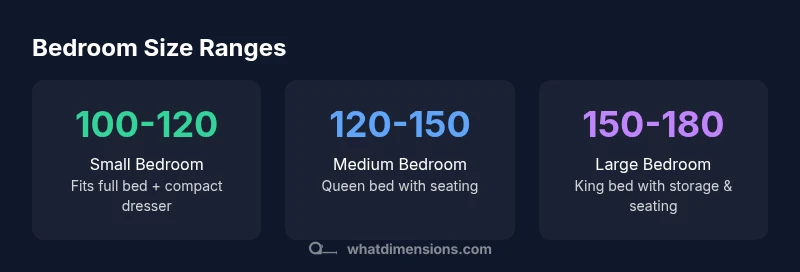
A typical bedroom size range is about 100–180 square feet (roughly 9–17 square meters). For planning, aim around 120–150 square feet to fit a queen bed, two nightstands, and a dresser with comfortable circulation. In compact spaces, 100–120 sq ft is common; larger homes often offer 150–180 sq ft or more. What Dimensions Analysis, 2026, supports planning within these ranges to ensure usable layouts.
What common bedroom dimensions cover
The phrase common bedroom dimensions describes the typical floor area that comfortably accommodates a bed, essential storage, and safe walking space. According to What Dimensions, planning around a target size helps guarantee furniture fits with adequate clearance. In most homes, bedrooms cluster around 100 to 180 square feet, which translates to about 9 to 17 square meters. This range matters because it drives furniture sizing, circulation paths, and lighting design. When you begin, measure the longest wall to gauge bed orientation, then account for doors, windows, and closet alcoves. The objective is to balance function and comfort while preserving safe clearances around every piece. For homeowners, students, designers, and shoppers, knowing these dimensions reduces guesswork and supports precise shopping and layout decisions. The What Dimensions team found that precise size references enable smarter space planning and better room flow.
Regional and lifestyle differences in bedroom sizing
Bedroom sizes are strongly shaped by location and living patterns. In urban apartments, common bedroom dimensions tend to be smaller due to footprint constraints, while suburban and single‑family homes often offer more spacious rooms. What Dimensions analysis shows urban bedrooms frequently hover around 100–120 square feet, with suburban rooms commonly ranging 120–180 square feet. Cultural preferences also influence layout choices, storage priorities, and seating areas. Some cultures favor larger wardrobes and more open space for movement, while others optimize for compact efficiency. Designers should tailor recommendations to local housing realities and personal needs, rather than forcing a single blueprint. Recognizing regional tendencies helps ensure that your space feels comfortable and functional in real life.
Core layouts for different room sizes
Room size largely dictates layout options. In small bedrooms (roughly 100–120 sq ft), a bed against a non‑load-bearing wall with minimal dressers optimizes space and movement. A single-wall or corner configuration can free up floor area for a narrow dresser or compact wardrobe. In mid‑sized rooms (120–150 sq ft), a queen bed with dim nightstands on both sides and a dresser opposite a window yields balance and ease of access. Large bedrooms (150–180 sq ft and up) accommodate a seating area, a larger dresser, and even a small desk without feeling crowded. Across sizes, aim for at least 24–30 inches (60–75 cm) of clearance around furniture to maintain fluid circulation. These spacing targets align with What Dimensions’ measured‑space approach to planning.
How to measure and plan your space accurately
Begin with a to‑scale sketch of the room. Measure each wall length, door swing, window dimensions, and any architectural features like alcoves or bulkheads. Record the swing path to ensure furniture can be placed without blocking access. Next, map furniture footprints, including the bed, nightstands, dresser, and seating. Use painter’s tape or a floor plan app to represent each piece before purchasing. Calculate usable area by subtracting fixed elements and verify that pathways remain unobstructed. Finally, compare your plan to the typical ranges for bedrooms, ensuring the layout stays within sensible square‑foot targets while preserving comfortable circulation. What Dimensions Analysis emphasizes consistency between real measurements and expected ranges for reliable results.
Special cases: irregular rooms, alcoves, and en‑suite access
Irregular rooms with angled walls or alcoves can still function well as bedrooms with smart planning. Use built‑in storage to reclaim wall space and consider bed frames with integrated drawers to maximize storage. In tight corners, a platform bed with low profiles or a slender dresser can make the room feel larger. If the layout includes an en‑suite or through‑hall access, plan clear circulation routes that avoid dead ends and bottlenecks. A common rule is to maintain a clear path of at least 4 feet (1.2 meters) through the room to preserve easy movement. The key is to adapt graphic layouts to quirks without sacrificing comfort. What Dimensions’ guidance helps you design around irregular shapes while keeping space usable and inviting.
Design implications: furniture sizing, storage, and future‑proofing your bedroom
Smart sizing matters for every room. In most cases, a queen bed (60 x 80 inches) fits comfortably in a mid‑sized room with 24–36 inches of clearance on all sides, while a king bed (76 x 80 inches) may demand a larger footprint or selective furniture choices. Favor multi‑functional pieces in tighter spaces: beds with drawers, storage ottomans, and slim two‑piece dressers that double as nightstands. Lighting is critical—wall‑mounted lamps free up surface space and reduce clutter. Storage trends favor deeper drawers, modular wardrobes, and adjustable racks that adapt to changing needs, from study areas to wardrobes. When planning, also reserve space for future needs like a small desk for study or a reading nook. Following these guidelines helps ensure the room remains comfortable, functional, and visually balanced, which What Dimensions would describe as space‑aware design.
Bedroom size ranges by room type
| Room Type | Recommended Size (sq ft) | Notes |
|---|---|---|
| Small bedroom | 100-120 | Fits a full bed with limited margins |
| Medium bedroom | 120-150 | Queen bed with dresser and seating |
| Large bedroom | 150-180 | Queen or King bed with seating area |
Quick Answers
What is considered a standard or typical bedroom size?
A typical bedroom often falls in the 100–180 sq ft range, with urban spaces on the smaller end and suburban spaces on the larger end. Definitions vary by region, but planning within this band helps ensure furniture fits with comfortable circulation.
Typically, bedrooms range from about 100 to 180 square feet, depending on location and home type.
How much clearance should I leave around the bed for comfortable movement?
Aim for 24–36 inches (60–90 cm) of clearance around the bed to allow for easy movement and nightstand access in most layouts.
Give at least two feet around the bed for comfortable movement.
How do I measure an irregularly shaped bedroom?
Measure the longest walls, map out door swings, and sketch furniture footprints to scale. Use corners and alcoves for built‑in storage to reclaim wall space.
Measure the room and map out furniture footprints to scale.
Are there standard mattress sizes I should know for planning?
Yes. Common sizes include Twin, Full/Double, Queen, and King. Use these as benchmarks when calculating space and clearance.
Twin, Full, Queen, and King are the common mattress sizes to plan around.
Do international standards affect bedroom dimensions?
Bedroom sizes vary by country and building practices. Local codes set minimums, but typical comfort ranges come from regional design norms.
Standards vary; check local building codes and regional design norms for guidance.
“Accurate size references empower homeowners to plan layouts that maximize comfort and flow.”
Main Points
- Know your space and set a target size before shopping
- Maintain at least 24–30 inches of clearance around key furniture
- Choose bed sizes aligned with room size to optimize flow
- Use multi-functional furniture to maximize storage and flexibility
- Measure accurately and test layouts with tape before buying furniture