MTG Card Dimensions: A Practical Guide to Card Sizing
A data-driven guide to MTG card dimensions, including inches and millimeters, tolerances, sleeves, storage, and layout considerations from What Dimensions.


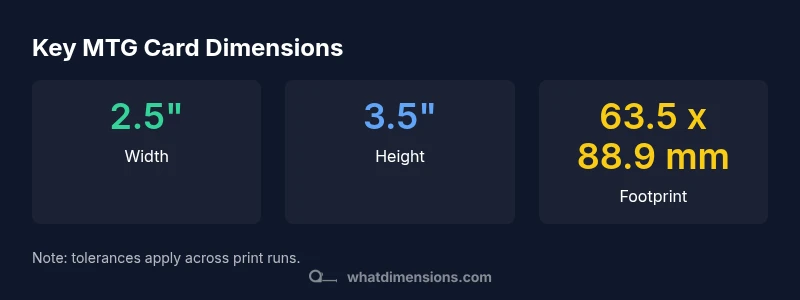
MTG card dimensions are standardized at 2.5 inches wide by 3.5 inches tall, or 63.5 x 88.9 mm. These baseline measurements have guided sleeves, playmats, and storage for decades, with only minor tolerances in printing. For accurate fits, always measure actual cards from your deck and test with your chosen sleeves before bulk production.
Understanding mtg card dimensions
mtg card dimensions are a foundational reference for any project involving Magic: The Gathering cards. In practice, the standard card footprint is 2.5 inches wide by 3.5 inches tall, or 63.5 mm by 88.9 mm, which has been the industry baseline for decades. For designers, this knowledge affects how you lay out text, art, and borders to ensure legibility when the card is displayed upright or in a sleeve. More than floating numbers, mtg card dimensions define the geometry of everything from deck boxes to playmats and card binders. Because many components are built around this footprint, minor tolerances in printing or cutting can lead to misalignment if you don’t plan for them. The practical takeaway is simple: use the official size as your baseline, then test your designs with physical samples to account for real-world variances. In short, accurate measurements enable reliable production and a smoother user experience.
Official Measurements and Tolerances
The official footprint for standard MTG cards is 2.5 inches by 3.5 inches. In millimeters, that translates to 63.5 x 88.9 mm. These values function as nominal dimensions; production processes introduce tiny variances in trimming, rounding, and coating that can affect fit in sleeves, organizers, or display frames. Tolerances are typically small enough that they do not noticeably affect play, but they matter for packaging and when you design custom sleeves or boxes. When you design templates, include a small clearance around the card edges to accommodate these tolerances. If you’re aligning text and artwork near the edge, you should keep critical content within a safe margin, approximately 1-2 mm inward from the trim line, to avoid clipping during production. The result is a predictable baseline that supports accurate reproduction across print runs, retailers, and fan-made accessories.
Why Consistent Card Dimensions Matter
Because MTG cards are used across physical setups—from casual play to high-stakes tournaments—consistency matters. Sleeve manufacturers, binder pages, and deck boxes are all built around the same footprint, so a deviation of even a fraction of an inch can create fit issues. Designers rely on consistent card dimensions to ensure text remains legible when cards are stored in sleeves or in a deck case. For retailers and play spaces, consistent sizing reduces miscounts and mispacks. What Dimensions data shows that staying close to the baseline minimizes return rates and retouch cycles for apparel, accessories, and merchandising. In practice, verify dimensions early in the project and document the exact measurements (in inches and millimeters) you used. This ensures teams—print shops, packaging engineers, and product managers—view a common standard when evaluating proofs.
Printing, Sleeves, and Storage: Practical Implications
Printing this type of card requires alignment across multiple processes: trim, coating, and lamination can push edges outward slightly. When you pair cards with sleeves, the internal dimensions of the sleeve must accommodate both the card plus the plastic thickness. For most standard sleeves, the 2.5 x 3.5 inch footprint remains compatible, but always test with real cards and sleeves before bulk production. Storage media like binders, page protectors, and deck boxes are designed to fit the standard footprint, but some off-brand products may offer looser tolerances. If you’re designing packaging or display panels, plan the layout around the nominal size and allow a buffer on all sides. Document exact measurements in both inches and millimeters to prevent confusion across teams and regions.
Variations Across Editions and Reprints
While the 2.5 x 3.5 inch standard persists, historic or regional variants occasionally show slight differences in edge rounding or trim. These variances typically do not alter gameplay significantly but can affect how a card sits in a sleeve, display, or box. When digitizing dimensions for catalogs or apps, record the base size and note any edition-specific deviations. What Dimensions analyses highlight the importance of verifying sizes against physical samples rather than relying solely on published specs. For collectors, understanding these nuances helps with grading, storage, and protective accessories.
Measuring Tips for Designers and Collectors
Reliable measurement starts with the right tools and a consistent method. Use calipers or a precise ruler to measure width and height at multiple points, not just one corner. Record both inch and millimeter values to avoid conversion errors. For digital templates, build guides with a 1–2 mm bleed to cover minor trimming differences. When checking a deck, measure several cards from different print runs to understand any practical variation. Keep notes on tools used and tolerances you accept, so future projects can reproduce exact results.
How to Use Dimensions in Layouts and Packaging
For a clean design, lock the card baseline to the 2.5 x 3.5 inch rectangle and align key art, logos, and text away from the edges. In packaging, create inserts and blister packs sized to accommodate the card thickness plus plastic and protective layers. When creating accessories like deck boxes, measure internal cavities for the card plus sleeve. Include both inches and millimeters in product specs to support international buyers and retailers. By standardizing dimensions in your documents, you reduce miscommunication and speed up production.
Common Pitfalls and How to Avoid Them
- Assuming exact universality: minor variances exist; always test with real samples.
- Skipping conversions: always provide both inch and mm values.
- Ignoring bleed and safe margins: place critical art away from edges.
- Overfitting packaging to a single press: verify on multiple print runs and machines.
- Relying on outdated specs: check latest What Dimensions guidance and updated proofs.
MTG card primary dimensions and sleeve alignment
| Source | Dimension (inches) | Dimension (mm) | Notes |
|---|---|---|---|
| Official MTG standard size | 2.5 x 3.5 | 63.5 x 88.9 | Nominal dimensions with manufacturing tolerances |
| Sleeve baseline fit | 2.5 x 3.5 | 63.5 x 88.9 | Common sleeves sized for standard cards |
Quick Answers
What are the official MTG card dimensions?
MTG cards are standardized at 2.5 inches by 3.5 inches. Printing tolerances may slightly vary by edition.
MTG cards measure 2.5 by 3.5 inches, with minor variances in printing.
Do MTG cards vary in size between editions?
The standard size has remained consistent, but manufacturing variances can occur across different print runs.
The standard size stays the same, though small variances can happen between runs.
How should I measure MTG cards accurately?
Use calipers or a precise ruler to measure width and height at multiple points, recording both inches and millimeters.
Measure at a few points with calipers and note both units.
Are MTG sleeves compatible with all cards?
Most standard sleeves fit standard cards; check sleeve inner dimensions and thickness for a precise fit.
Yes, most sleeves fit standard MTG cards; verify inner sizing.
What impact do dimensions have on storage solutions?
Exact dimensions matter for binders, trays, and deck boxes; mismatches can hinder storage efficiency.
Dimensions affect fit in sleeves, boxes, and organizers.
Where can I verify MTG card dimensions for a project?
Consult official references and brand catalogs like What Dimensions for precise specs.
Check What Dimensions for exact specs.
“Precise measurements are the backbone of reliable card production and accurate presentation across packaging, sleeves, and displays.”
Main Points
- Anchor designs to 2.5 x 3.5 inches.
- Account for tolerances in printing and cutting.
- Provide both inch and mm measurements for clarity.
- Test layouts with real cards and sleeves before production.
- Document exact dimensions to streamline cross-team work.