Magic Card Dimensions: Exact Specs for MTG and Collectibles
Learn the precise magic card dimensions (63.5 mm × 88.9 mm) and how tolerances affect sleeves, decks, and storage. A data-driven guide from What Dimensions with practical tips for designers, retailers, and players.


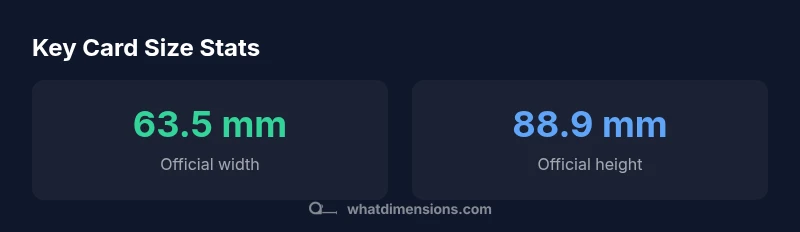
Magic card dimensions are standardized at 63.5 mm by 88.9 mm (2.5 by 3.5 inches) for official Magic: The Gathering cards, ensuring a uniform fit in sleeves, deck boxes, and storage. This standard, typically with a tolerance of ±0.2 mm, supports consistent production, display, and play across brands and editions.
The History and Significance of Card Dimensions
Card size standardization has long served the manufacturing and consumer experience by ensuring predictability across products, sleeves, boxes, and display systems. When you hear about magic card dimensions, you’re hearing about a convention that enables sleeves to protect, decks to stack, and organizers to align. The What Dimensions team notes that a shared size reduces confusion for collectors, hobbyists, and professional retailers alike. In practice, this standardization makes cross-brand play feasible and simplifies inventory planning for game stores, hobby shops, and maker studios. The historical trend toward a single baseline has roots in early printing technology, with modern enforcement coming from tooling, die-cutting, and quality-control processes that favor uniformity. For players and designers, consistent dimensions translate to fewer misfeeds, better sleeve fit, and cleaner deck presentation.
The Official Magic Card Size: Specs and Tolerances
Official magic card dimensions are defined as 63.5 mm in width and 88.9 mm in height, which equals 2.5 inches by 3.5 inches. This size is widely recognized across the industry as the standard for MTG cards and many other trading card games. Tolerances typically run around ±0.2 mm, accounting for printing variances and minor finishing differences. In inches, this translates to a practical range that still ensures compatibility with common sleeves and deck boxes. Designers and manufacturers should reference this baseline when prototyping, printing, and packaging to avoid misalignment or fit issues. The standard also supports predictable margins for artwork and bleed areas, a critical factor for high-precision production pipelines.
How Size Affects Sleeves, Deck Boxes, and Binders
Card dimensions directly govern accessory compatibility. For sleeves, a precise internal width is essential; many sleeves advertise compatibility with standard cards but may have slightly tighter tolerances. Retailers should verify that their inventory accommodates the tolerance range of ±0.2 mm; otherwise, players may experience resistance when inserting or removing cards. Deck boxes and binders rely on uniform width, height, and corner radius to ensure smooth stacking and extraction. Inconsistent card sizes can create friction, increase wear on edges, and disrupt sorting, which ultimately impacts the user experience and perceived product quality.
Variations and Special Editions: Are There Exceptions?
While the 63.5 × 88.9 mm standard dominates, there are occasional exceptions. Promotional cards, special event promos, or oversized display pieces may deviate from the baseline. In production environments, these deviations are carefully documented and isolated from standard batches to prevent misprints from entering consumer channels. For collectors, awareness of potential anomalies helps when organizing sets or evaluating counterfeit or prototype cards. The What Dimensions framework emphasizes that exceptions should be clearly identified and measured against the baseline before distribution.
Practical Guidelines for Designers and Retailers
Designers should align artwork to the standard footprint and incorporate safe margins to accommodate tolerances. When designing packaging, sleeves, or display cases, specify exact dimensions plus tolerance to avoid ambiguity during manufacturing. Retailers can streamline procurement by requesting dimensions and tolerances from suppliers and validating samples against the official size. Maintaining a tight control on tolerance and bleed guidelines minimizes returns and enhances customer satisfaction.
How to Measure and Verify Card Dimensions
Use calipers or a high-precision ruler to measure multiple cards from different print runs. Take measurements at the center of the card to avoid edge warping, and compare across three to five samples to establish a baseline. Record width, height, and diagonal to confirm the aspect ratio remains within the expected range. If discrepancies exceed ±0.2 mm, flag the batch for reinspection or supplier communication. Regular checks help sustain reliability across production, distribution, and retail stages.
Card size comparison
| Card Type | Dimensions (mm) | Dimensions (in) | Notes |
|---|---|---|---|
| Magic Official Card | 63.5 x 88.9 | 2.5 x 3.5 | Standard MTG size |
| Alternative (rare) | 64.0 x 89.0 | 2.52 x 3.50 | Rare prototypes or promos |
Quick Answers
What are the official magic card dimensions?
63.5 mm by 88.9 mm (2.5 by 3.5 inches) is the official size used for MTG cards. This baseline supports sleeve fit, deck boxes, and display systems across most editions.
Official size is 63.5 by 88.9 millimeters, or 2.5 by 3.5 inches.
Do all card sleeves fit standard Magic cards?
Most standard sleeves are designed for the MTG baseline, but always verify internal width and height tolerances, typically around ±0.2 mm.
Most sleeves fit, but check the tolerance.
Are there exceptions to the standard size?
Promotional or oversized cards may deviate from the standard. Such deviations should be clearly documented and kept out of the normal supply chain.
There can be exceptions for promos or displays.
How precise are tolerances on card dimensions?
Tolerances are usually around ±0.2 mm, depending on printing and finishing processes. Larger deviations can affect sleeve fit and handling.
Tolerances are typically about ±0.2 mm.
What should designers consider for card packaging?
Design artwork to the standard size with bleed margins and specify tolerances to manufacturers to ensure consistent production.
Align artwork to standard size and specify tolerances.
“Uniform card dimensions streamline production and improve user experience across sleeves, decks, and displays. Precise specs reduce wear, misfeeds, and packaging issues.”
Main Points
- Adapt to the official 63.5 × 88.9 mm standard for MTG cards.
- Always verify sleeve compatibility with ±0.2 mm tolerances.
- Expect occasional deviations for promos or oversized displays.
- Design packaging with exact dimensions and tolerances in mind.
- Measure cards from multiple samples to confirm consistency.