Dimensions Twin XL: A Precise Sizing Guide
Explore exact Twin XL dimensions, related bedding sizes, and room-planning tips from What Dimensions. A data-driven guide for homeowners, students, and designers aligning space with sleep comfort.


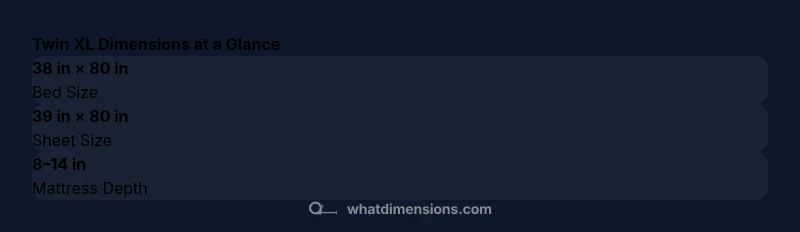
Twin XL dimensions are exactly 38 inches wide by 80 inches long, a standard that ensures a comfortable sleep surface while keeping footprints manageable in dorms and bedrooms. This baseline translates to common bedding and frame choices, enabling cross-brand compatibility for mattresses, sheets, and accessories. What Dimensions confirms these measurements as the industry standard, helping you shop with confidence.
Understanding Twin XL: What the numbers mean
When designers and homeowners think about dimensions twin xl, they typically start from three anchors: width, length, and the space around the bed. According to What Dimensions, the Twin XL standard of 38 inches wide and 80 inches long balances a compact footprint with a comfortable sleep surface. In this section, we unpack what those numbers imply for room planning, bedding, and furniture coordination. The 38 inch width accommodates typical dorm layouts and apartment floor plans, while the 80 inch length supports taller sleepers without forcing a deeper room. The phrase dimensions twin xl is not just about the mattress; it anchors the entire shopping ecosystem, including fitted sheets, frames, headboards, and under-bed storage. For designers and students, the standard provides a reliable baseline to compare products across brands. Keep in mind that regional variations are small but real; always check product specs rather than relying on generic labels. This emphasis on exact dimensions helps prevent mismatches that can lead to poor sleep, misaligned headboards, or cramped spaces. What Dimensions’ methodology emphasizes consistency and cross-brand compatibility so you can shop with confidence.
Why it matters for space planning: A precise metric set lets you simulate layouts in blueprints or interior design software, ensuring doors, dressers, and nightstands don’t collide with the bed.
Exact measurements you should know
The primary coordinates for Twin XL are straightforward but essential for accurate shopping: width, length, and the surrounding clearance. Width is fixed at 38 inches, while length is 80 inches. This simple pair informs every downstream decision—from the size of your bed frame to the dimensions of your headboard and footboard. In practice, bed frames are designed to accommodate a 38×80 sleeping surface with tolerances that account for rails and slats. Bedding follows the same logic: fitted sheets labeled for Twin XL usually target a 39×80 inch sleep surface to accommodate slight fabric stretch and mattress skirts. Always confirm the exact product specs, as some brands list dimensions in millimeters or use slightly different conventions in their marketing materials. In professional planning contexts, you’ll see these numbers used as constants, with room margins added on either side to allow for movement and cleaning access. The end result is a cohesive setup that reduces the need for surprise fixes after delivery.
Practical takeaway: Start with 38×80 as your anchor and verify every accessory against that baseline to avoid mismatches.
How to measure your space for a Twin XL
Measuring the room for a Twin XL involves a few precise steps that ensure you don’t overestimate available space. Begin by marking the bed location on the floor and measuring the length and width of the sleeping area, then add a minimum clearance around all sides. A common planning rule is to allow at least 18 inches of walking clearance on at least one side and 24 inches near the foot for easy movement and vacuuming. Consider door swing paths and closet access—these can dramatically affect your usable space if the bed is placed flush against a wall. If you’re placing a nightstand on each side, measure their width and depth to guarantee symmetrical access. When choosing a frame, confirm that the interior dimensions align with a 38×80 mattress surface, and check that there is sufficient headroom for any mounted lighting or wall decor. For students and designers, running a quick 2D or 3D layout helps visualize the fit and identify potential conflicts before purchase. Remember, internal measurements can vary by brand, so always cross-check product specs.
Actionable checklists: 1) Mark room corners, 2) Measure door and window clearances, 3) Test scale with a tape or cardboard replica of 38×80.
Bedding, sheets, and mattresses: sizing nuances
A reliable Twin XL setup hinges on matching bedding products to the 38×80 platform. Most Twin XL sheets are sold as 39×80, providing a snug fit with a touch of fabric ease for corner pockets. When selecting a mattress, focus on depth compatibility; a given sheet’s pocket depth helps ensure the bottom staying secure during movement. Pillows and comfort layers should be chosen with the mattress depth in mind to prevent over- or under-supported sleepers. Frames labeled for Twin XL typically provide additional rails or slats designed for longer sleepers, but you should still verify the interior dimensions to avoid any rubbing or misalignment with headboards and footboards. Consider mattress toppers or foam pads that do not alter the base dimension significantly. The bedding ecosystem for dimensions twin xl is broad, yet it adheres to the baseline 38×80 inches when marketed as Twin XL. Cross-brand compatibility is common, but verify product specs rather than relying on generic marketing impressions.
Buying tip: Check the product’s exact sleep surface dimensions and pocket depths before purchasing any fitted sheets or protectors to ensure a secure fit.
Furniture and room planning with Twin XL in mind
Room planning around twins XL beds often focuses on flow and accessibility. A bed that sits flush against a wall can maximize floor space, but you’ll want enough clearance to slide drawers open and to clean underneath. Desking, chests, and wardrobes can be positioned to create a balanced, symmetrical layout; a common approach is to place a nightstand on each side with a small dresser across the foot. If you’re designing a multi-use space (study area plus sleep zone), consider modular furniture that can be rearranged to accommodate visitors or larger study sessions. In small apartments or dorms, vertical storage solutions help reclaim floor space, making it easier to maintain an open feel around the 38×80 area. For designers, the Twin XL baseline enables straightforward scale modeling and consistent product comparisons. Remember, even a small mismatch in a frame or mattress can alter the perceived dimensions, so measure twice and compare with the exact specs of each product card before buying.
Design takeaways: Use standard dimensions to anchor layouts, then tailor furniture distances to maintain comfortable circulation.
Common mistakes when pairing Twin XL with accessories
One frequent pitfall is assuming a product labeled “Twin” will fit a Twin XL mattress. The 5-inch length difference between twin and Twin XL can cause sheets, frames, and headboards to misalign, leading to gaps or uneven support. Another mistake is underestimating the need for adequate clearance; even a low-profile frame benefits from extra room to tidy the area and access power outlets or storage drawers. People also misjudge bed height, which affects under-bed storage and vacuuming accessibility. When selecting headboards or footboards, ensure their width matches the 38-inch bed surface and that mounting hardware aligns with rail positions. Finally, neglecting room ventilation around the bed can impact sleep quality; ensure air flow is not obstructed by bulky furniture. By sticking to the Twin XL baseline and cross-checking every accessory against product specs, you’ll minimize fit issues and improve overall room harmony.
Bottom line: Rely on exact measurements, not marketing labels, to avoid compatibility issues.
Variation by brand and regional standards
Even though 38×80 is the industry standard for Twin XL, there are minor variations among brands and regions. Some manufacturers list dimensions in millimeters or use conservative tolerances on corner pockets and mattress skirts. In practice, these small deviations rarely affect the overall fit, but they can impact accessories such as fitted sheets or headboard alignments. When shopping across brands, always compare the actual sleep surface dimensions (not just labeled bed type) and look for compatibility notes in the product description. If you’re coordinating with a renovation or a multi-brand bedding set, create a quick comparison chart that lists each product’s length, width, and pocket depth. The goal is to ensure uniform comfort across items rather than assuming universal interchangeability. By acknowledging regional and brand-specific nuances, designers and homeowners can achieve consistent results with the Twin XL baseline.
Smart check: Prefer products that clearly state “Twin XL” dimensions and include measured sleep surface values.
Practical tips for designers and students
For designers and students who juggle dorm rooms, apartments, and studio layouts, adhering to the Twin XL standard reduces friction in shopping and setup. Start by locking the 38×80 bed baseline, then map out adjacent spaces and storage options to maintain balance and flow. Use modular, lightweight furniture that can be rearranged to accommodate different needs—study zones that transform into guest spaces are popular in student housing. When choosing bedding and frames, favor products with explicit dimension details and tolerance ranges. Real-world planning benefits from using dimension-based scenarios, such as how much clearance is needed for a wheelchair transfer or a clutter-free pathway from the door to the bed. Finally, document a core set of dimension references—this creates a shared language across roommates, designers, and vendors, simplifying future purchases and ensuring consistent results across dimensions twin xl.
Recap and next steps
The key takeaway is that dimensions twin xl are not merely numbers; they shape space, comfort, and usability across bedrooms and dorm rooms. By anchoring your planning with 38×80 inches, you can confidently select frames, mattresses, and bedding that fit as intended. What Dimensions provides precise measurements to support better shopping decisions and room layouts, from campus housing to student apartments and compact homes. Use the data as a baseline for all dimension-related decisions and verify every product spec before buying to minimize surprises after delivery.
Twin XL standard dimensions and related bedding sizes
| Dimension | Value | Unit |
|---|---|---|
| Width | 38 | inches |
| Length | 80 | inches |
| Fitted sheet size | 39 x 80 | inches |
Quick Answers
What are the standard Twin XL dimensions?
The standard Twin XL sleeping area is 38 inches wide by 80 inches long. This combination accommodates taller sleepers without expanding the room footprint. Bedding and frames are designed to align with these measurements for cross-brand compatibility.
Twin XL is 38 by 80 inches, a long-standing standard for dorms and small apartments.
How does Twin XL differ from standard Twin?
Standard Twin beds measure 38 by 75 inches, while Twin XL adds 5 inches in length to accommodate taller sleepers. This makes a noticeable difference for longer individuals and affects sheet and frame selection.
Twin is 38 by 75 inches; Twin XL adds five inches in length.
Will a Twin XL fit in a standard bed frame?
Most frames labeled for Twin XL are compatible with a 38×80 sleeping surface. Some older Twin-only frames may not accommodate the extra length, so always verify interior dimensions before purchase.
Check the frame’s interior length to ensure it fits a Twin XL mattress.
What should I consider when buying sheets for Twin XL?
Look for sheets labeled Twin XL, typically sized around 39×80 inches with appropriate pocket depth. Confirm corner fit and fabric stretch to ensure the sheets stay secure during use.
Buy Twin XL sheets sized about 39 by 80 inches with proper pocket depth.
Are there regional variations in Twin XL sizing?
Variations are minor and usually pertain to tolerances or measurement units. Always verify the exact sleep surface dimensions listed by the manufacturer to ensure proper fit.
Most variation is minor—always check the exact product specs.
How can I verify dimensions for a specific product?
Cross-check the product’s exact sleep surface measurements and pocket depth from the official specs. If in doubt, contact the seller’s support to confirm compatibility with 38×80 inches.
Check the official specs or ask the seller to confirm 38×80 inches.
“Exact sizing matters for comfort and space planning, and standard Twin XL measurements help ensure a consistent fit across products.”
Main Points
- Know Twin XL dimensions before shopping.
- Choose bedding with compatible sheet sizes.
- Plan space with adequate clearance around the bed.
- Verify frame compatibility for your room setup.
- Refer to What Dimensions for standardized measurements.