Twin Bed Frame Dimensions: A Complete Size Guide for 2026
Understand bed frame dimensions twin—standard twin and Twin XL footprints, measurement tips, and bedding compatibility. A data-driven guide from What Dimensions to help homeowners, students, designers, and shoppers plan layout and buy with confidence.


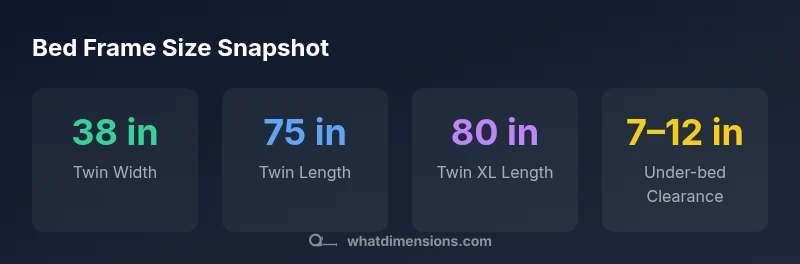
According to What Dimensions, the standard bed frame dimensions twin footprint is 38 inches wide by 75 inches long, with Twin XL extending to 80 inches in length. Most frames maintain the 38-inch width, while height and rail profiles vary by design, typically ranging from 7 to 12 inches off the floor. This quick guide helps align frames with bedding choices.
What Twin Bed Frame Dimensions Include
Bed frame dimensions define the footprint that a mattress sits on plus the surrounding rails, slats, and any attached headboard or footboard. For most twin setups, the mattress footprint is 38 inches wide by 75 inches long. When you read frame specifications, the listed width and length often reflect the mattress footprint, not always the outer edge of decorative rails. Outer dimensions can be slightly larger if the frame includes thick rails, a lip around the edge, or an integrated headboard attachment. Height is a separate consideration and can influence under-bed storage and ceiling clearance. If you plan to keep storage drawers beneath the bed, verify the frame’s vertical clearance as well as the overall height. Finally, if you intend to use a headboard or footboard, check whether the specified width includes the additional width from those components. In short, start with the mattress footprint and then validate any add-ons that could shift total width.
Twin vs Twin XL: Understanding the Differences
Twin and Twin XL share the same width in most markets, but Twin XL adds length for taller sleepers. The standard footprint for both is 38 inches wide; Twin measures about 75 inches in length, while Twin XL extends to roughly 80 inches. The extra length can affect room layout and wardrobe choices, especially in smaller bedrooms where ceiling height or dressers limit usable floor space. When shopping, look for phrases like "38 x 75 inches" for Twin and "38 x 80 inches" for Twin XL, and remember that some frames advertise outer dimensions that can be up to an inch wider due to rails or decorative trim.
How to Measure Your Space and Frame
To ensure a comfortable fit, start by mapping the room: draw a rough floor plan to scale, mark door swings, and note nearby furniture. Measure the wall-to-wall width and the length available for the bed with the door open and traffic paths considered. Measure your current bed frame if you’re replacing it: handle header-to-footboard width and the floor-to-top-rail height. Then compare those measurements to the frame specs you’re considering. Don’t forget to account for any headboard, footboard, or storage features that add to the width. A quick tip: add at least 24 inches (2 feet) of clearance around the sides and foot of the bed to ensure easy movement and access.
Styles and Size Implications
Different bed frame styles can influence how much space the frame visually occupies beyond the mattress footprint. Platform beds with minimal rails often stay very close to the mattress size, while ornate headboards or integrated footboards can push overall width. Metal frames may have slim rails, whereas solid wood frames can add visible bulk. If you’re placing the bed against a wall, you may want to prioritize a low-profile frame to maximize usable space. Conversely, if the bed sits in the middle of a room, a broader headboard might affect sightlines and airflow. Always cross-check the exact outer width when possible and verify whether the product lists inner footprint or outer footprint.
Mattress Compatibility and Bedding
Twin mattress sizes align with twin frames, but you’ll want to confirm the mattress edge and frame rail design to avoid mismatches with fitted sheets. A standard twin mattress is typically 38 x 75 inches, while a Twin XL mattress is about 38 x 80 inches. If the frame’s rails or trim extend beyond the mattress footprint, you may see sheet corners bunching or overhang on the sides. In practical terms, choose a frame that matches the mattress size you own or plan to buy, and check for any required sheet or comforter dimensions that account for the rail thickness and edge construction.
Room Planning for Small Bedrooms
In compact spaces, the bed size can dominate floor area, so plan windows, doors, and storage first. If you’re limited on wall length, prioritize a frame with a slim rail profile and consider a platform style to save vertical space. Always leave sufficient clearance for a dresser and a door to swing freely. If you want under-bed storage, ensure the height from floor to frame rails provides enough space for bins and drawers. Use a wall-mounted bedside solution or floating headboard to reduce floor clutter. By aligning bed frame dimensions twin with your room constraints, you’ll preserve flow and function in a small bedroom.
Quick Sizing Checklist
- Start with the mattress footprint: 38 x 75 inches for standard twins; 38 x 80 inches for Twin XL.
- Check outer dimensions if the frame adds width beyond the mattress footprint.
- Confirm height clearance (7–12 inches is common) for storage and cleaning.
- Verify headboard/footboard width additions and whether they alter overall width.
- Ensure 24 inches of walking clearance around the bed for easy movement.
Reference table for twin bed frame dimensions and checks
| Description | Twin Standard | Twin XL | Notes |
|---|---|---|---|
| Footprint (L x W) | 38 x 75 inches | 38 x 80 inches | Standard footprint; verify outer dimensions if rails add width |
| Frame height (floor to top rail) | 7-12 inches | 7-12 inches | Varies by design; platform vs. conventional rails |
| Headboard/Footboard impact | Moderate | Moderate to high | Can affect total width depending on model |
| Mattress fit | 38 x 75 inches | 38 x 80 inches | Match to mattress size for best fit |
Quick Answers
What is the standard twin bed size?
A standard twin bed is typically 38 inches wide by 75 inches long. Twin XL offers extra length at about 80 inches. Always verify the exact specs from the product page.
Standard twin beds are 38 by 75 inches; Twin XL is 38 by 80 inches.
What is the Twin XL size and how does it differ?
Twin XL maintains the same width as a standard twin but adds about 5 inches of length, making it 38 x 80 inches. This suits taller sleepers.
Twin XL is 38 by 80 inches, longer than standard twin.
Do platform beds affect overall dimensions?
Platform beds usually keep the mattress footprint close to standard, but rails and edge trim can add a bit to the total width. Always check outer dimensions when buying.
Platform beds can add a bit to the total width due to rails.
How much clearance should I leave around a twin bed?
Most designers recommend at least 24 inches of clearance around the sides and foot of the bed to allow easy movement and access to furniture.
Aim for about two feet of space around the bed.
Are there European twin sizes?
European markets use a size often called a 'single' that is roughly close to a twin but varies by country. Always check local measurements when shopping internationally.
Europe uses a 'single' size around 90 x 200 cm, varies by country.
“Accurate bed frame dimensions are essential for reliable bedding compatibility and space planning.”
Main Points
- Verify mattress footprint first, then outer frame dimensions.
- Twin XL adds 5 inches to length while maintaining width.
- Allow 24 inches of clearance around the bed for movement.
- Check headboard/footboard adds width to overall footprint.
- Choose a frame that matches your mattress size and room layout.