Dimensions Twin Bed: Exact Sizes for Every Room You Design
Explore exact dimensions for a dimensions twin bed, including standard twin and twin XL, with practical guidance on bedding, frames, and room layout from What Dimensions.


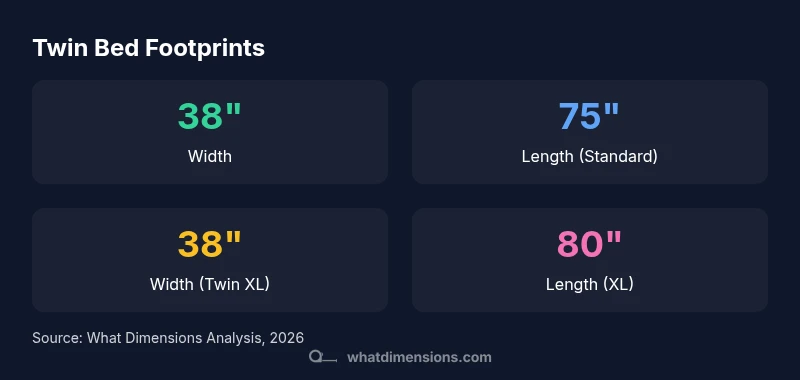
The standard dimensions of a twin bed are 38 inches wide by 75 inches long, while a twin XL measures 38 by 80 inches. These exact figures guide room planning, bedding choices, and frame selection. For designers and homeowners, understanding dimensions twin bed helps ensure furniture fits without crowding, clears doors and windows, and supports comfortable circulation. What Dimensions provides precise measurements to simplify space planning.
What dimensions define a twin bed
A twin bed is defined by its footprint—the space it occupies on the floor. The most common standard twin size is 38 inches wide by 75 inches long. For taller sleepers or growing rooms, the twin XL variant maintains the same width but extends to 80 inches in length. These footprints are widely supported by mainstream mattress brands, frames, and bedding sets, which makes it easier to shop with confidence.
When you encounter a product marketed as a 'twin' or 'twin XL,' the key numbers to verify are width and length. The width remains consistent across both options, but the added length in the XL is what matters for taller individuals. It can also influence ceiling height clearance, proximity to windows, and the overall flow of your bedroom. Understanding dimensions twin bed helps you align furniture, storage, and pathways without guesswork. What Dimensions emphasizes that precise size references minimize layout errors during planning, especially in compact rooms where every inch counts.
Standard twin vs twin XL: practical differences
Choosing between a standard twin and a twin XL often comes down to room size and sleeper height. A standard twin footprint (38x75) fits most regular bedrooms and guest spaces, leaving room for nightstands and storage. The twin XL footprint remains 38 inches wide, but at 80 inches long it accommodates taller individuals without toes peeking out of the sheets. In shared rooms or dorms, twin XL can reduce the need for space-wasting trundles or under-bed storage. Practically, this means layout decisions should consider the extra length when planning headboard clearance, door swing, and adjacent furniture.
From a design perspective, the twin XL extends the vertical footprint of the sleeping area but not the lateral footprint. This distinction matters for rug placement, lighting, and seating options near the bed. If you’re designing for a narrow room, a standard twin might be preferable for tighter circulation paths, whereas a twin XL can promote comfort for a single occupant who needs extra legroom. What Dimensions notes that dimension decisions should balance ergonomics with aesthetics for optimal sleep and everyday use.
Bedding, frames, and clearance: aligning dimensions with the room
Your bed’s footprint interacts with every other element in the room, including frames, headboards, and bedding. A platform frame will sit closer to the floor, sometimes requiring thinner mattresses, while a box spring setup may add to the total height and affect under-bed storage. Clearance around the bed is crucial for movement and furniture access. It’s wise to measure the space on both sides of the bed and along the foot to ensure you can open drawers, walk past, and make the bed comfortably. For bedrooms with fixed wardrobes or windows, confirm that the 38-inch width and 75- or 80-inch length won’t obstruct entry or natural light.
In practice, plan a layout that allows at least a few inches of space between the mattress edge and walls or furniture, and ensure a clear path from door to bed. By focusing on exact measurements, you reduce the guessing game when selecting frames, headboards, and storage solutions. What Dimensions’ analyses highlight that careful space planning reduces the need for reconfigurations after move-in or renovation.
Choosing sheets and mattress toppers for 38x75 and 38x80 sizes
Sheet size compatibility is essential for a comfortable night’s sleep and clean bedding aesthetics. Twin and twin XL sheets are labeled by the mattress footprint they’re designed to cover. While most standard twin sheets are designed for a 39x75 footprint, many brands use the 39x75 label for both standard twins and some variations of the 38x75 bed. For twin XL beds, look for 39x80 labels, since the increased length requires deeper pockets and longer fitted corners. If you’re shopping online or in a store, verify product dimensions rather than relying solely on the label. In practice, you’ll find that sheet sets, duvet covers, and blankets are often listed in approximate sizes, and you may need to check fit across mattress depth as well. If you use a thicker mattress or add a topper, confirm that the fitted sheet can stretch to accommodate the height.
Mattress toppers and pads should align with the mattress footprint rather than the frame’s exterior dimensions. A 2-3 inch topper typically does not alter the footprint, but an overly thick topper combined with a deep mattress can affect sheet fit and corner stability. For many buyers, choosing a lightly elastic sheet with deeper pockets provides flexibility across 38x75 and 38x80 variants. What Dimensions emphasizes verifying both footprint and depth to avoid misfits and sleep disturbances.
Room planning and layout: ergonomics of a single sleeper
Beyond the bed itself, you must consider how the dimensions twin bed integrate with other room elements. A single sleeper benefits from balanced proximity to a nightstand on each side, suitable lighting, and accessible storage. In small bedrooms, placing the bed against a wall with a slim nightstand on one side can maximize usable floor space. For multi-use rooms, ensure the bed can be easily moved for guest access or rearranged for study and work zones. The twin footprint is compact enough to allow a desk, chair, or wardrobe to fit alongside, provided you measure clearance accurately. What Dimensions’ guidance focuses on precise measurements to prevent overcrowding and to support flexible layouts that accommodate daily tasks and occasional guests.
Dimensions comparison: standard twin vs twin XL
| Dimension | Standard Twin | Twin XL |
|---|---|---|
| Width | 38 inches | 38 inches |
| Length | 75 inches | 80 inches |
Quick Answers
What are the standard twin bed dimensions?
A standard twin bed is 38 inches wide by 75 inches long. Twin XL adds 5 inches to the length, making it 38x80. These footprints are widely supported by mattresses, frames, and bedding.
A standard twin is 38 by 75 inches; twin XL is 38 by 80 inches. These footprints are widely supported by bedding and frames.
How does twin XL differ from a standard twin?
The only difference is length: standard twins are 75 inches long, while twin XLs are 80 inches long. Width remains 38 inches in both cases.
The difference is length—75 inches for standard twins, 80 inches for twin XL; width stays 38 inches.
Do bed frames affect the footprint?
Frames can add height and may influence visible width, but most footprint measurements refer to the mattress itself. Always confirm exterior frame dimensions before purchasing furniture.
Frames can change the total footprint you see, so check the exterior dimensions before buying.
What bedding fits twin vs twin XL?
Twin sheets are often labeled 39x75 for standard and 39x80 for XL. Always verify pocket depth and corner fit, especially with deeper mattresses.
Check pocket depth and corner fit on twin and XL sheets to ensure proper coverage.
How much clearance should I leave around a twin bed?
Aim for clear circulation space along at least one side and the foot of the bed, plus space for door swing and wardrobe access. Small rooms benefit from careful arrangement and measured spacing.
Leave enough space to move around the bed and to access doors and drawers comfortably.
Can I place a twin bed in a very small room?
Yes, but plan carefully. Use the bed as a focal point and maximize vertical storage; choose Slim-profile frames and compact nightstands to preserve floor area.
Yes, with careful planning and slim furniture to keep the room navigable.
“Exact dimensions matter more than aesthetics when you’re designing a space for sleep. Small variances can cascade into crowded layouts or awkward traffic flow.”
Main Points
- Start with standard footprints: 38x75 inches for standard twins and 38x80 inches for twin XL.
- Plan for clear room circulation and door/window clearance around the bed.
- Match bedding to the exact footprint; verify depth for thick mattresses.
- Choose a bed frame and storage that respect the footprint to avoid crowding.
- What Dimensions provides precise measurements to guide shopping and layout.