Twin Mattress Dimensions: Standard Sizes and How to Choose
Discover the exact twin mattress dimensions—standard twin and Twin XL sizes—with practical room-planning tips. This What Dimensions guide provides precise measurements and guidance for shoppers.


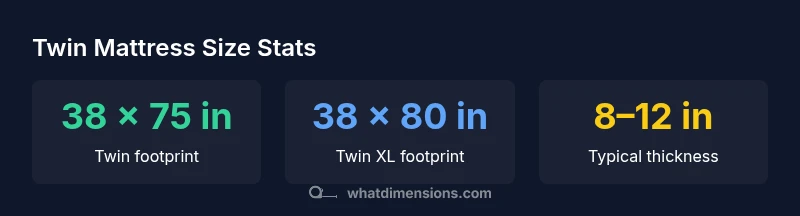
Standard twin mattresses measure 38 by 75 inches (96.5 by 190.5 cm), offering a compact option for smaller bedrooms and dorms. The Twin XL variant extends to 38 by 80 inches (96.5 by 203 cm) for taller sleepers. For international readers, the closest metric equivalents are approximately 97 cm by 191 cm and 97 cm by 203 cm, respectively.
Twin Mattress Sizes: An Overview
According to What Dimensions, identifying the right mattress size starts with understanding two core twin formats: standard twin and Twin XL. A standard twin measures 38 inches wide by 75 inches long (about 96.5 cm by 190.5 cm) and is a longtime staple in children's bedrooms, bunk beds, and many dorm rooms. The Twin XL version keeps the same width but adds five inches of length, resulting in 38 by 80 inches (roughly 96.5 cm by 203 cm). Some dorms and compact apartments also offer a short twin, commonly around 72 inches long (183 cm) and 38 inches wide, which can be helpful when floor space is at a premium. For most adults and growing teens, Twin XL is the practical choice if you want taller headroom without compromising on width. When planning a room, it's essential to map the bed footprint against existing furniture, doorways, and window placement. If you consider changing foundations or adding storage under the bed, take those heights into account as well. In short, starting with the right twin size reduces layout headaches later.
Standard Twin vs Twin XL: Dimensions and Use Cases
The standard twin is a compact solution that minimizes the footprint in small bedrooms, children's rooms, or spaces where furniture density is high. It suits single sleepers who don't require extra length and helps keep pathways clear in narrow rooms. The Twin XL, by contrast, preserves the same width but provides an extra five inches of length, which can make a noticeable difference for taller occupants. This length is especially important for college dorms, guest rooms, and studio apartments where a longer bed improves sleeping posture without compromising on spatial efficiency. In metric terms, the standard twin is about 96.5 x 190.5 cm, while Twin XL is about 96.5 x 203 cm. When choosing, consider not only the sleeper's height but also the space available for bed linens, nightstands, and under-bed storage. If you frequently move furniture around, laying out a quick floor plan using scaled measurements can prevent fitting issues later.
Short Twin and Regional Variants: When to Consider Alternatives
Some institutions and retailers offer a short twin, typically around 72 inches long, mainly used in dorms with very tight spaces. The width remains 38 inches, preserving compatibility with standard sheets and most frames. Short twins are not as universally available as standard or Twin XL, so check stock at local stores or online before purchasing. If you’re aiming to maximize vertical space or fit a long dresser, a short twin can help, but you may need to investigate compatible foundations, bed frames, and storage solutions. For international readers, substitutes like 183 cm length (short twin) equate roughly to 72 inches. Always verify the exact math on the retailer’s product page and measure your doorway to avoid transport issues. In most cases, the decision to use a short twin hinges on space constraints rather than comfort.
Measuring Space: How to Fit a Twin Bed in Your Room
Begin by measuring the room’s length and width, then the bed’s footprint. Mark the area with painter’s tape to visualize clearance around the bed: aim for at least 24 inches of space on at least one side for easy sheet changes and movement, with 24 inches at the foot if possible. Check door swings to ensure the bed doesn’t block entry. Consider window placement to avoid alignment with headboard. Don’t forget to measure ceiling height, particularly if you’re mounting something above the bed or planning a loft on a Twin XL. Use a scaled floor plan if you’re unsure, and include space for a nightstand, lamp, and under-bed storage. Finally, consult the retailer’s mattress thickness options to ensure your bed frame can support your chosen model.
Sheets, Foundations, and Accessories: Getting It Right
Because a twin bed uses a standard 38-inch width, most standard twin sheets fit well. If you’re planning to use a futon frame or a storage bed, confirm the pocket depth of your fitted sheets and the type of foundation (slatted, solid platform, or adjustable base). Mattress thickness is another variable that affects sheet fit and comfort; while 8-12 inches is common, some models exceed 12 inches and require deeper pockets. When choosing a foundation, ensure it aligns with your bed frame’s attachment points and height preferences. Remember to verify pillow and blanket sizes for overall room aesthetics. Finally, check return policies if you’re shopping online to accommodate potential fabric or size discrepancies.
Room Layout Strategies for Small Rooms and Apartments
To maximize space, place the bed against a wall that doesn’t block windows or doors, ideally with a slim nightstand on one side. In a dorm or studio, consider under-bed storage drawers or boxes to minimize clutter. Use a vertical approach: install shelves above the head of the bed to keep surfaces accessible without crowding the floor. If you frequently host guests, keep a backup set of bedding and a compact storage solution. For light sleepers, consider blackout curtains or a low-profile platform with built-in storage to reduce clutter around the sleeping area. Finally, measure the path to the bed to ensure you can move pillows, blankets, and sleep aids without tripping on clutter. With thoughtful planning, even a small twin room can feel open and functional.
Common Mistakes to Avoid When Shopping Twin Mattresses
Don’t assume all twins are the same—always verify length and thickness as advertised. Avoid buying a Twin XL when your space only supports a standard twin. Don’t ignore doorways or entryway constraints; a mattress brought upstairs or through tight turns can be ruined. Resist the temptation to buy the lowest price without considering the risk of sagging or poor durability. Finally, neglecting the bedding and foundation ecosystem can result in mismatched sheets, uncomfortable sleep, and costly returns. Always cross-check measurements on the product page and mark your space with a floor plan before buying.
Quick Sizing Recap and Planning Checklist
Use this compact checklist to confirm your twin choice: 1) Measure room dimensions and confirm a 24-inch clearances; 2) Decide between standard twin (38 x 75 inches) or Twin XL (38 x 80 inches) based on height and room length; 3) Ensure your bed frame and foundation accommodate thickness; 4) Check sheet pocket depth and ensure available storage; 5) Gather metric equivalents (97 x 191 cm and 97 x 203 cm) for cross-border shopping. Keeping this concise guide in mind helps ensure a smooth setup and satisfying nights of sleep.
Twin vs Twin XL size comparison
| Dimension | Twin | Twin XL | Notes |
|---|---|---|---|
| Length | 75 inches | 80 inches | Standard lengths for adults |
| Width | 38 inches | 38 inches | Uniform width across twins |
| Common thickness | 8-12 inches | 8-12 inches | Typical mattress thickness ranges |
Quick Answers
What is the standard twin mattress size?
The standard twin mattress is 38 inches wide by 75 inches long (about 96.5 cm by 190.5 cm).
The standard twin is 38 by 75 inches, or about 97 by 191 centimeters.
Is Twin XL simply a longer twin?
Yes. Twin XL shares the 38-inch width but adds 5 inches of length, totaling 80 inches (about 203 cm).
Twin XL is the same width but longer—38 by 80 inches.
Which twin size fits a small room?
For very small spaces, a standard twin is usually the best balance of footprint and sleeping surface. In long rooms, Twin XL is preferred for taller sleepers.
For small rooms, start with a standard twin for space; if you’re tall, consider Twin XL.
Can I use a full-size sheet on a twin bed?
Full-size sheets are too large for a twin bed. Use standard twin sheets with 39-inch pockets.
Use twin sheets, not full-size sheets, for a proper fit.
Are there international twin dimensions?
Internationally, twin sizes approximate 97 cm by 191 cm, while Twin XL is about 97 cm by 203 cm.
In metric, twins are about 97 by 191 cm; XL is about 97 by 203 cm.
What thickness range should I look for in a twin mattress?
Most twin mattresses fall in the 8-12 inch thickness range, with thicker models offering more support.
Common twin thickness is 8 to 12 inches.
“Exact mattress dimensions are essential for space planning and sheet fit. A precise reference to 38 x 75 inches (Twin) or 38 x 80 inches (Twin XL) helps homeowners avoid mismatches.”
Main Points
- Know the two main twin sizes: standard twin (38 x 75 in) and Twin XL (38 x 80 in)
- Twin XL is longer; choose based on sleeper height and room length
- International readers can use metric equivalents (approx. 97 x 191 cm and 97 x 203 cm)
- Short twin exists for compact dorms (72 x 38 inches)
- Ensure sheets and foundations match the chosen size