Twin Sheet Dimensions: A 2026 Guide to Twin and Twin XL Sheet Sizes
Understand twin sheet dimensions for standard and Twin XL mattresses, including width, length, and pocket depth. Practical tips for choosing, measuring, and caring for twin sheet sets in 2026 from What Dimensions.


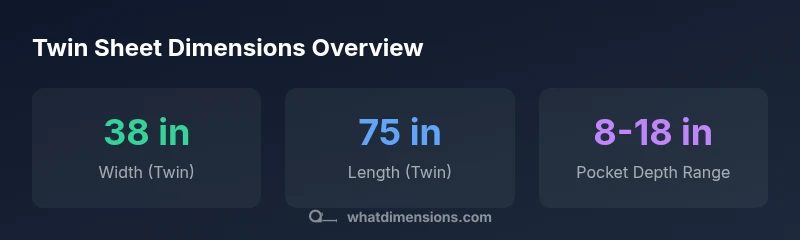
Twin sheet dimensions determine which sheet sets will fit your bed. The standard twin mattress is typically about 38 inches wide by 75 inches long, while Twin XL extends to 38 by 80 inches. When shopping, also match pocket depth to mattress depth and verify whether the label specifies twin or twin XL. This ensures a snug fit and minimizes sheet shifting.
Understanding twin sheet dimensions
Twin sheet dimensions refer to the measurements used to design bedding that fits twin-sized mattresses. For homeowners, students, designers, and shoppers, knowing these measurements helps ensure sheets stay on, look neat, and wear evenly. The What Dimensions team emphasizes that dimensional accuracy matters not only for fit but for laundering ease and fabric longevity. When you shop, look for size labels that match the mattress type: standard twin or Twin XL. The standard twin mattress is one of the most common sizes in the United States, typically around 38 inches wide and 75 inches long. Twin XL adds length for taller sleepers and is widely used in dorms and studio apartments; many Twin XL mattresses measure about 38 inches by 80 inches. Remember that there is no universal standard across all brands; construction tolerances and toppers can affect final fit. Some regions outside the United States report metric measurements; if you’re shopping internationally, note centimeter equivalents (roughly 97 cm by 191 cm for standard twin, and about 97 cm by 203 cm for Twin XL). The pocket depth of a fitted sheet must align with mattress depth; mismatches produce popping corners, reduced fit, and accelerated wear. In short, twin sheet dimensions consist of width, length, and pocket depth, and they should be verified against the exact mattress you own.
Standard sizes: Twin and Twin XL
When shopping for twin sheets, you’ll encounter two primary size categories: standard twin and Twin XL. The width for both is typically 38 inches, but the length differs. A standard twin measures about 75 inches long, while Twin XL extends to around 80 inches. In metric terms, that translates to roughly 97 cm by 191 cm for standard twins and about 97 cm by 203 cm for Twin XL. These dimensions are widely used in bedding charts and product labels, but it’s essential to confirm with the specific manufacturer, as tolerances can vary and toppers or layered mattresses may alter the required sheets. If you’re shopping for a dorm or apartment with a taller sleeper, Twin XL is the precise choice. Always check the product’s pocket depth to ensure a proper fit over the full mattress height, and consider whether you need flat sheets with extra length to tuck in neatly.
Sheet types and fit: pocket depth and fabric
Fitted sheets that accompany twin sizes come with pocket depths designed to accommodate different mattress heights. Common pocket depth categories range from 8 to 18 inches, with many brands offering standard depths around 10 to 14 inches and deep-pocket options for thicker mattresses or toppers. Beyond depth, fabric choice matters for fit and feel. Cotton sheets (percale or sateen) are breathable and durable; microfiber sheets are smooth and affordable; linen provides a crisp feel; bamboo blends add softness and temperature regulation. When selecting a twin sheet set, favor sheets with elastic around all four corners or a full surrounding elastic band to prevent shifting. Confirm that the size label matches standard twin or Twin XL, and be aware that some brands designate “twin” sheets for a 38x75 bed and “twin XL” for 38x80. This distinction is critical for achieving a snug, wrinkle-free fit.
How to measure for the right twin sheets
Measuring for twin sheets starts with the mattress itself. Use a flexible tape to measure width (across the top), length (from head to foot), and depth (mattress thickness). Then compare these measurements to the sheet’s stated pocket depth and overall dimensions. For a standard twin (38x75), a shallow-to-standard pocket depth of about 8 to 14 inches is often sufficient, while deeper toppers may require pockets closer to 15 to 18 inches. If you’re unsure, bring your current sheet with you when shopping and compare its label to the mattress dimensions. Always choose sheets labeled for twin or twin XL accurately; mislabeling can lead to a poor fit and constant re-adjustment at night. Finally, consider the elastic fit: fully elasticized corners provide the most secure stay-in-place performance.
How to choose the right twin sheet set: materials, fit, and care
The right twin sheet set balances fit, feel, and care. Materials influence breathability, softness, and shrinkage. Cotton sheets offering a percale weave tend to be cool and crisp, while sateen offers a smoother, more luxurious feel. Microfiber blends are generally budget-friendly and wrinkle-resistant, though they can trap heat more than cotton. For tall mattresses or those with toppers, verify pocket depth is sufficient; for a snug fit, look for sets with all-around elastic or extra deep pockets. Pay attention to thread count as a rough guide to feel, but prioritize fiber type and weave. Care instructions vary by material—cotton may shrink slightly if washed in hot water, while microfiber often fares well in warm cycles. Following manufacturer guidance helps preserve size integrity for longer.
Care and maintenance for twin sheets
To prolong the life of twin sheets, wash in cold to warm water with similar fabrics and avoid high heat in drying. Drying on low heat or line-drying helps minimize shrinkage and preserve elasticity. Use mild detergents and avoid chlorine bleach on colored fabrics to prevent fading. If your sheets develop pilling or loose elastics, follow the product’s care labels and consider replacing or reinforcing the elastic components. Rotating between a few sheet sets can minimize wear on any one set. When storing off-season, ensure they are fully dry to prevent mildew, and fold neatly to maintain fabric integrity.
Common mistakes and quick fixes
A common mistake is buying a twin set labeled only as “twin” without confirming whether it is intended for a standard 38x75 bed or a Twin XL 38x80 bed. This can lead to a tight or loose fit, uneven tuck, and frequent shifting. Another mistake is neglecting pocket depth; a shallow pocket on a deep mattress tops can pull corners. The fix is to measure and compare depths first, then select sets with matching pocket depths. If you own a topper or pillow-top, choose a deep-pocket or all-around elastic design. Finally, avoid oversized recommendations based on a generic “twin” size; always verify exact length and depth on the packaging or product page.
Twin vs Twin XL: size comparison
| Size | Dimensions (W x L) | Typical Pocket Depth |
|---|---|---|
| Twin | 38 inches x 75 inches | 8-18 inches |
| Twin XL | 38 inches x 80 inches | 8-18 inches |
Quick Answers
What is the standard twin mattress width?
The standard twin mattress width is typically 38 inches, though brands may vary slightly. Always confirm on the product label.
A standard twin is usually 38 inches wide, but always check the label to be sure.
What is the length of a standard twin sheet?
A standard twin length is typically 75 inches, with Twin XL at about 80 inches. Check product specs for exact measurements.
Standard twin length is usually 75 inches; Twin XL is about 80 inches.
Do pocket depths matter for twin sheets?
Yes. Choose a pocket depth that matches your mattress depth. Common ranges are 8–18 inches, but verify with the label.
Pocket depth is important. Pick a sheet with a depth that fits your mattress.
Can I use standard twin sheets on a Twin XL mattress?
No. Standard twin sheets are shorter; Twin XL sheets are longer to accommodate the extra length.
No—standard twins won't fit a Twin XL mattress lengthwise.
What should I do if sheets slip off at night?
Ensure proper fit with all-around elastic or corner elastic and verify pocket depth matches mattress depth.
If sheets slip, make sure they fit snugly with the right pocket depth and elastic.
“Exact dimensions matter for a clean, secure fit. When sheet dimensions align with mattress dimensions, you get better sleep hygiene and longer-lasting bedding.”
Main Points
- Identify your mattress size before shopping.
- Distinguish Twin from Twin XL by length (75 in vs 80 in).
- Match pocket depth to mattress depth for a secure fit.
- Choose fabric by climate and care preferences.
- Check labels for exact dimensions and all-around elasticity.