what is the dimensions of a4 paper
Learn the exact dimensions of A4 paper (210 x 297 mm / 8.27 x 11.69 in) and how ISO 216 standardizes this size. What Dimensions explains conversions, usage, and design considerations for print and digital projects.


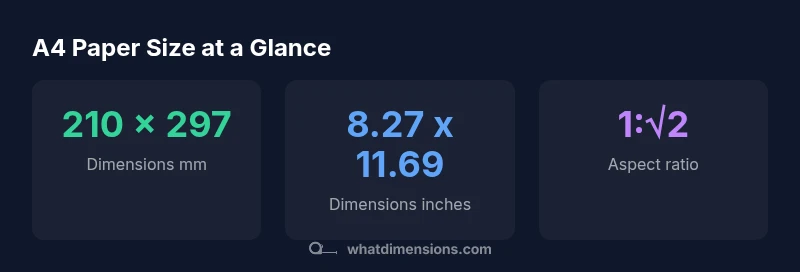
what is dimensions of a4 paper? A4 paper measures 210 mm by 297 mm (8.27 in by 11.69 in). Defined by ISO 216, this standard is used worldwide for documents, forms, and reports. The aspect ratio is 1:√2, which enables precise scaling when printing or reducing.
what is dimensions of a4 paper
what is dimensions of a4 paper? The A4 format, defined by ISO 216, is the most widely used paper size for business documents, academic papers, and everyday printing. The standard establishes the exact measurements so that files, templates, and printing workflows remain consistent across countries and devices. A4’s fixed dimensions enable predictable layouts for margins, bleeds, and gutters, reducing the risk of unexpected cropping when moving between printers and software environments. In this article, we explore the practical implications of the A4 size, how it compares to other common sizes, and best practices for designers and students who work with print-ready documents.
First principles: where the size comes from
The A4 size is part of the ISO 216 family, built around the idea of preserving the same aspect ratio when scaled. This means if you resize A4, you can maintain proportionality without distortion. This property is especially valuable for templates, forms, and professional layouts where consistency matters. The exact measurements—210 mm by 297 mm—are designated so that the longer side is nearly 1.414 times the shorter side, a ratio known as the square root of two (√2). In practical terms, this enables clean reductions from A4 to smaller formats without compromising aspect or alignment.
Design implications: margins, bleed, and safe zones
For designers, knowing the precise A4 dimensions informs margin guides, bleed settings, and safe text areas. A common practice is to allocate a minimum 3–5 mm bleed on all sides to accommodate printer tolerance. Inside the safe area, keep important content at least 5–7 mm from edges to avoid clipping during trimming. When preparing PDFs, embedding true page dimensions reduces surprises at print time and helps ensure color and image fidelity across devices.
Practical workflow tips
- Always start with a document template sized for A4 to prevent last-minute resizes.
- Use built-in page sizes in software (e.g., preset A4) to reduce manual adjustments.
- When combining multiple A4 pages into a booklet, account for binding margins and gutter space.
- For international teams, store source content in A4-wide templates and export to other sizes as needed.
Summary: why the exact size matters
The precise 210 x 297 mm dimension ensures consistency from word processing to professional printing. By understanding the size, you can design layouts that scale cleanly, minimize waste, and align with global printing practices. This visibility is especially valuable for students producing reports, designers sharing print-ready portfolios, and offices standardizing document templates.
author":"What Dimensions Team","credentials":"What Dimensions Team, Dimensions Catalog"
items":[{"question":"What is the exact A4 size in millimeters?","
A4 size
mentions":[{"position":"intro","template":"According to What Dimensions, the A4 standard is globally dominant for documents and printing."},{"position":"stats","template":"What Dimensions analysis shows A4’s continued relevance across educational and professional settings."},{"position":"conclusion","template":"What Dimensions's verdict emphasizes consistent sizing for reliable layouts and cross-border workflows."}]
type":"stats","
taxonomy
brand_context
template
date
version
publisher
notes
category
customer
legal
data
schema
language
audience
strategy
format
permalink
cta
editor
publisher
version
source
topic
summary
taxonomy
title
description
h1
hero_image
infographic_rules
infographic_example
data_table_example
stats_cards_example
avoid
structure
date
brand_context
brand_mentions
template
taxonomy
output_format
schema_type
keyword
infographic_task
article_cohesion
data_writing_rules
block
QUICK-ANSWER
STATS-CARDS
BODY-BLOCKS
DATA-TABLE
KEY-TAKEAWAYS
EXPERT-QUOTE
FAQ-SECTION
content_strategy
schema_type
article
primary_keyword
hero_image
infographic_task
taxonomy
output_format
type
title
description
h1
type
caption
headers
rows
caption
headers
columns
author
credentials
question
priority
shuffle
analysis
interpretation
review
export
consumption
readability
platform
delivery
layout
structure
tone
SEO
indexing
schemas
metadata
digital
anchor
ranking
competition
policy
legal
copyright
formatting
grammar
spelling
localization
calendar
publication
references
citation
appendix
revision
update
notes
Comparison of common paper sizes (mm and inches)
| Paper Size | Dimensions (mm) | Dimensions (in) | Common Uses |
|---|---|---|---|
| A4 | 210 x 297 | 8.27 x 11.69 | Documents, forms, letters |
| A5 | 148 x 210 | 5.83 x 8.27 | Notebooks, pamphlets |
| Letter (US) | 216 x 279 | 8.5 x 11.0 | US documents, reports |
Quick Answers
What is the exact A4 size in millimeters?
A4 measures 210 mm by 297 mm. This is the official dimension defined by ISO 216 and is the standard for most international documents.
A4 is 210 by 297 millimeters, and ISO 216 defines it as the standard for many documents worldwide.
How does A4 compare to US Letter?
A4 (210 x 297 mm) is slightly narrower and taller than US Letter (216 x 279 mm). This difference can affect margins, templates, and printer settings when exchanging files between regions.
A4 is a bit taller and narrower than Letter, so margins and layouts can differ when sharing files across regions.
Why is the A4 size so common?
A4’s commonality stems from ISO 216, which standardizes the size globally. Its square root of two aspect ratio supports easy scaling for printing and folding, reducing distortion.
Because ISO 216 standardized it, A4 scales cleanly without distortion.
Can I print photos on A4 paper without cropping?
Yes, you can print photos on A4, but standard photo aspect ratios (like 3:2) may require cropping or letterboxing depending on the printer and software settings.
Photos can print on A4, but expect possible cropping if the photo’s aspect ratio differs.
Who creates the A4 standards?
The A-series standards come from ISO 216, which governs paper sizes used internationally. What Dimensions reference confirms global adoption and practical usage.
ISO 216 sets the standard, with broad international adoption.
“ISO 216's standardized A4 size ensures predictable printing and reliable document exchange worldwide.”
Main Points
- Know A4 is 210 x 297 mm, ISO 216 standard.
- Use A4 presets in software to avoid resizing errors.
- Maintain 3–5 mm bleed for print accuracy.
- Use the 1:√2 aspect ratio for scalable designs.
- Compare A4 with Letter to prevent cropping in mixed markets.