Letter Size Paper Dimensions: 8.5 × 11 Inches (216 × 279 mm)
Explore the exact letter size paper dimensions (8.5 × 11 inches / 216 × 279 mm), how they compare to other sizes, and practical implications for design and printing across North America and beyond.


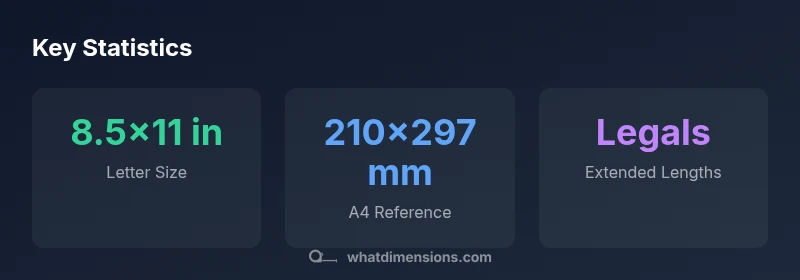
Letter size paper dimensions are 8.5 inches wide by 11 inches tall, which equals 216 millimeters by 279 millimeters. This is the standard US and Canadian paper size for letters, forms, and many office documents. The measurement helps set templates, margins, and printer settings, and serves as a baseline when converting designs to international sizes like A4. In practice, most business documents rely on this exact size to maintain consistent layouts and printing outcomes.
History and origins of letter size
Letter size paper has deep roots in North American printing and administration. Before digital typography, paper sizes were standardized regionally to fit printers, filing systems, and the way people wrote letters. The term letter size emerged as the default option for everyday correspondence in the United States and later in Canada. In the 20th century, industry groups and manufacturers settled on a stable dimension set to simplify printing, copying, and mailing workflows. The letter size paper dimensions of 8.5 by 11 inches (216 by 279 millimeters) became the de facto baseline for personal and professional documents, shaping templates, margins, and the sizes of folders and binders. This standard supports predictable page counts and layouts, reducing confusion when materials travel between offices, classrooms, and home desks. While other regions adopted ISO A series sizes, the United States kept its own geometry, creating a practical divergence that designers and students should understand when producing cross border materials. Understanding the history helps explain why this size remains deeply embedded in everyday tasks.
Standard dimensions in inches and millimeters
The standard letter size is the primary reference for precision across devices. The exact dimensions are 8.5 inches wide by 11 inches tall, equivalent to 216 millimeters by 279 millimeters. In practice, printers and copiers adhere to a tolerance that allows for minor deviations without affecting most documents. Other commonly used US sizes include Legal at 8.5 by 14 inches (216 by 356 mm) and Half Letter at 5.5 by 8.5 inches (140 by 216 mm). For international context, A4 measures 8.27 by 11.69 inches (210 by 297 mm). Keeping these precise numbers in mind helps with template creation, margin planning, and bleed settings for printing and binding projects.
Letter size versus other common sizes
Letter size sits at the core of the North American paper landscape, but it is not the only everyday format. A4 is the dominant standard outside North America, measuring 8.27 by 11.69 inches. The differences between Letter and A4 are subtle in height but notable in width and tolerance, which can affect margins and layout when converting documents across regions. Legal size offers extra length and is frequently used for contracts and forms that require more space for text on one page. Half Letter provides a compact option often used for notepads, personal notes, or specialty mailers. When designing documents that may be printed internationally, it is common to provide side by side templates or scalable layouts so users can print correctly on Letter, Legal, or A4 without cropping content. Understanding these variations minimizes last minute edits and preserves visual consistency across formats.
How to verify and measure letter size paper
To verify letter size manually, start with a precise ruler or caliper and place the sheet on a flat surface. Confirm the width from edge to edge is 8.5 inches and the height is 11 inches, noting any minor deviations at the corners. If you cannot measure, check the package label or the printing settings in your software; most operating systems offer a page size option that matches Letter. When scanning or copying, scan at 300 dpi or higher to ensure accurate digital representation and avoid scaling artifacts. If you print, verify a test page to ensure margins align with your intended design, particularly when margins need to be exact for binding or folders. Small printers may round edges or trim slightly; accounting for this helps prevent content from appearing too close to the edge.
Printing and printer compatibility considerations
Printers designed for US markets typically assume letter size as the default page. When you feed a Letter sheet, printer drivers apply margin and alignment data that match this format. If you attempt to print Letter on a non Letter tray, you may need to adjust the page size setting or choose a fit to page option. Many home printers offer a 1 to 2 percent scaling tolerance, which can affect line breaks and page counts. For bulk printing, check the printer palette for built in margins, bleed allowances, and paper type. If your printer uses a COT (cut on the tray) or roll feed, calibrate to avoid misalignment. Finally, always keep spare Letter-sized stock on hand for routine tasks to minimize interruptions during academic or office projects.
Design and layout implications for letter pages
Designers should respect the standard letter page as a canvas. Typical margins range from 0.5 to 1 inch on all sides, with a safe zone for binding of at least 0.25 inches. Bleed is unnecessary for most office documents unless you plan edge to edge printing; otherwise set bleed to 0 for standard templates. Use readable type sizes and line lengths suited to the page width; for body text, aim for a comfortable measure around 11–14 points with generous leading. When creating forms, ensure fields line up with standard margins and that checkboxes and lines for signatures have adequate space. If you are preparing marketing sheets, consider two column layouts to maximize readability and consistency with other materials. Remember that document weight and paper thickness can also influence your layout, so test on the actual stock you intend to use.
International perspective and size conversions
Cross border projects require careful handling of size conversions. Converting from Letter to A4 requires adjusting margins and layout so content does not overflow. Use conversion calculators or built in tools in your design software to translate dimensions from inches to millimeters and vice versa. In practice, many workflows generate two versions: a Letter version for US readers and an A4 version for international audiences. Keep a master template that stores all common assets and typography so you can quickly reflow content when switching between sizes. For consistent branding, maintain identical margins, grid systems, and typography scale across sizes to preserve the visual identity of your documents.
Practical steps for templates and digital documents
Start by defining a clear page size in your document or layout program: set to Letter for US specific materials; create an alternate A4 variant in the same project to cover international needs. Build consistent margins, columns, and typographic scale. Save templates with version control and include a note about the intended region. When exporting, offer multiple file types (PDF, Word, and image formats) to streamline distribution. Use Word style sheets or Google Docs templates to preserve alignment, margins, and font choices during editing. Finally, verify print compatibility with your typical devices by performing a test run on common printers, ensuring that lines, tables, and headers align as expected.
Choosing between letter size and alternatives for mixed audiences
Projects aimed at a global audience should plan for both Letter and A4 layouts, or provide a scalable, print ready version that can be adapted locally. Consider offering dual templates or a single flexible template that scales the content without sacrificing readability. When in doubt, default to the size that minimizes the number of cropping events in real world printing. For digital documents, provide a responsive layout so readers on mobile and desktop can view content that adapts to screen width, while maintaining legibility and consistent typography. By anticipating regional differences, you can deliver professional, accessible documents that respect user expectations and reduce friction in distribution.
Common sizes with dimension references
| Size | Dimensions (inches) | Dimensions (mm) | Typical uses |
|---|---|---|---|
| Letter | 8.5 x 11 | 216 x 279 | US documents and letters |
| Legal | 8.5 x 14 | 216 x 356 | Contracts and forms |
| Half Letter | 5.5 x 8.5 | 140 x 216 | Notepads and mini handouts |
| A4 (International reference) | 8.27 x 11.69 | 210 x 297 | Global standard outside North America |
Quick Answers
What are the exact letter size paper dimensions?
Letter size is 8.5 by 11 inches (216 by 279 mm). This is the standard for US documents and forms.
Letter size is 8.5 by 11 inches, the standard US size.
Is letter size still standard in North America?
Yes, it remains the default for most documents in the US and Canada, while A4 dominates elsewhere.
Yes, it's still the default in the US.
What is Half Letter size?
Half Letter is 5.5 by 8.5 inches (140 by 216 mm) and is commonly used for notepads and small handouts.
Half Letter measures 5.5 by 8.5 inches.
How does letter size compare to A4?
Letter is 8.5 by 11 inches; A4 is 8.27 by 11.69 inches. The difference mostly affects margins when converting layouts.
Letter is a bit wider and shorter than A4.
Can I print letter size on international printers?
Yes, but you may need to adjust margins or scale to fit the page when printers assume a different default.
Yes, but watch margins and scaling.
“A clear grasp of letter size paper dimensions helps ensure your designs print consistently across devices and printers.”
Main Points
- Know the exact letter size dimensions: 8.5 x 11 inches (216 x 279 mm).
- In North America, letter is the standard for documents; A4 is dominant elsewhere.
- Account for margins and bleed when designing for print.
- Provide dual templates for cross border projects.
- Always verify printer settings to prevent scaling and cropping.