Queen vs Full Size Mattress Dimensions: A Practical Guide
Compare queen and full size mattress dimensions to choose the right bed for space, budget, and sleep needs. Learn exact measurements, room-fit, sheets, frames, and practical buying tips.


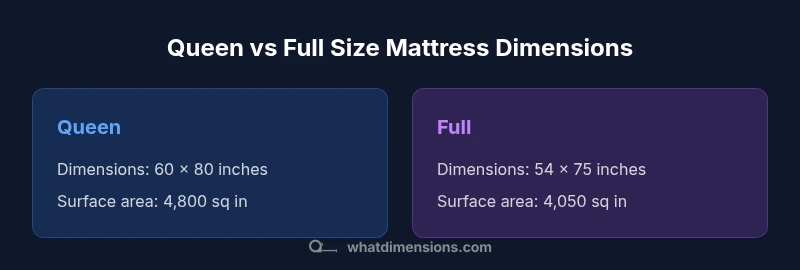
Queen vs Full Size Mattress Dimensions: The queen is 60x80 inches, larger than a full at 54x75 inches, offering about 750 more square inches of sleeping surface. In most bedrooms, the queen is the practical default, while the full suits smaller rooms or tighter budgets. Consider room layout, sleepers, and future needs to decide.
Why Mattress Dimensions Matter
When you design a bedroom, mattress dimensions set the foundation for layout, storage, and daily use. The difference between a queen and a full isn't just a number—it affects how you move around the room, how you dress the bed, and even which sheets you can buy. According to What Dimensions, the most common sizes translate into practical constraints: you need enough floor space for doors and dressers, and you should leave room to walk around the bed without stubbing your toes. Queen vs full size mattress dimensions determine fit in tight corners, the look of the room, and the ease of cleaning under the bed. This section outlines the core dimensional differences and why they matter for real-world setups. By starting with measurements, you can avoid a mismatch between your bed, the frame, and the surrounding furniture.
Queen vs Full Size: Quick Dimensions Recap
A standard full mattress measures 54 inches wide by 75 inches long, while a queen measures 60 inches wide by 80 inches long. The queen provides 6 inches of extra width and 5 inches of extra length, which translates into about 750 extra square inches of sleeping surface. These numbers drive decisions about room layout, sheet selection, and frame compatibility. Understanding the exact dimensions helps you assess whether a given space, wardrobe clearance, or nightstand arrangement will feel balanced rather than crowded. What Dimensions emphasizes that these numbers are reference points; real rooms vary in wall placement, door swing, and radiators, which can complicate an otherwise straightforward choice.
Room Layout and Footprint
Layout efficiency starts with footprint awareness. A queen bed occupies more horizontal space and slightly more length than a full, which may limit the placement of side tables, under-bed storage, or a ceiling fan clearance. In a 10×10 foot room, for example, placing a queen leaves less workable area for nightstands and passage. By contrast, a full bed may free up floor space for a dresser or desk, but reduces sleeping area, which many sleepers notice immediately when sharing the bed or moving in the middle of the night. In practice, most bedrooms designed around queen sizes feel more balanced for couples; smaller rooms benefit from considering a wall bed or storage solutions that reduce footprint.
Sleeping Arrangements: Couples, Singles, Guests
For couples who share a bed, the extra surface area of a queen can reduce nightly bickering over space and reduce roll-offs at the edges. Singles or guests staying briefly might prefer a full because it fits into tighter spaces and keeps costs down. If guests frequently share, you might lean queen; if guests stay for extended periods, consider a queen or even a divided option with a sofa bed in a guest room. What Dimensions highlights that comfort is not only the mattress size but also mattress depth and top layer materials; these factors influence perceived space even when sizes are similar.
Bed Frames, Box Springs, and Foundations
Frame compatibility matters as much as mattress size. A queen mattress requires a queen frame with center support or a compatible platform; using a full frame with a queen mattress can cause instability and wear. Box springs used with a queen are typically larger and heavier than those for a full. When shopping, verify corner brackets, rail spacing, and headboard compatibility with the bed frame you plan to use. If you’re converting an existing setup, you may need to adjust the rails or swap the foundation to align with the mattress size, even if everything else seems similar.
Bedding and Sheet Size Considerations
Sheet sets, mattress pads, and protective covers are size-specific. For a queen, look for 60×80 inch covers; for a full, 54×75 inch. Deep-pocket sheets require tighter tolerances, so ensure your sheet depth matches the mattress height. If you mix sizes, you risk wrinkling, shifting, or the sheets pulling off at night. In many households, couples who select a queen also invest in higher-thread-count sheets for comfort and longevity, while single sleepers in full-sized rooms may prioritize ease of washing or lower material weight.
Measuring Your Bedroom: A Step-by-Step Guide
Start with a floor plan. Mark the bed location, door swing, and window clearances. Measure the actual wall-to-wall space available, then add the bed's width and length to confirm you can walk around it. Check clearance for nightstands and lamps, and verify that the bed's foot does not block access to closets. Consider radiator heat, baseboard molding, and carpet thresholds. Use painter’s tape to visualize the footprint and move furniture around digitally or on paper before purchasing. What Dimensions suggests verifying at least one path of travel around the bed to avoid awkward furniture rearrangements post-purchase.
Common Setup Scenarios and Recommendations
Scenario A: A single sleeper with a medium-sized bedroom. A full mattress can fit easily while leaving space for a small desk or dresser. Scenario B: A couple with a moderate room. A queen is the balanced choice, offering ample sleeping surface while preserving room flow. Scenario C: A guest room that doubles as a study. A full mattress can be paired with under-bed storage; if you expect frequent adult guests, consider a queen and a daybed alternative. These recommendations balance space, comfort, and future needs as described by What Dimensions.
Space-Saving Ideas Without Compromising Comfort
Use under-bed storage drawers or slim nightstands to maximize floor space. Consider a platform bed with integrated storage so you can keep a queen-sized bed footprint without crowding the room. Wall-mounted lighting reduces table clutter, and a wall mirror can visually expand the space. If your space forces a choice, position the bed against a solid wall and keep the opposite wall clear for movement. The goal is to create the impression of air and ease, not a tunnel-like corridor around the bed.
Cost Considerations and Budgeting
Budgeting for a queen versus a full may hinge on long-term value rather than upfront price. A queen-size mattress typically costs more than a full, but it often lasts longer and offers better resale potential. Consider sheet sets, frames, and foundations as part of the total cost. If you expect to transition to a larger bed in the future, you might choose a solid foundation or modular frame that allows upgrading to queen later without replacing everything at once. What Dimensions notes that price ranges vary by brand, material, and warranty, so compare options across sizes and bundles to optimize value.
Care, Durability, and Longevity
Proper care extends the life of any mattress size. Rotate the mattress regularly to prevent uneven wear, even if the dimensions differ. A queen’s surface area distributes weight differently than a full, which can influence how you crush the edges over years. Use a breathable mattress protector, and consider a mattress with good edge support to maximize usable sleeping space. If you replace a frame or foundation, ensure the new components distribute weight evenly to avoid sagging at the sides. The durability of a queen tends to be higher due to broader distribution and common usage in couples, but you should still follow care guidelines to maximize the life of your mattress.
Practical Checklist Before You Buy
Measure your room; compare to the mattress footprint. Check doorways, wardrobe access, and bed proximity to windows. Confirm that your frame, foundation, and sheets are compatible with your chosen size. Consider future needs—will you likely switch to a bigger bed? Review warranty length and return policy. Finally, pick a trusted retailer and read customer reviews to gauge real-world performance and comfort.
Comparison
| Feature | Full-size mattress | Queen-size mattress |
|---|---|---|
| Dimensions (W x L) | 54 x 75 inches | 60 x 80 inches |
| Sleeping surface area (approx.) | 3,825 sq in | 4,800 sq in |
| Best for | Single sleepers or tight spaces | Couples or those who want more room |
| Room footprint impact | Smaller footprint | Larger footprint with more center space |
| Sheets & accessories | Full sheets (54x75) | Queen sheets (60x80) |
| Price range | $150-$450 | $250-$900 |
Strengths
- More affordable upfront cost for single sleepers
- Easier to move and handle in tight spaces
- Matches smaller rooms without overwhelming layout
- Simple to source basic bedding and frames
The Bad
- Less sleeping surface for couples
- Shorter length may be cramped for taller sleepers
- Fewer mid-range frame and bedding options in some markets
- Lower resale value when upgrading to larger sizes
Queen mattresses win on balance for most rooms and couples
Queen sizes offer more surface area and room compatibility in typical bedrooms. Choose full when space, budget, or layout constraints are dominant factors; plan around room measurements and future needs.
Quick Answers
What are the exact dimensions of a queen mattress?
A standard queen measures 60 inches wide by 80 inches long. This size is the most common for couples and larger bedrooms.
A queen mattress is 60 by 80 inches, which is the most common size for couples.
What are the exact dimensions of a full mattress?
A standard full mattress measures 54 inches wide by 75 inches long. It fits smaller rooms but offers less sleeping space than a queen.
A full mattress is 54 by 75 inches.
Is a queen too large for a small room?
In very small rooms, a queen can feel dominant. Measure available floor space and door clearance to determine if a queen or full fits more comfortably.
In tight rooms, a queen can feel large; measure first.
Can I use a full-frame with a queen mattress?
No. Bed frames are generally size-specific. A queen mattress needs a queen frame or a compatible platform to ensure stability and warranty coverage.
No—match the frame size to the mattress.
Are queen sheets compatible with a full mattress?
Queen sheets are too large for a full mattress. Use sheets labeled for full or double beds to ensure a proper fit.
Queen sheets won’t fit a full mattress.
What other factors should influence the size choice?
Consider room layout, sleep partners, and future needs. Comfort, depth, and mattress material can impact perceived room space even at the same size.
Don’t forget layout, partners, and future plans.
Main Points
- Measure your room before choosing size
- Choose queen for couples in standard bedrooms
- Choose full for tight spaces or tight budgets
- Match frame and sheets to mattress size
- Consider future needs before buying