Queen vs Full Mattress Dimensions: Side-by-Side Guide
Compare queen and full mattress dimensions, how they fit in rooms, bedding, and frames. This in-depth guide uses precise size specs to help homeowners choose the right mattress size.


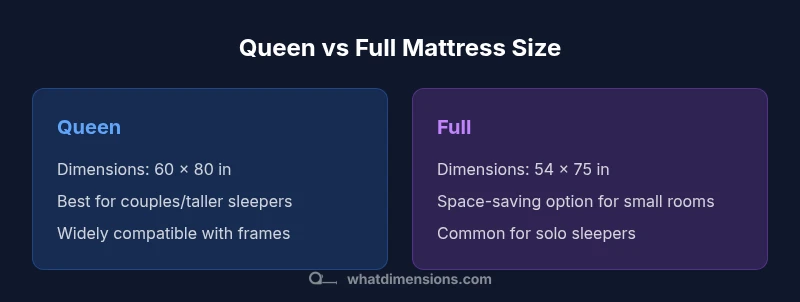
Queen mattresses offer significantly more sleeping area than fulls (60 x 80 inches vs 54 x 75 inches), which matters for couples or taller sleepers. If you sleep solo and have a tight room, a full can save space and still provide adequate comfort. This guide explains the exact size differences and practical implications for space, bedding, and room layout.
What queen mattress dimensions vs full means
When people talk about the size difference between a queen and a full mattress, they’re really discussing two standard bed dimensions that influence sleep space, room planning, and lifestyle fit. A queen measures 60 inches wide by 80 inches long, while a full—also called a double—measures 54 inches wide by 75 inches long. The size gap isn’t just about width and length; it translates into usable space in bedrooms, how much room a sleeper has to move, and what kind of sheets and bedding you’ll need. According to What Dimensions, these measurements are the baseline that most bedding and frame manufacturers align with, making it easier to shop with confidence rather than guesswork.
Standard dimensions in detail
The queen size (60
80
60 x 80 inches) is the most widely used two-person bed in many households. The full mattress (54
75
54 x 75 inches) is commonly chosen for single sleepers or spaces where a queen would overwhelm the room. From a dimensional standpoint, the queen adds about 6 inches in width and 5 inches in length compared with a full. Those tiny differences, repeated across bedding, sheets, and frame components, compound to affect every aspect of the bed’s footprint and how it actually feels in a room.
Sleeping space and room feel
Calculating the usable sleep area helps translate dimensions into real comfort. A queen at 60
80
60 x 80 inches provides about 33.3 square feet of sleeping surface, while a full at 54
75
54 x 75 inches yields about 28.1 square feet. While those figures seem small, they directly impact how much space you have for nightstands, dressers, and pathways. For couples, the extra width of a queen reduces leg entanglement and makes morning movement easier. For solo sleepers, the additional length and width can still translate into a more relaxed sleeping posture and fewer disturbances from a partner.
Bedding, sheets, and toppers compatibility
Sheets, duvet covers, and toppers are dimensioned to fit the mattress you own. Queen bedding is widely available and typically compatible with most mainstream sets, but you should verify pocket depth and corner fit for thicker mattresses or added toppers. Full sheets are less bulky than queen sheets, which can lead to a looser fit on some deeper mattresses. If you plan on a heavy mattress topper or extra pillow-top, you may need to adjust to a larger sheet set or specialty toppers. The alignment of elastic corners and sheet depth matters for a crisp, wrinkle-free surface.
Frames and foundations compatibility
Bed frames and foundations come in a range of widths that match mattress sizes. A queen frame generally supports the standard queen mattress without modification, but you may need a wider headboard or rails. A full frame is compatible with most standard foundations and often easier to move in tight spaces. When shopping, check the frame’s inner width and clearance to ensure you won’t have binding or misalignment with sheets and rails. If you’re upgrading from full to queen, verify that the new frame’s footprint will still fit within your room’s dimensions and doorways.
Room layout and space planning
Small rooms demand creative spacing: a queen can dominate a tight footprint, limiting nightstand placement or dresser access. Consider doorway width, closet clearance, and traffic flow. A full mattress can leave more floor space for other furniture and movement, but it comes at the cost of sleep surface. When planning, sketch a quick layout with scaled furniture, placing the bed first to understand available space for seating or desks. What Dimensions emphasizes that planning is the secret to avoiding a cramped feel when upgrading sizes.
Solo sleepers versus couples
For solo sleepers, the choice often hinges on comfort preferences and room size. A queen provides more boundary space, reducing disturbances from a restless partner and distributing weight across a larger surface. For couples, the queen is usually the better option for shared space and nighttime movement. That said, a full can be a reasonable compromise in smaller bedrooms where the bed’s footprint directly influences other critical furniture placements. The decision should balance comfort with the room’s dimensions and traffic patterns.
Cost and long-term value considerations
In general, queen mattresses command a higher upfront price than full models, driven by larger materials and manufacturing. Over time, the extra sleeping area may translate into better sleep quality and resale appeal when you decide to upgrade. If budget or space constraints are paramount, a full offers a practical path that preserves living space without sacrificing basic comfort. What Dimensions notes that space planning often pays off more than initial price, especially for shared beds in smaller rooms.
Measuring your space before you buy
A precise measurement routine prevents buyer’s remorse. Start by measuring room length and width, doors, and hallway clearances. Then measure your current bed’s footprint, including any nightstands, lamps, and dresser faces that may constrain movement. Finally, simulate the new bed’s size by marking the floor with painter’s tape to visualize clearance. This process, advocated by What Dimensions, reduces the risk of purchasing a mattress that doesn’t actually fit your space.
What Dimensions offers for shoppers
What Dimensions emphasizes using precise size references for real-world planning. By comparing exact dimensions and room implications, shoppers can avoid common mistakes like selecting a mattress that looks good in photos but feels cramped in person. The brand’s guidance helps you translate abstract size names into measurable space, ensuring a confident final choice. For buyers who want clarity, the What Dimensions approach centers on exact measurements and practical room-fit reasoning.
Quick-start decision guide
If your room is medium to large and you sleep with a partner or have taller sleepers, start with a queen. If your space is tight or you mostly sleep solo, consider a full and test how it fits with your daily routines. Always verify ceiling height, doorway width, and furniture layout before committing. Use the step-by-step approach above to compare dimensions side-by-side in your own space.
Practical next steps
Create a simple decision worksheet: list room measurements, then map the bed size options to available space. Cross-check with bedding and frame options. If you’re undecided, slightly reorder priorities (space vs. sleep surface) to see how the decision impacts daily living. The process is straightforward, and with precise measurements, you’ll avoid common misfits and enjoy better long-term comfort.
Comparison
| Feature | Queen mattress | Full mattress |
|---|---|---|
| Dimensions (L x W) | 80 in x 60 in | 75 in x 54 in |
| Sleeping space (area) | 约33.3 sq ft | 约28.1 sq ft |
| Best for | Couples or taller sleepers; more room to move | Solo sleepers or small bedrooms; saves space |
| Sheet sizing | Queen sheets standard; consider depth if topper is used | Full sheets standard; easier to fit in smaller frames |
| Frame compatibility | Widely supported by standard queen frames | Widely supported by standard full frames; easier to maneuver during setup |
| Room footprint impact | Requires more floor space; plan around dressers and nightstands | Leaves more floor space; better for compact layouts |
Strengths
- More sleeping space for couples or taller sleepers
- Saves space in small bedrooms with full
- Widely available bedding and frames for both sizes
- Better resale value and market options for queen
- Clear measurement standards simplify planning
The Bad
- Higher upfront cost for queen
- Larger footprint requires more room clearance
- Queen bedding can require deeper pockets or thicker toppers
- Full can feel cramped for two sleepers or couples
Queen mattress dimensions generally win for couples and taller sleepers; full is the space-saver for tight rooms.
Choose queen if you value space and comfort for two. Choose full if room size limits you or you sleep solo most nights. Use precise measurements to confirm fit before buying.
Quick Answers
What are the exact dimensions for queen and full mattresses?
A queen mattress is 60 inches wide by 80 inches long, while a full mattress is 54 inches wide by 75 inches long. These are the standard dimensions most bedding and frames use.
Queen is 60 by 80, full is 54 by 75.
Is a queen harder to move through a doorway than a full?
Yes, a queen mattress is larger and heavier, making it more challenging to maneuver through tight doorways. Plan with professionals or remove the headboard and feet to help passage.
Yes, it’s bigger, so plan ahead when moving.
Which size is better for couples?
For couples, the queen typically provides more room to spread and reduces disturbances. The full can feel cramped for two adults, especially if either sleeper moves during the night.
Queen is usually better for couples.
Can you use queen sheets on a full bed?
No. Queen sheets are designed for a 60 x 80 frame and won’t fit snugly on a 54 x 75 full bed. Use full-size sheets unless upgrading to a queen.
Queen sheets won’t fit a full bed.
Do I need new sheets if I switch from full to queen?
Yes. Switching from full to queen requires new sheets, pillowcases, and possibly deeper pockets if you add a topper. Measure the mattress depth to select compatible sheets.
Yes, you’ll need new sheets if you switch sizes.
What room layouts work best with each size?
A queen bed benefits medium to large rooms with space for nightstands and movement; a full bed fits compact bedrooms but may limit nightstand access. Test layouts using painter’s tape before buying.
Think about room flow and furniture placement before choosing.
Main Points
- Measure your room first to compare bed footprints
- Choose queen for couples or tall sleepers; full for small spaces
- Verify doorways and furniture clearance before upgrading
- Expect to buy new sheets/toppers when switching sizes
- Rely on exact dimensions rather than generic labels when planning