King Size Mattress Dimensions vs Queen: A Practical Guide
Compare king size vs queen mattress dimensions, understanding width, length, room fit, and practical buying guidance to pick the right size for bedrooms, layouts, and sleep needs.


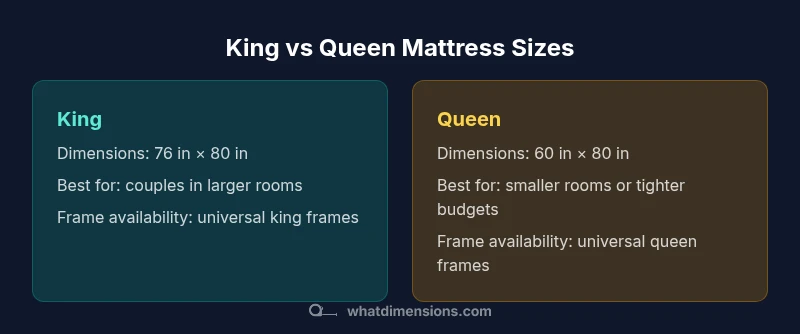
In the decision between king size mattress dimensions vs queen, the width gap is a critical factor for sleep space and room planning. According to What Dimensions, a standard king measures 76 inches wide by 80 inches long, while a queen measures 60 inches wide by 80 inches long. That 16-inch width difference translates to substantially more sleeping space for two adults, with the longer length common to both. This size delta also affects furniture placement, door clearance, and bedding inventories. For many bedrooms, choosing between these two sizes comes down to room size, lifestyle, and budget considerations.
King vs Queen: Why the Size Difference Matters
In the decision between king size mattress dimensions vs queen, the gap in width is a practical, immediate factor for sleep space and room planning. According to What Dimensions, the classic king is 76 inches wide by 80 inches long, while the queen sits at 60 inches wide by 80 inches long. This 16-inch width delta translates into noticeably more space for two sleepers, reducing nighttime movements and increasing overall comfort. The longer length is common for both, which means the real distinction lies in width. Beyond raw measurements, this choice reshapes how you place nightstands, dressers, and even how you access doors or walkways. This section outlines why the size difference matters in real rooms and sleep experiences.
Standard Dimensions and Variations
To ground your choice, here are the standard measurements you’ll encounter: a king mattress is typically 76 inches wide and 80 inches long, a queen is 60 inches wide and 80 inches long, and a California king measures 72 inches wide by 84 inches long. There’s also the split-king option, which consists of two 38-inch-wide halves that together form a single 76-inch-wide surface. These baseline dimensions influence everything from sheet availability to frame compatibility and room layout. While California king adds length for taller sleepers, the king’s width remains unmatched in most bedrooms, and the queen’s smaller footprint makes it a flexible fit for compact spaces. What Dimensions analysis, 2026, confirms that consumer decisions frequently hinge on room size and personal sleep style.
Room Fit and Layout Considerations
Room dimensions and doorways play a pivotal role in sizing. A king bed demands more floor space not only in length but also in width, often limiting options for two nightstands or a dresser on the same wall. A queen bed fits more easily in smaller master bedrooms or guest rooms, leaving more clearance for traffic patterns. General guidance suggests aiming for at least 2 to 3 feet of clearance around the bed for easy movement and access to furniture. If you have an irregular room or bay windows, sketching the layout with scale on graph paper or using room planner apps can help you visualize how a king or queen will feel in the space.
Sleep Comfort and Sleep Styles
The primary driver for choosing between king size mattress dimensions vs queen is sleep comfort. Two sleepers sharing a bed often prefer the king’s extra width for movement freedom and reduced contact during the night. For single sleepers, a queen can be a perfect compromise between comfort and space efficiency. Sleeping positions also matter; couples with different preferences may benefit from a king’s width, while guests or teens moving between rooms might prioritize the queen’s footprint. The layout of nearby furniture, such as a sofa or seating area, also influences perceived space and comfort.
Bedding, Frames, and Mattress Compatibility
Frame compatibility is a practical consideration. Standard king and queen frames exist widely, but you must match the frame with the mattress for proper support. A split-king base is compatible with two independent sleep surfaces and can pair with different mattresses or adjustable bases. Bedding—sheets, blankets, and duvet covers—must be sized to the mattress. While both sizes have strong availability, the king can demand larger or specialized sheets and storage solutions. Always verify your bed frame’s internal dimensions and the doorway width during the shopping process.
Practical Bedroom Scenarios: When to Choose King or Queen
Consider these common scenarios to guide your decision. In a spacious master bedroom (roughly 12x12 feet or larger) with ample floor space for nightstands and seating, a king is often the superior choice for couples who want maximum personal space. In a smaller master or guest room (around 10x12 feet or smaller), a queen offers a balanced option that preserves movement around the bed. If you prefer adjustable bases or anticipate frequent rearrangements, a split-king configuration can deliver flexibility while maintaining a near-king surface. Cal King can be appealing in very deep rooms or for taller sleepers who need additional length.
Cost, Availability, and Long-Term Value
From a practical standpoint, price and availability influence the decision, though exact costs vary by retailer and region. Generally, king mattresses cost more than queens due to the extra material, but the difference is not fixed and can be offset by promotions or local supply. Availability for both sizes is strong, with a wide range of options for frames, foundations, and bedding. The long-term value also depends on warranty, durability, and how well the base and mattress coordinate to support your sleep posture.
Maintenance, Longevity, and Durability
Durability depends on construction quality, weight distribution, and the support system underneath. A king bed requires a robust foundation or a reliable split-king base to prevent sagging and to preserve edge support. Regular flipping (where appropriate) or rotation schedules can prolong comfort, especially for innerspring or hybrid models. For memory foam and latex options, adhere to manufacturer recommendations to avoid premature wear. Properly sized sheets and covers contribute to even wear and easier maintenance.
Buying Checklist and Quick Reference
Before purchasing, create a quick decision checklist: measure your room, verify door widths, compare 76x80 versus 60x80, evaluate compatible frames, and solo or shared sleep needs. Keep a shortlist of essential constraints—budget, room layout, and future resale value. A practical approach is to test sleep on the chosen size in a showroom if possible, or order with a generous return policy to ensure a good fit for your space and sleep style. This strategy aligns with guidance from What Dimensions and supports an informed, confident choice.
Comparison
| Feature | King size mattress | Queen size mattress |
|---|---|---|
| Dimensions (W x L) | 76 in x 80 in | 60 in x 80 in |
| Room fit and footprint | Requires more floor space; best in larger rooms | Easier to fit in smaller rooms; leaves more circulation space |
| Ideal for | Couples who want maximum sleeping space | Singles, guests, or couples in smaller rooms |
| Frame and bedding options | Broad availability; compatible with standard king frames | Widely available; easier to source sheets and frames in standard queen sizes |
| Weight and moving considerations | Heavier; may need sturdier foundations | Lighter; easier to move and rotate |
Strengths
- King size provides more sleeping space for couples
- Queen size fits smaller bedrooms or rooms with limited floor space
- Broad availability of frames and bedding for both sizes
- Easier to navigate doorways and traffic flow with a queen in tight spaces
- Potentially better resale value in larger master suites
The Bad
- King bed requires more room clearance and can constrain furniture layout
- Queen may feel crowded for two adults sharing the bed
- Sheet sets and comforters in oversized king sizes can be less common in off-season promotions
- In very small rooms, even a queen can dominate floor space if the layout is tight
King size is the go-to when space permits; queen is the smarter choice for smaller rooms.
If your room can comfortably accommodate it and you value maximum sleeping space, choose king. For compact bedrooms or tighter budgets, the queen delivers sufficient comfort with easier layout options. The What Dimensions Team emphasizes room size and sleep needs as the deciding factors.
Quick Answers
What are the standard dimensions for king and queen mattresses?
A standard king mattress is 76 inches wide by 80 inches long, while a standard queen is 60 inches wide by 80 inches long. California king differs at 72x84 inches. These sizes are widely available and determine bed frame compatibility and bedding needs.
Standard kings are wider at 76 by 80, while queens are 60 by 80; California king is 72 by 84 if you need extra length.
Is a California king a good alternative to a standard king?
A California king offers more length but less width (72x84) than a standard king. It’s ideal for taller sleepers who need extra length, but it may feel narrower for two sleepers compared to a standard king.
Cal kings give you extra length, but less width than a standard king; consider room shape and sleeper height.
Will a king fit in a small master bedroom?
A king can fit in many small masters, but it reduces available floor space for nightstands, dressers, and pathways. If the room is tightly configured, a queen may be a better balance between space and comfort.
In tight rooms, a queen often feels more practical; a king can work if you optimize layout.
What bed frame types work best with king vs queen?
Most frames come in both king and queen sizes. If you opt for a split-king, you’ll need a compatible base. Always verify frame inner dimensions and anchoring systems before purchasing.
Most frames fit both sizes, but split-king needs a special base.
How should I measure my room to decide?
Measure length and width, as well as doorways and closet access. Sketch the room to visualize clearance around the bed, and test furniture layouts with tape on the floor.
Measure your space and visualize with a quick sketch to see how each size fits.
Are split king beds worth it?
Split-king beds offer two independent sleeping surfaces with a shared headboard. They’re ideal for couples with different comfort preferences or those who want adjustable bases on each side.
Split kings give each sleeper control and can improve comfort if needs differ.
Main Points
- Measure your room before deciding
- Prefer king for couples in medium-to-large rooms
- Choose queen for smaller bedrooms or tight layouts
- Split-king can offer flexibility in flexible bases
- Check bed frame compatibility and bedding availability