King vs Queen Bed Dimensions: A Comprehensive Comparison
Explore how king size bed dimensions compare to queen, with exact measurements, room-fit tips, and practical guidance for choosing the right bed size for your bedroom.


TL;DR: King size beds are larger than queen beds, measuring about 76 inches by 80 inches in the U.S. vs 60 inches by 80 inches for queen. The king offers more width, better for couples who move a lot, but requires a larger room and more bedding. For smaller rooms or budget concerns, queen remains the practical standard, while variations like the California King offer extra length.
King Size Bed vs Queen: Core Dimensions
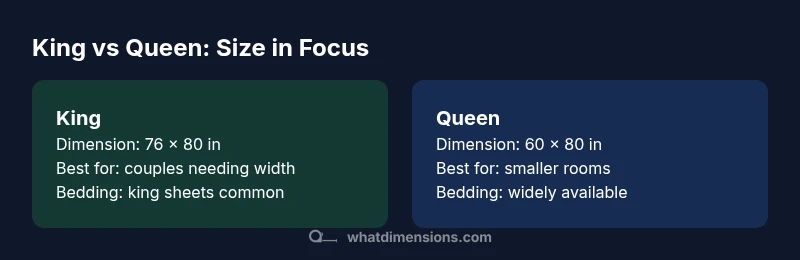
The comparison between king size bed dimensions and queen sizes hinges on two simple numbers: width and length. A standard king mattress typically measures 76 inches wide by 80 inches long (about 193 cm by 203 cm). The standard queen mattress is 60 inches wide by 80 inches long (about 152 cm by 203 cm). The delta is 16 inches wider for a king, which translates into noticeably more sleeping space for two people sharing the bed. In practice, this extra width can reduce nighttime jockeying and improve comfort for couples who tend to spread out. When planning a room, consider not just the mattress but the frame, headboard, and any floating nightstands that may constrain usable space. According to What Dimensions, the choice often comes down to room proportions and personal sleep style.
Space Planning: How Size Impacts Room Layout
Beyond the mattress, room layout plays a critical role in how king vs queen configurations feel in a space. In a typical master bedroom (12x12 feet or larger), both sizes can fit with adequate clearance around the bed for doors, dressers, and movement. The king, however, requires more wall-to-wall clearance on both sides to avoid feeling cramped, particularly in narrower rooms. A queen is more forgiving in compact spaces and allows for two nightstands and some under-bed storage without crowding. For most homeowners, the decision balances available floor area, door swing space, and the need for easy access to closets and seating areas. What Dimensions notes that success hinges on real measurements rather than rough estimates.
Bed Frames, Foundations, and Overhangs
The apparent footprint of a bed is not just the mattress size; frames and foundations add to the total. A king bed frame often adds 4–6 inches of width on each side, depending on the design, and a sturdy foundation can extend the overall height slightly. In contrast, a queen frame typically adds less width, which can make it easier to place in smaller rooms. If you use a canopy or heavy headboard, plan for extra side clearance and consider whether you want side rails or floating nightstands. Bedding compatibility also matters: king sheets and duvet covers will be wider, and some bedding sets are sold as “king only,” requiring separate purchases if you own a queen frame. The choice should align with your preferred bed-in-a-room configuration and available linens.
Room Size Guidelines: Minimums and Recommendations
A common rule of thumb is to leave at least 24 inches of clearance on each side of the bed for easy movement, though 28–36 inches is ideal in most rooms. In practice, a king bed in a 12x12 room will feel snug if other furniture occupies a lot of floor area. A queen bed may offer more flexibility in smaller bedrooms while still delivering comfortable access to nightstands and storage. For larger rooms (14x16 feet or more), a king can truly shine, creating a sense of luxury and generous space for two sleepers and pets. Always measure doorways, closets, and windows to ensure the chosen bed size integrates smoothly with the room’s flow. The What Dimensions framework emphasizes measuring actual furniture footprints and circulation space before purchase.
Bedding and Linen Compatibility: Sizing Nuances
Linen and comforters are a practical consideration when choosing between king and queen. King-sized sheets require wider fabric panels and longer edges, which can impact fit on certain mattress depths. Duvet covers, mattress pads, and toppers are commonly available in both king and queen varieties, but you may encounter deep-pocket issues with thick mattresses on some frames. If you own a non-standard depth mattress (e.g., extra-thick foams or pillow-tops), verify the linen’s pocket depth and whether deep-pocket king sheets are necessary. When shopping, confirm that the bedding you select matches both your mattress width and depth for a tidy, secure fit. For many shoppers, this practical detail tips the scale toward the size that aligns with both sleep area and laundry routines.
Real-World Scenarios: Small Room vs Master Suite
In a compact bedroom, a queen bed provides breathing room without dominating the floor space, making it easier to place a dresser, a seating area, or a small desk. In a true master suite (13x14 feet or larger), a king bed becomes a focal point and allows couples to share wide sleep surfaces without colliding at night. A 10x12-foot room, for instance, can often accommodate a queen bed with careful layout and slim nightstands, while a 12x14-foot room may handle a king with adequate clearance if furniture sizes are chosen thoughtfully. These real-world examples illustrate how the same bed size interacts with room geometry. What Dimensions’ practical sizing approach centers on precise room measurements and user needs rather than blanket prescriptions.
Cost, Value, and Longevity Considerations
Price differences between king and queen bed setups extend beyond the mattress itself. King sizes typically cost more for both the mattress and bedding, and the total expense may rise if you need two twin XLs for a split-king configuration or larger king frames. The mattress’s longevity is a relevant factor: denser foams and higher-quality spring systems can influence how long a given size remains comfortable. In terms of value, a queen often offers a better balance of space efficiency and comfort for single occupants or couples in smaller rooms. For many buyers, evaluating long-term costs—mattress longevity, linen replacements, and frame durability—helps justify whichever size best suits their lifestyle. What Dimensions’ research underlines the importance of framing the decision with long-term use in mind.
Alternatives and Edge Cases: Customization and Hybrid Options
If neither standard size perfectly fits a room, consider alternatives like a California King, which trades some width for extra length, or a split king setup that uses two adjustable bases side-by-side with independent mattresses. A split-king can be a powerful solution for couples with different sleep preferences or for shared spaces where one person tends to move more at night. In very small bedrooms, a full or small double can sometimes be paired with storage beneath the bed to optimize space, although this reduces sleeping width. Finally, for rooms with unusual dimensions or fixed furniture layouts, custom-sized mattresses are an option, though availability and cost vary by retailer. The goal is to align the bed size with both sleep comfort and room functionality.
Quick Sizing Cheat Sheet: Dimensions at a Glance
- King size bed: 76 inches wide x 80 inches long (193 cm x 203 cm)
- Queen size bed: 60 inches wide x 80 inches long (152 cm x 203 cm)
- California King: 72 inches wide x 84 inches long (183 cm x 213 cm)
- Clearance target: 24–36 inches around the bed for movement
- Bedding essentials: King sheets and duvets for standard king; queen sets for queen beds
This cheat sheet distills the core numbers and practical tips you’ll use while shopping and measuring your room. Remember that exact frame dimensions can vary slightly by manufacturer, so always verify before purchasing.
Comparison
| Feature | King size bed | Queen size bed |
|---|---|---|
| Dimension (W x L) | 76 in x 80 in (193 cm x 203 cm) | 60 in x 80 in (152 cm x 203 cm) |
| Recommended room size (minimum) | At least 12x12 ft for comfortable circulation | At least 11x12 ft for practical placement |
| Bedding size compatibility | Requires king sheets, deeper pockets common | Uses queen sheets; widely available, easy to find |
| Best for | Couples who want maximum sleeping width | Smaller rooms or budget-conscious setups |
| Cost considerations | Typically higher mattress and linen costs | Typically lower total cost and broader linen availability |
Strengths
- More sleeping space for couples and pets
- Better for rooms with long walls or walkways
- Easier to accommodate two larger sleepers without disturbing each other
- Potentially higher resale value in upscale bedrooms
The Bad
- Requires a larger bedroom footprint and more clearance
- Higher initial cost for mattress, frame, and linens
- Bedding and accessories may be harder to source in non-standard depths
- May feel oversized in smaller rooms and tight layouts
King size beds generally offer more space and comfort for couples in appropriately sized rooms, while queen beds remain the practical default for smaller bedrooms and tighter budgets.
Choose king if you have room to spare and sleep with a partner who moves at night; opt queen for smaller rooms or cost-sensitive scenarios. The What Dimensions guidance emphasizes aligning the bed size with real room measurements and daily use.
Quick Answers
What are the standard dimensions for a king size bed?
A standard king mattress is 76 inches wide by 80 inches long. Frame and foundation can add to the footprint, so always verify actual measurements before purchasing bed hardware.
A standard king is 76 by 80 inches, but check your frame to confirm total width and length.
How do king and queen sizes fit in small bedrooms?
In small bedrooms, a queen is typically easier to fit and leaves more walking space around the bed. A king can fit in some rooms but may require careful layout and slim furniture to avoid crowding.
Queens fit better in small rooms; kings need careful planning.
What is California King and how does it differ?
A California King is 72 inches wide by 84 inches long. It is longer but narrower than a standard king, which is helpful for taller sleepers but may feel tight in width.
California King is longer but a bit narrower than a standard king.
Do bedding sizes vary by region or brand?
Yes, bedding sizing can vary by brand and region. Always verify that sheets and comforters match your mattress dimensions and depth for a proper fit.
Bedding sizes vary by brand, so double-check before buying.
Are there practical alternatives to standard king and queen?
Options include California King, split-king configurations, or custom sizes. Split-king can offer independent comfort zones for couples.
If standard sizes don’t fit, consider California King or split-king.
What should I consider besides dimensions?
Also consider room layout, door and window placement, closet access, and budget. A well-chosen size should balance comfort, functionality, and the ability to rearrange furniture easily.
Think about layout and budget, not just the bed itself.
Main Points
- Measure your room before choosing a size
- King beds maximize width for couples and pets
- Queen beds suit smaller rooms and lower costs
- Consider California King for extra length, not width
- Plan for bedding and frame dimensions to avoid sizing mismatches
- Split-king is a viable hybrid in some layouts