Dimensions of Full vs Queen: Mattress Size Guide
Compare full and queen mattress dimensions, space needs, and bedding compatibility to decide the right sleep surface for your room. Learn with What Dimensions.


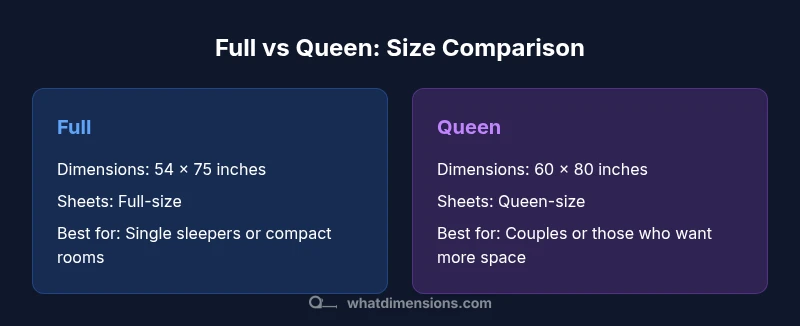
For most homes, the dimensions of full vs queen determine bed footprint, nightstand space, and sheet purchases. A full bed (54 x 75 inches) fits tighter rooms but offers less surface area than a standard queen (60 x 80 inches), which provides more room for couples or spread-out sleepers. When choosing, consider room size, frame compatibility, and bedding needs.
Understanding the dimensions of full vs queen mattresses
The phrase dimensions of full vs queen is a practical starting point for any bedroom reorganization or shopping plan. In the mattress world, a full bed measures 54 inches wide by 75 inches long, while a queen bed measures 60 inches wide by 80 inches long. This difference may seem modest, but it translates to meaningful changes in usable surface area, sleep comfort, and how much space you can allocate for nightstands, dressers, and circulation. According to What Dimensions, understanding these baseline numbers helps homeowners anticipate how a room will feel with each option and prevents buying decisions rooted in aesthetics alone. When you compare dimensions side-by-side, you gain a clearer picture of how a full bed supports solo sleepers or guests while a queen bed better accommodates couples or those who like extra space.
Comparison
| Feature | Full bed (54 x 75 inches) | Queen bed (60 x 80 inches) |
|---|---|---|
| Dimensions (W x L) | 54 in × 75 in | 60 in × 80 in |
| Sheets and covers | Full-size bedding | Queen-size bedding |
| Room footprint | Smaller footprint; fits tighter rooms | Larger footprint; needs more floor space |
| Best for | Single sleepers, compact spaces, guest rooms | Couples or sleepers who want more surface area |
Strengths
- Clearer space optimization for small bedrooms
- Easier to find compatible sheets and bedding
The Bad
- Queen requires more floor space in smaller rooms
- Full can feel cramped for two sleepers or active sleepers
Queen beds generally offer more space and future-proofing; full beds suit smaller rooms and guest spaces.
Choose a queen if you need extra width and length for two sleepers or when sharing the bed is common. Opt for a full if room size is at a premium or you’re furnishing a guest room where occasional use is expected.
Quick Answers
What are the standard dimensions of a full bed?
A standard full bed is 54 inches wide by 75 inches long. This size suits single sleepers or guest rooms where space is tight. For sheets and frames, look for full-size options to ensure proper fit.
A full bed is 54 by 75 inches, great for solo sleepers in smaller rooms. Look for full-size sheets and frames for a proper fit.
Do queen beds fit in small rooms?
Yes, a queen bed can fit in many small rooms, but it will reduce remaining floor space for dressers, nightstands, and movement. Careful layout planning and measurement are essential.
Yes, but it takes up more space. Plan your layout carefully to keep traffic flow open.
What bedding goes with full vs queen?
Full bedding includes sheets and comforters labeled for full-size mattresses, while queen bedding is labeled for queen-size mattresses. Mixing sizes can lead to fit issues and uncomfortable sleep surfaces.
Use only bedding labeled for the correct size to ensure a proper fit and comfort.
Can I convert a full bed to a queen later?
Converting a full bed to a queen typically requires a new bed frame and often a new headboard. Bedding and foundations may also need updating to fit the larger dimensions.
You’d likely need a new frame and bedding to switch from full to queen.
Which size is best for guests?
For guests who may stay overnight infrequently, a full bed can be a practical compromise. If space allows and you anticipate longer stays or couples, a queen is often the better long-term option.
Full can work for guests; queen is often better for longer visits or couples.
Main Points
- Choose queen for couples or those who value space.
- Select full for compact rooms or guest spaces.
- Check room layout before buying to avoid spacing issues.
- Ensure bedding, frames, and foundations are compatible with chosen size.
- Consider future needs such as potential room sharing or expansion.