Dimensions of Full Size Bed vs Queen: A Side-by-Side Guide
Compare exact dimensions of full vs queen beds, how they fit rooms, bedding options, and guidance for choosing by space, sleep style, and budget for buyers everywhere.


TL;DR: The queen bed (60" x 80") offers more surface area than a full bed (54" x 75"), which can improve comfort for couples or restless sleepers. If your room is compact or you’re on a tighter budget, the full size saves space and still suits solo sleepers. Consider door clearance and frame options to ensure a smooth fit.
Dimension Basics: The dimensions of full size bed vs queen
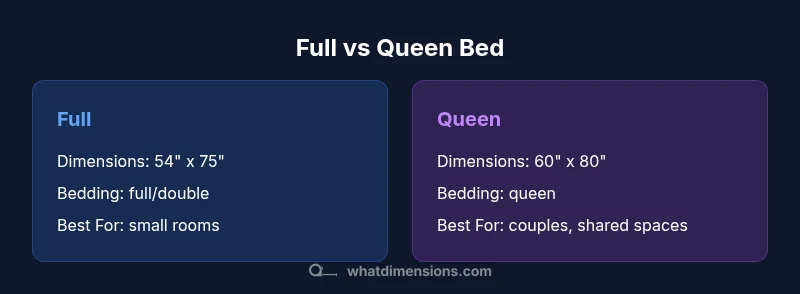
Choosing between a full size bed and a queen involves more than just the numbers on a spec sheet. The full (also called a double) typically measures 54 inches wide by 75 inches long, while the queen comes in at 60 inches by 80 inches. The width difference translates to roughly an extra two pillows’ worth of sleeping surface for two people sharing the bed. The extra length is particularly noticeable for taller sleepers. According to What Dimensions, the queen size generally provides a more versatile sleeping surface for couples or sleepers with movement during the night, whereas the full size excels in tighter rooms where every inch counts. This is not just about comfort; it also affects sheets, blankets, and bed frames. For homeowners and designers, understanding these dimensions forms the foundation of practical room planning and furniture placement.
Key Measurements: Full vs Queen
The most critical measurements are the bed dimensions themselves: Full Size Bed is commonly 54 inches wide and 75 inches long; Queen Size Bed is 60 inches wide and 80 inches long. For bedding, a full sheet set and comforter will be sized for the 54x75 footprint, while queen sheets and duvets are sized for 60x80. This difference also appears in mattresses, foundations, and bed frames: a queen requires a queen-caliber frame with appropriate mounting hardware and a sturdy foundation, while a full frame is sufficient for a 54x75 mattress. What Dimensions analysis shows is that you will typically experience noticeably more surface area per sleeper on a queen, which can influence sleep quality in shared scenarios. In practice, these measurements guide your choice of nightstands, dressers, and space around the bed for movement and accessibility.
Room Layout and Traffic Flow
When planning room layout, the bed’s footprint drives door swing, walkway clearance, and furniture placement. A queen’s wider width can constrain side clearance in a small room, but it often leaves room for two nightstands and a shared space between them. A full bed, by contrast, may allow larger dressers or a wider seating area if the room’s length is limited. The general rule is to leave at least 24 inches of clearance around the sides and at the foot of the bed for comfortable movement. In narrow bedrooms, the extra width of a queen can actually hinder traffic flow if doorways, windows, or closets interrupt pathways. What Dimensions’s team observes is that careful measurement and a simple floor plan often reveal the best fit before you buy.
Bedding, Frames, and Accessories: What to Buy
Deciding between full and queen also determines your bedding ecosystem. Full sheets and duvets are sized for 54x75, while queen sets are designed for 60x80. If you choose a queen, you will generally need a queen-size frame and a larger headboard to maintain proportion and aesthetics. For frames, consider the type of foundation—box spring, slatted, or platform—and whether you want storage space under the bed. Pillow choices also shift: two standard pillows for a full bed look and function differently on a queen due to the wider sleeping surface. Matching accessories, such as bed skirts, quilts, and comforters, should be selected with the correct width and length in mind. What Dimensions’s research indicates that compatibility across accessories can save time and prevent mismatch during setup.
Sleep Style Scenarios: When to Choose Which Size
For solo sleepers in compact apartments, a full bed can maximize usable floor space and free up room for a compact wardrobe or desk. For couples or partners sharing sleep space, a queen bed commonly offers enough surface area to reduce nighttime disturbances and accommodate different sleeping positions. If you frequently host guests in a guest room, the queen size can double as a guest-friendly option that still fits in diagonally tight layouts. For multi-purpose rooms where the bed doubles as a seating area, the queen often wins on versatility, while a full keeps the room visually lighter and less crowded. These scenarios align with What Dimensions’s practical guidelines for balancing function and footprint in real rooms.
Costs, Longevity, and Long-Term Value
Price and longevity are practical considerations in bed size choice. In general, queen setups may involve higher upfront costs for bedding, frames, and foundations, but they also translate into broader market availability and resale appeal if you ever upgrade. Full-size options can be more economical upfront and may suffice for solo sleepers or rooms with limited square footage. Long-term value depends on how long the bed remains suitable for the occupants and how much the surrounding space reconfigures over time. The key is to weigh immediate costs against the potential for layout flexibility and comfort as needs evolve. What Dimensions’s analysis emphasizes planning for changes in living arrangements and room use years into the future.
Common Pitfalls and How to Avoid Them
A common error is choosing a size without measuring actual room dimensions, including doorway clearance and closet access. Another pitfall is assuming bedding availability is uniform across retailers; while both sizes are widely available, some niche brands may lag in stock for full sets. Finally, neglecting frame compatibility can lead to purchasing a frame that doesn’t fit your mattress or looks disproportionate in the room. To avoid these issues, measure precisely, review current bedding lists before shopping, and confirm frame compatibility with the mattress dimensions you intend to buy. What Dimensions’s team recommends verifying both mattress and frame compatibility before procurement to ensure a smooth setup.
Quick Sizing Tips and Tools
Start with a floor plan: sketch the room to scale or use graph paper to map out wall lengths, door widths, and window placements. Measure the bed footprint twice in its planned orientation and leave 24 inches of clearance on each side and 12-24 inches at the foot if possible. Use a tape measure and a smartphone note to capture exact numbers. If you’re unsure, try a dry run with masking tape on the floor representing the footprint of a full or queen bed to visualize how it will sit within the space. What Dimensions’s practical approach is to translate abstract measurements into a tangible room view before committing to a purchase.
What the What Dimensions Team Recommends
In most standard bedrooms, the queen size offers better flexibility for couples and multi-purpose spaces, while the full size is a strong choice for compact rooms or solo sleepers who want to maximize floor area. The What Dimensions team’s verdict emphasizes matching your room’s geometry and your sleep preferences rather than chasing a single ideal size. If you need a quick rule of thumb: measure twice, check frame compatibility, and consider how much room you want to leave for movement and furniture rearrangement over the years. This pragmatic approach tends to yield a bedroom that remains comfortable as needs evolve.
Comparison
| Feature | Full Size Bed | Queen Size Bed |
|---|---|---|
| Dimensions (W x L) | 54 in x 75 in | 60 in x 80 in |
| Best For | Solo sleepers in tight spaces | Couples or shared sleep space |
| Bedding Availability | Widely available in most markets | Widely available in most markets |
| Room Fit | Narrow rooms; easier to place with other furniture | Moderate to larger rooms; more layout options |
Strengths
- Queen beds maximize sleeping surface for couples or restless sleepers
- Full beds fit more easily in smaller bedrooms and apartments
- Bedding and frames are widely available for both sizes
- Both sizes offer strong resale value in standard markets
The Bad
- Queen may require more space for doorways and walkways in tight rooms
- Full can feel cramped for two sleepers or in very active sleep patterns
- Queen bedding and frames can be slightly pricier than full in some markets
Queen beds win for versatility and shared sleep; full beds win for small rooms and tighter budgets
If space allows and there is a partner or someone sharing the bed, choose queen for comfort. If the room is constrained or you’re prioritizing cost, a full bed remains a sensible, space-saving option. What Dimensions analysis supports sizing the choice to the room layout and sleep needs.
Quick Answers
What are the exact dimensions of a full size bed vs queen?
A full size bed is typically 54 inches wide and 75 inches long, while a queen is 60 inches wide and 80 inches long. The queen offers more sleeping surface for two people or taller sleepers. Bedding and frames differ to accommodate the respective footprints.
A full bed is 54 by 75 inches; a queen is 60 by 80 inches, with the queen giving more room for two sleepers and taller individuals.
Can a queen bed fit in a small bedroom?
Yes, a queen can fit in many small bedrooms, but you must account for doorway clearance and other furniture. In very tight rooms, a full bed may be a better fit to preserve floor space.
A queen can fit in many small bedrooms, but measure carefully and consider doorways and furniture layout.
What bedding sizes do I need for each?
Full beds require 54x75 sheets and comforters; Queen beds require 60x80 sets. Mattress protectors and fitted sheets follow these dimensional footprints.
Full needs 54x75 sheets; queen needs 60x80.
Is upgrading to a queen worth it if space is limited?
If space is extremely tight, a full bed can work well. If you anticipate hosting a partner or desire more personal space, explore layout options to optimize the room before deciding.
In tight spaces, a full can be practical; otherwise, rearranging the room for a queen may be worthwhile.
How should I measure my room for bed sizing?
Measure wall lengths, doorway width, and closet access. Sketch a floor plan to scale and simulate the bed’s footprint to ensure at least 24 inches of clearance on each side.
Measure walls and doors, then map the bed footprint to check clearance.
What about bed frames and foundations?
Full and queen frames require corresponding mattress sizes. Ensure the foundation, headboard, and rails align with the chosen footprint for stability and aesthetics.
Make sure the frame and foundation match the bed size you choose.
Main Points
- Measure your room before choosing a size
- Choose queen for couples; choose full for solo sleepers
- Plan for bed frame and sheet compatibility
- Consider long-term space needs and room reconfigurations