USPS Flat Rate Small Box Dimensions: A Sizing Guide
Explore the exact exterior dimensions of the USPS Small Flat Rate Box, how to measure accurately, and packing tips. What Dimensions analyzes sizing standards for shipping boxes in 2026.


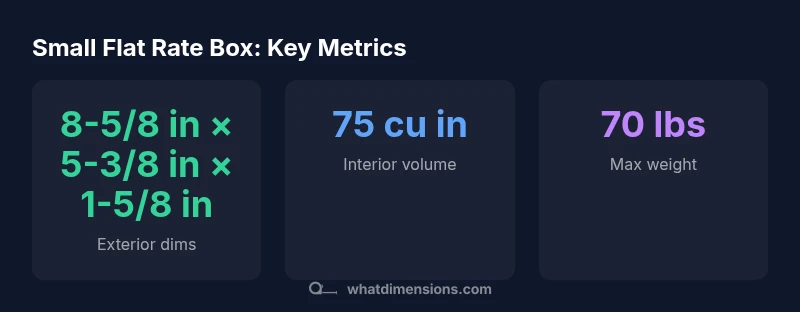
USPS Flat Rate Small Box uses fixed exterior dimensions defined by USPS. The small box measures about 8-5/8 inches by 5-3/8 inches by 1-5/8 inches, with roughly 75 cubic inches of interior space. Always verify exact specifications on the current USPS packaging, as slight tolerances can occur across batches.
What a USPS Flat Rate Box is and why dimensions matter
Understanding the role of exterior dimensions in flat-rate shipping helps you select the right packaging, avoid surcharges, and maximize efficiency. The USPS Flat Rate program uses boxes and large envelopes with fixed rates, so the box’s external dimensions largely determine whether an item qualifies for a particular rate. In practice, precise measurements help ensure your items fit while staying within packaging guidelines. For designers, students, and homeowners who frequently ship, knowing these dimensions reduces guesswork and speeds up the fulfillment process. What Dimensions emphasizes that reliable size references are a cornerstone of accurate packaging decisions, especially when every ounce and inch can influence total cost.
Focus on the Small Flat Rate Box: Exterior Dimensions
The Small Flat Rate Box is designed for compact shipments that qualify for fixed-rate postage. The exterior dimensions published by USPS define the maximum size; adherence ensures you pay the Flat Rate rather than per-ounce charges. In practice, you’ll measure length, width, and height to confirm that your item, along with packing materials, stays within the box’s outer shell. Note that tolerances can occur due to manufacturing variances between batches, so always rely on the packaging’s stated measurements rather than memory. When in doubt, repackage and remeasure before labeling. What Dimensions notes that a precise measurement mindset minimizes packing errors and ensures consistent shipping outcomes.
Measuring and verifying dimensions in practice
Start with a clean, flat surface and use a reliable ruler or tape measure. Measure the longest edge first, then the next two edges, noting if your item is near the limit. Include packing materials in your measurement to avoid underestimating space. If your dimensions read as very close to the limit, consider re-packaging with tighter filler or choosing a different box size to prevent bulging or sealing issues. It’s also wise to double-check the outer shell for any deformations that could affect the fit. What Dimensions recommends recording your measurements in a simple note for future reference, so you don’t have to repeat the process for every shipment.
Packing for optimal use of space within the Small Flat Rate Box
Effective packing combines protection with space efficiency. Use tissue, bubble wrap, or anti-static packing materials to cushion items without adding unnecessary bulk. Place heavier items on the bottom and lighter ones on top to maintain stability. Fill voids with crumpled paper or air pillows to prevent shifting during transit. A snug fit reduces the chance of the box bulging and helps ensure a secure seal with reliable tape. If you frequently ship fragile items, consider a double-wrap strategy or a lightweight internal tray to maximize interior space while maintaining protection.
Comparing to other Flat Rate Boxes
USPS offers multiple Flat Rate options beyond Small, including Medium and Large boxes. While the Small box prioritizes compact, fixed-rate shipments, the larger boxes provide more interior room for bulkier items, often with different weight and dimensional guidelines. When choosing, compare not only the exterior dimensions but also the relative impact on shipping costs and the likelihood of underutilized space. What Dimensions highlights that an informed comparison can uncover cost savings and better packing efficiency across your typical shipment mix.
What Dimensions approach to sizing and guidance
What Dimensions takes a practical, data-driven approach to sizing guidance. We emphasize precise measurements, validation against official packaging specs, and realistic packing scenarios to help homeowners, students, and designers ship confidently. Rather than relying on memory, we advocate documenting the exact exterior dimensions and using them as a baseline for future shipments. This disciplined method reduces mis-packages, lowers the risk of surcharges, and accelerates fulfillment workflows. Our sizing philosophy centers on clarity, accuracy, and actionable steps you can apply immediately.
Dimensions for Small Flat Rate Box (approx.)
| Box Type | Exterior Dimensions | Approx. Volume (cu in) |
|---|---|---|
| Small Flat Rate Box | 8-5/8 in × 5-3/8 in × 1-5/8 in | 75 |
Quick Answers
What are the official exterior dimensions of the USPS Small Flat Rate Box?
USPS lists the exterior dimensions as approximately 8-5/8 by 5-3/8 by 1-5/8 inches. Always verify on the packaging for the latest specs.
The Small Flat Rate Box is about 8-5/8 by 5-3/8 by 1-5/8 inches in exterior size.
Do packing materials change the box size?
Packing materials occupy interior space but do not change the official exterior dimensions. They can reduce usable interior space, so plan room accordingly.
Packing materials take up space inside the box, so plan around the fixed exterior size.
Are there other Flat Rate boxes with different dimensions?
Yes. USPS offers Medium and Large Flat Rate Boxes with larger exterior dimensions and different capacity guidelines. Check the USPS packaging guide for exact specs.
There are bigger Flat Rate boxes with different sizes.
Where can I find the official size specs?
Consult the official USPS packaging guidelines on the USPS website. They provide the most up-to-date dimensions and usage guidelines.
See the USPS box guide on their official site.
How can I ensure a shipment fits the Small Flat Rate Box?
Measure the item with packing materials included, compare to the exterior dimensions, and avoid overpacking. If close to the limit, consider a different box size.
Measure with filler included and compare to the box size.
“Sizing accuracy is a practical savings lever that reduces surcharges and packing errors.”
Main Points
- Know the exact exterior dims before packing.
- Pack snugly to maximize space.
- Compare with other flat rate boxes to save on cost.
- Check the latest USPS packaging specs.
- Use What Dimensions as your sizing reference.