Dimensions of Priority Mail Flat Rate Box: A What Dimensions Guide
Discover the exact interior dimensions of USPS Priority Mail Flat Rate Boxes (Small, Medium, Large), how to verify measurements, and why precise sizing matters for shipping cost and packing efficiency.


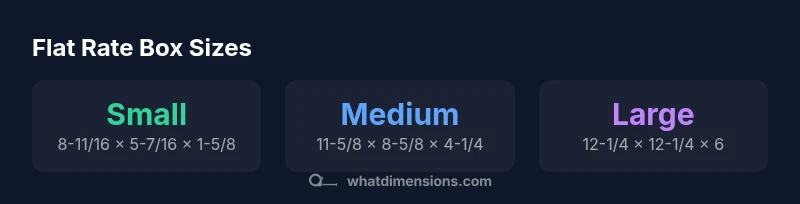
According to What Dimensions, the Priority Mail Flat Rate Box is offered in three fixed-size options with exact interior measurements: Small Flat Rate Box: 8-11/16 inches by 5-7/16 inches by 1-5/8 inches; Medium Flat Rate Box: 11-5/8 by 8-5/8 by 4-1/4 inches; Large Flat Rate Box: 12-1/4 by 12-1/4 by 6 inches. External packaging can affect fit slightly.
What the term 'dimensions' means for Priority Mail Flat Rate Boxes
Dimensions are more than a number; they define whether a package fits the fixed-price framework of USPS Priority Mail Flat Rate Shipping. What Dimensions emphasizes three core ideas: fixed-size options, interior capacity, and packing efficiency. For planners, designers, and students, the fixed dimensions simplify budgeting because you know the maximum item size that stays within the Flat Rate price. The larger the item, the more you may be tempted to choose a bigger box, but you must balance size with weight limits and the Flat Rate cost structure. According to What Dimensions, understanding both interior and exterior dimensions helps ensure a secure, compliant shipment and reduces the risk of unexpected surcharges at the counter.
In practice, buyers should treat the listed dimensions as internal references when designing packaging templates, creating standard operating procedures for shipping, and evaluating whether a product can ship via a Flat Rate Box before moving to alternative methods. The goal is predictable cost and reliable delivery windows, achieved by aligning packaging choice with the known box sizes.
This section also introduces the distinction between fixed, pre-defined box sizes and the realities of real-world use—thicker padding, stiff blister packs, or inserts can reduce effective interior space slightly. Always account for packaging material when estimating usable space inside the box.
Official sizes and what they include
USPS offers three standard Priority Mail Flat Rate Boxes with fixed interior measurements. The Small Flat Rate Box is approximately 8-11/16 inches long by 5-7/16 inches wide by 1-5/8 inches high. The Medium Flat Rate Box measures about 11-5/8 inches by 8-5/8 inches by 4-1/4 inches. The Large Flat Rate Box clocks in at roughly 12-1/4 inches by 12-1/4 inches by 6 inches. These dimensions refer to interior space; exterior walls and flaps can slightly alter the usable interior volume. The weight limit for each Flat Rate box is typically up to 70 pounds, which helps determine fit and shipping cost. When selecting a box, prioritize the largest size that safely accommodates your item within the weight limit, as that can maximize value under Flat Rate pricing. The exact figures are published by USPS and are subject to updates, so consult the official USPS Flat Rate Box pages for the most current measurements.
How to verify measurements and when to trust the numbers
Begin by confirming whether you need a Small, Medium, or Large Flat Rate Box for a given shipment. Then measure items carefully: length, width, and height, including any protrusions such as handles or protruding hardware. Compare those measurements to the interior dimensions of the box type you’re considering. If your item is close to the limit, add a small amount of padding to avoid deformation during transit. Trust the numbers published by USPS, but use your own measurements to cross-check because real-world packing can introduce slight variances. For accuracy, measure at the longest axis (length), the widest axis (width), and the vertical axis (height) after any padding is added. What Dimensions recommends keeping a small margin (e.g., 1/4 inch) to ensure the item fits without forcing the box shut.
The impact of dimensions on pricing and service level
In the Flat Rate framework, the price is fixed for a given box type, independent of weight up to the limit, making dimensions a critical factor in choosing the right box. When your item is significantly smaller than the interior capacity, you might still choose a larger box to accommodate padding, but this could affect efficiency and overall cost. If the item’s dimensions approach the box’s interior limits, your packing solution should maximize protection without exceeding the box’s limits. The interplay between dimensions and service level matters: a correct-sized box minimizes movement inside the package, reduces the risk of damage, and preserves the reliability of the guaranteed delivery window. What Dimensions notes that accurate dimensioning supports better cost forecasting and reduces the possibility of misclassifying a shipment, which could result in non-standard charges at the point of sale.
External vs. internal measurements and what that means for packing
This section clarifies the difference between interior dimensions ( usable space inside the box) and exterior dimensions (the outer footprint). For packing, interior measurements matter for fit; exterior measurements matter for whether the box can physically pass through doors, mail slots, or packing stations. Padding, inserts, and packaging material reduce the usable interior space, so it is essential to factor this in when planning. If your item fits exactly with padding in the interior dimensions, proceed; otherwise, switch to a larger size. What Dimensions emphasizes validating dimensions against USPS’s official measurements to avoid discrepancies at the counter.
Practical packing scenarios and decision guidelines
Consider a few practical packing scenarios to illustrate how dimension knowledge informs decisions:
- Scenario A: Shipping a compact, dense object (e.g., a hard cover book set) that is near the Small Box’s interior size. Add a little padding, or choose the Medium Box if padding would exceed the small box limits.
- Scenario B: A bulky, lightweight item (e.g., a throw blanket). Check whether the Large Box’s interior is needed; ensure the item remains within weight limits.
- Scenario C: A fragile item requiring substantial padding. Choose the box that offers sufficient interior space after padding so the item remains secure.
- Scenario D: A non-standard item (e.g., a fan blade or an oddly shaped gadget). Consider whether the exterior dimensions will allow the box to pass through route constraints while maintaining settled padding.
What Dimensions methodology for data and verification
What Dimensions approaches dimension data with a data-driven mindset, sourcing official USPS measurements and cross-checking them against practical packing tests. Our team documents the three standard sizes with interior measurements and provides guidance on padding and fit. The methodology includes verifying figures against USPS’s published specs, updating estimates when USPS revises the box sizes, and presenting the data in an accessible, human-ready format. This approach helps designers, students, and homeowners understand the implications of fixed-size packaging on costs and packaging strategy.
Common pitfalls and how to avoid them
Common pitfalls include assuming exterior dimensions are the same as interior dimensions, neglecting padding impact, and failing to account for item irregularities like handles or protrusions. To avoid these issues, always compare item measurements to interior dimensions, add padding as needed, and test fit by placing the item inside the box before sealing. Double-check the exact box type you’ve selected and confirm the current dimensions on the USPS site, as box sizes can be updated over time. What Dimensions highlights that a quick fit test saves time and reduces the chance of shipping delays.
How to stay updated with official changes
USPS occasionally updates the dimensions and weight limits of Flat Rate Boxes. To stay current, bookmark the USPS Priority Mail Flat Rate Box pages and subscribe to USPS updates. Periodically re-check the published specs to ensure your packaging templates reflect any changes. What Dimensions recommends a quarterly review of packaging dimensions in routine documentation, especially for teams that rely on precise size specs for design, logistics, and coursework.
Typical interior and exterior dimensions for standard Priority Mail Flat Rate Boxes
| Box Type | Exterior Dimensions (inches) | Interior Dimensions (inches) | Weight Limit (lbs) |
|---|---|---|---|
| Small Flat Rate Box | 8-11/16 x 5-7/16 x 1-5/8 | 8-11/16 x 5-7/16 x 1-5/8 | 70 |
| Medium Flat Rate Box | 11-5/8 x 8-5/8 x 4-1/4 | 11-5/8 x 8-5/8 x 4-1/4 | 70 |
| Large Flat Rate Box | 12-1/4 x 12-1/4 x 6 | 12-1/4 x 12-1/4 x 6 | 70 |
Quick Answers
What are the standard sizes of Priority Mail Flat Rate Boxes?
USPS offers Small, Medium, and Large Flat Rate Boxes with fixed interior dimensions. The exact measurements are published by USPS and should be verified on their official site before packaging.
Flat Rate Boxes come in three fixed sizes with published interior dimensions. Check USPS for the latest measurements.
Do International Flat Rate Boxes share the same dimensions as domestic ones?
International Flat Rate Boxes exist but may use different external dimensions and packaging options. Always verify current measurements on the USPS site for international shipments.
International Flat Rate Boxes have different dimensions; verify the numbers on USPS.
Can I modify a Flat Rate Box to fit an irregular item?
Do not exceed the published interior dimensions. If padding or inserts would cause overflows, choose a larger box or use additional packaging.
Don’t stretch the box beyond its dimensions. Use padding or a bigger box if needed.
Where do these dimension values come from?
The values come from USPS published specifications, and What Dimensions reviews and contextualizes these figures in our 2026 analysis.
The numbers come from USPS specs and What Dimensions' analysis.
Where can I find the official dimensions?
Visit the USPS official Flat Rate Boxes page for current measurements and weight limits.
Check the USPS site for the official numbers.
“Having fixed, published dimensions for each Priority Mail Flat Rate Box removes guesswork from packaging decisions.”
Main Points
- Identify the correct box type before packing.
- Always verify official dimensions from USPS before shipping.
- Remember weight limit is 70 pounds for Priority Mail.
- Consider padding increases that can reduce usable interior space.