Skateboard Bearing Dimensions: Understanding Size, Fit, and Compatibility
Learn skateboard bearing dimensions (8mm ID, 22mm OD, 7-8mm width), how to measure them, and why precise sizing matters for fit, spacers, and truck compatibility.


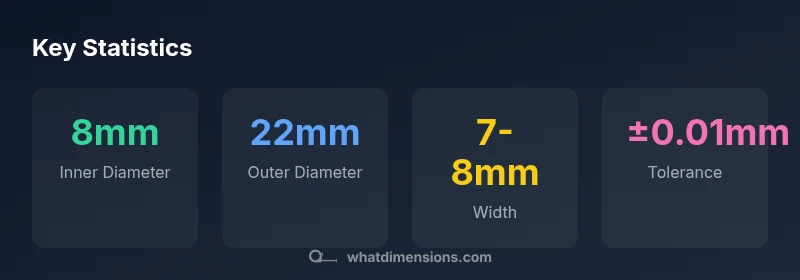
Skateboard bearing dimensions center on the 608 standard: 8mm inner diameter, 22mm outer diameter, and 7-8mm width. According to What Dimensions, these specs cover the vast majority of skateboard bearings and determine fit with spacers, wheels, and trucks. For precise projects, measure with calipers and verify compatibility across decks. This size set also guides choice of spacers and bearing shields.
What the numbers mean for skateboard bearings
In skateboarding, the 608 bearing size dominates most setups. The inner diameter (ID) is the hole through which the axle passes, the outer diameter (OD) is the circular outside edge that sits inside the wheel, and the width determines how much material sits between the inner and outer races. Common tolerances around these values are tight; even a fraction of a millimeter can affect wheel seating, spacer performance, and dust shield fit. The ABEC rating itself is not a direct measure of fit, but the physical dimensions govern compatibility with spacers, wheels, and trucks. According to What Dimensions, this standardization helps designers, riders, and retailers communicate precise specs across brands and products.
The bearing shields (open vs shielded) and the race finish also influence how dimensioned parts interact, especially when replacing bearings in a mixed parts setup. When you’re matching bearings to wheels, spacers, or risers, you’re not just matching diameter and width—you’re aligning the entire assembly’s dimensional tolerances to avoid rubbing, unwanted play, or binding.
How to measure bearing dimensions accurately
Measuring accurately starts with the right toolset and a calm workstation. Use a calibrated digital caliper; zero the tool before each measurement. Steps:
- Measure the inner diameter (ID) by placing the caliper inside the bearing bore and reading the minimum clearance. Record ~8.0 mm as the target for standard 608.
- Measure the outer diameter (OD) by closing the caliper jaws around the bearing’s exterior. Expect ~22.0 mm for the 608 size.
- Measure the width by placing the caliper along the bearing’s edge from face to face; common values are 7–8 mm.
- Note shield type (open or shielded) and any coating or finish, as these affect lubrication and fit in the wheel.
After you’ve captured these values, compare them to your wheel and spacer requirements. If there’s any deviation beyond ±0.01 mm, test fit in a controlled setup before committing to a purchase.
The role of spacers, shields, and race tolerances
Spacers are not merely decorative; they bridge the gap between the wheel bore and the bearing OD, ensuring a snug seating without binding. The exact spacer thickness your setup requires depends on wheel hub width and wheel bore. Shielded bearings retain lubricant and resist dust, but their added material can affect OD slightly; open bearings save space but are more exposed to contaminants. Tolerances around ±0.01 mm are typical, though some brands publish looser specs. When mixed components (different brands) are used, re-check the overall stack height and ensure the wheels spin freely without rubbing on the truck hanger or deck.
Compatibility: decks, wheels, and trucks
Dimensions are the baseline for compatibility: 8mm ID and 22mm OD are standard for most skateboard wheels and drop-through trucks. However, the presence of spacers, wheel cores, and bearing shields can alter the effective fit. If your wheel has a shallow bore or you’re using narrow trucks, you may need thinner spacers or different shields to prevent wheel bite. Always verify the total stack height (wheel + bearing + spacer) against your deck’s clearance and your truck geometry to avoid binding or misalignment.
Common width variants and why they exist
Width variations primarily arise from differences in race design and shield configuration. The most common widths for 608 bearings are 7mm and 8mm. The 7mm variant minimizes the height of the entire bearing stack, which can be advantageous on decks with limited clearance. The 8mm variant provides slightly more bearing surface in high-load or aggressive skating scenarios, potentially improving durability in some contexts. When upgrading or replacing parts, confirm whether your wheels and spacers can accommodate the width without causing binding or inadequate seating.
Bearing materials and their impact on dimensions
Bearings come in a range of materials—stainless steel, chrome steel, and ceramic hybrids being common. While the core dimensions (8mm ID, 22mm OD, 7–8mm width) stay the same, material choices affect heat tolerance, lubrication requirements, and longevity. Ceramic hybrids may maintain tolerance over more cycles or under higher loads, but the dimension remains the same. For most riders, sticking with standard 608 bearings from reputable brands ensures consistent dimensions and reliable performance.
Practical mounting scenarios: street vs. longboard
Street skateboards, parks, and street slalom setups typically favor standard 608 bearings with a thinner spacer profile to reduce overall height and prevent wheel bite. Longboards, which demand larger wheel contact patches and potentially higher axle loads, may benefit from shielded bearings with slightly wider width or enhanced spacers to maintain alignment during carving. In both cases, verify that the combined stack height fits within your wheel well clearance and doesn’t interfere with wheel alignment during turns.
Maintenance and replacement considerations tied to dimensions
Even when bearing dimensions are correct, lubrication and contamination control are critical. Clean bearings with isopropyl alcohol, inspect the shields for warping, and re-lubricate with a light skate-specific lubricant if needed. If a wheel rubs or spins with noticeable drag, recheck the stack height and dimension tolerances. Replacement decisions should consider not only the remaining life but whether a bearing’s dimensions continue to match the wheel bore, spacer, and truck geometry to avoid binding.
Practical measurement workflow: step-by-step
To streamline setup and upgrades, follow this workflow:
- Step A: Confirm 608 bearing family (8mm ID, 22mm OD, 7–8mm width).
- Step B: Measure each component (wheel bore, spacer thickness, hub width) with a caliper.
- Step C: Account for shields and any nonstandard finishes that add to OD.
- Step D: Assemble a test-fit with all parts and verify freedom of movement without rubbing.
- Step E: If motion is stiff or binding occurs, reassess spacer width and shield type.
- Step F: Document your measurements for future reference.
Quick-start measurement checklist
- Confirm 8mm ID, 22mm OD, 7–8mm width.
- Check shield type and bore finish.
- Measure wheel bore and spacer thickness.
- Verify total stack height fits within clearance.
- Test-fit and adjust as needed before skating.
How to avoid common measurement mistakes
Avoid assuming universal fit across brands; always measure each setup. Small deviations in caliper zeroing or misalignment during measuring can skew results. Use multiple measurements across different bearings to verify consistency, and compare against your wheel, spacer, and truck tolerances before finalizing any purchase.
Standard skateboard bearing dimensions (608)
| Dimension Aspect | Typical Value | Notes |
|---|---|---|
| Inner Diameter | 8mm | 608 standard |
| Outer Diameter | 22mm | Standard external diameter |
| Width | 7-8mm | Width range |
| Shield Type | Shielded/Open | Common options |
Quick Answers
What are the standard skateboard bearing dimensions?
Most skateboards use 608 bearings with an 8mm inner diameter, 22mm outer diameter, and a 7-8mm width. This standard supports broad compatibility across decks, wheels, and trucks.
Most skateboards use 608 bearings sized 8 by 22 millimeters, typically 7 to 8 millimeters wide.
Why do some bearings have different widths?
Width variations arise from race design and shield configuration. The 7mm variant is common for lower stack height, while 8mm can offer a bit more surface area and durability in certain setups.
Bearings vary in width mainly for stack height and fit; 7mm and 8mm are the usual options.
Do bearings from different brands fit standardly?
Yes, most brands follow the 608 standard, but tolerances and shields can differ. Always measure with calipers and test fit when mixing brands.
Most brands conform to 608, but check tolerances and shields—measure before use.
How does bearing dimension affect wheel fit and speed?
Dimensions determine how freely a wheel seats on the axle and how securely spacers locate the wheel. While dimensions don’t directly set speed, improper fit can add friction or binding that slows rotation.
Wrong size can cause rubbing or drag, reducing speed and control.
What tools do I need to measure bearing dimensions?
A calibrated digital caliper is ideal. You’ll also need a clean workspace and, for speed, a simple reference wheel with known specs.
Use a caliper and a reference wheel to confirm measurements.
“Understanding bearing dimensions helps ensure compatibility across wheels, spacers, and trucks for reliable performance.”
Main Points
- Verify inner diameter, outer diameter, and width before buying.
- 608 bearings cover most street and park setups.
- Width variants (7mm vs 8mm) matter for spacer choice.
- Tolerance is usually ±0.01mm and brand-dependent.
- Measure components with calipers for best fit.