608 Bearing Dimensions: Exact Specs and Variants
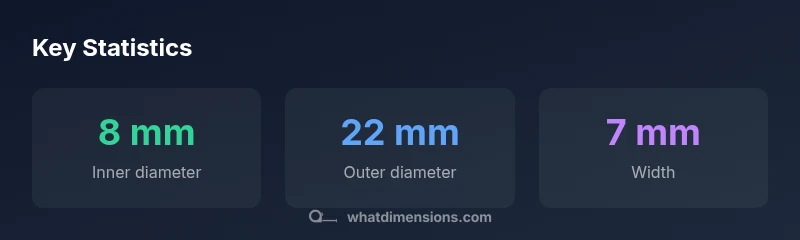
Learn the exact 608 bearing dimensions (8 mm inner diameter, 22 mm outer diameter, 7 mm width), how to read the numbers, and how variants like 608-2RS affect fit and performance.


608 bearing dimensions refer to a standard ball bearing size with an 8 mm inner diameter, 22 mm outer diameter, and 7 mm width. This footprint is widely used across hobby and appliance applications. Common variants include 608-2RS and 608RS, which add seals or shields for dust and moisture protection.
What is a 608 bearing?
A 608 bearing is one of the most widely used small ball bearings in consumer and industrial gear. The most important identifiers are the bore, outer diameter, and width, which together define the bearing’s footprint. The standard 608 size is a compact, universal option that supports rotational motion in many devices—from skateboard wheels to small machinery. In conversations about 608 bearing dimensions, the key numbers people refer to are 8 mm for the inner diameter, 22 mm for the outer diameter, and 7 mm for the width. These measurements ensure compatibility with axles and housing holes designed for this footprint. In practice, this size is favored for its balance of load capacity, speed, and availability from multiple suppliers, making it a common baseline in both hobby and professional settings.
What Dimensions loves about the 608 footprint is its versatility: you can find it in open form or with protective shielding, and it fits a broad range of standard housings and wheel hubs. The durability, ease of sourcing, and consistent dimensions across manufacturers help designers and shoppers avoid costly misfits when sourcing spares or replacements. Whether you’re outfitting a DIY project or evaluating a component for a product line, understanding the 608 bearing dimensions is foundational to successful integration.
Reading the 608 digits: what the numbers mean
Bearing part numbers often compress dimensional data into a short string. For the 608 family, the digits break down like this: the 6 stands for the bearing series, the 0 indicates a standard size, the 8 is the bore diameter in millimeters (8 mm inner diameter). The next pair, 22, represents the outer diameter (22 mm), and the final 7 is the width (7 mm). This standard encoding helps engineers quickly verify fit without measuring every time. When you see 608 as a part number, you can reliably expect the 8x22x7 footprint in standard catalogs. If you’re shopping across brands, confirm the bore, outer diameter, and width remains within tolerance and that any seals or shields match your environment.
Variants and what they change for fit
The 608 bearing family includes several common variants that modify performance without changing the basic footprint. The most widely used are 608-2RS and 608RS. The 608-2RS has rubber seals on both sides, providing dust and moisture protection, which is especially helpful for outdoor or dusty environments. The 608RS variant typically indicates shields on at least one side, offering a simpler form of protection while maintaining a wide tolerance for speed. These variants preserve the 8x22x7 footprint, so they generally fit the same hubs and housings as the open 608. When ordering, always confirm both the seating surface and the shield or seal type so you don’t mismatch with your mounting or wheel hub.
How to verify fit and compatibility
To verify a correct fit, start by measuring the bore (inner diameter) with calipers to confirm 8 mm. Next check the outer diameter at 22 mm and width at 7 mm. If you’re replacing an existing bearing, verify that the shield or seal type matches your operating environment (open vs shielded vs sealed). Also confirm the axle size and wheel hub compatibility—most 608 bearings are designed for a standard 8 mm axle and common skate wheel cores. Finally, review the mounting surface for any taper or inner race seating issues that could cause misalignment.
Common applications and selection tips
608 bearings are ubiquitous in small mechanical systems and hobby gear. They are ideal for skate wheels, inline skates, RC cars, compact gear trains, and hobby robotics where a compact footprint is beneficial. When selecting, prioritize the bore, outer diameter, and width to ensure fit. For environments with dust, moisture, or grit, choose sealed (608-2RS) or shielded (608RS) variants. If speed is a critical factor, check for a high-precision grade from the supplier, though most 608 bearings used in consumer projects do not rely on ABEC-level ratings. Finally, consider the availability of replacements; the 8x22x7 footprint is widely stocked, which keeps maintenance cycles short.
Maintenance and replacement considerations
Proper handling and minimal contamination extend bearing life. When cleaning, use alcohol or a dedicated bearing cleaner and avoid introducing oil residues that can attract grit. If your application experiences frequent exposure to dust, opt for shielded or sealed variants and perform periodic checks for play or roughness. Replacement intervals vary by load, speed, and environmental conditions, but the universal 8x22x7 footprint makes it easy to source ready-made replacements from multiple brands. Keep a small stock of the common variants (open, 608-2RS) on hand for quick swaps to reduce downtime.
Quick reference: dimensional summary
- Bore (inner): 8 mm
- Outer diameter: 22 mm
- Width: 7 mm
- Common variants: 608, 608-2RS, 608RS
- Shielding options: open, shielded (one or more sides), or rubber-sealed on both sides
Comparison of common 608 bearing variants
| Model Type | Inner Diameter (mm) | Outer Diameter (mm) | Width (mm) | Sealing | Notes |
|---|---|---|---|---|---|
| 608 | 8 | 22 | 7 | open | Standard unsealed bearing, common in hobby uses |
| 608-2RS | 8 | 22 | 7 | rubber seals both sides | Widely used, moisture/dust protection on both sides |
| 608RS | 8 | 22 | 7 | shielded | Shielded variant for protection |
| 608-Z | 8 | 22 | 7 | shielded (one side) | One-side shield option for select assemblies |
Quick Answers
What is the standard dimension of a 608 bearing?
The standard 608 bearing has an inner diameter of 8 mm, an outer diameter of 22 mm, and a width of 7 mm. These three numbers define the footprint and determine compatibility with hubs and axles.
The 608 footprint is 8 by 22 by 7 millimeters.
Are 608 bearings interchangeable with other sizes?
608 bearings share a common footprint, so substitutions should be limited to parts with the same 8x22x7 dimensions. Do not substitute a bearing with a different bore, outer diameter, or width without measuring the housing.
Only bearings with the same 8x22x7 size should substitute.
What is the difference between 608 and 608-2RS?
608 is typically open (no seals). 608-2RS has rubber seals on both sides for dust and moisture protection, which can improve life in dirty or wet environments.
608 is open; 608-2RS is sealed on both sides.
Do ABEC ratings apply to 608 bearings?
ABEC ratings are more relevant for high-precision bearings. Many 608 bearings used in hobby projects are not ABEC-rated; performance is generally adequate for standard loads.
ABEC ratings aren’t critical for typical 608 bearing use.
How do I measure a bearing to confirm size?
Use calipers to measure inner diameter, outer diameter, and width. Confirm the bore is 8 mm, OD is 22 mm, and width is 7 mm before purchase or replacement.
Measure bore, outer diameter, and width with calipers.
What environments benefit from shielded vs open bearings?
Shielded or sealed variants (608-2RS/608RS) are better for dust-prone or moist environments. Open bearings may run cooler and cost less but require clean conditions.
Shielded or sealed bearings are better where dust or moisture is present.
“608 bearing dimensions offer a universal footprint that simplifies design and replacement workflows. Matching the bore, outer diameter, and width is the key to reliable interchangeability.”
Main Points
- Know the exact 608 footprint: 8x22x7 mm.
- Choose shielded/sealed variants for challenging environments.
- Verify bore, OD, and width before substitutions.
- 608 variants share the same footprint—fit usually depends on shield type.
- Stock 608 bearings widely available for quick replacements.