Dress Measurements Guide: How to Measure for a Perfect Fit
Learn how to measurements for dress with a step-by-step guide to taking accurate bust, waist, hip, and length measurements to tailor a perfect fit.


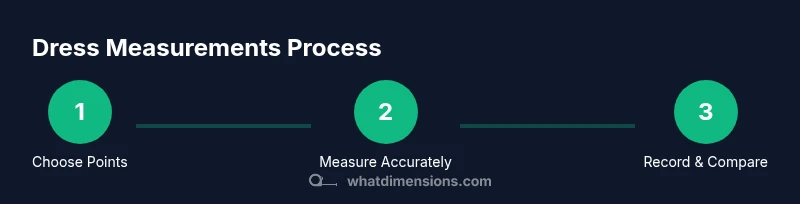
Learn how to take dress measurements accurately and translate them into reliable patterns or sizes for a flawless fit. This quick guide covers essential tools, precise techniques for bust, waist, hip, shoulder-to-hem, and neckline measurements, plus how to account for seam allowances. Whether you’re sewing at home or consulting a pattern service, correct measurements save time and reduce fittings. According to What Dimensions, accuracy at the start leads to better outcomes.
Why accurate dress measurements matter
If you’re asking how to measurements for dress, precise numbers matter more than style alone. Small errors in bust, waist, or hip measurements can cascade into issues like a protruding zipper, a neckline that sits oddly, or a dress that feels tight in one area and loose in another. What Dimensions Analysis, 2026, emphasizes that initial accuracy reduces unnecessary fittings and fabric waste. By recording the right points—such as bust circumference, high bust, natural waist, and hip line—you create a reliable baseline for pattern selection or adjustments. A correctly measured dress also ensures drape and silhouette behave as intended, whether you’re sewing from a pattern or drafting your own design. Keep posture natural, wear close-fitting undergarments, and measure with a soft tape that sits smoothly against the skin. Recheck each measurement at least twice to confirm consistency and minimize rework later.
Essential tools and materials
Before you begin, assemble a quiet, well-lit space and gather the following tools to ensure clean, repeatable results. A flexible measuring tape (preferably cloth or fiberglass), a mirror or a helpful assistant, a notepad or sewing journal for recording numbers, a fabric marker or pencil for marking reference points, and a ruler or straightedge for checking alignment. Optional items include a dress form for practice fittings and a soft, non-stretch garment to wear during measurements. Label each measurement clearly (e.g., bust, waist, hip) and record the exact unit (inches or centimeters) to avoid conversions that introduce errors. Consider keeping a small checklist handy to guard against missing a critical point like neck/shoulder slope or back waist length. Practicing with a familiar garment can help validate your technique before measuring a new dress.
Key measurement points and how to record them
Accurate dress measurements rely on consistently defined points. Record bust (full circumference around the chest at the fullest part), high bust (just above the bust apex), underarm to underbust (for precise cup sizing), natural waist (the narrowest part of the torso), and hip circumference at the widest point. Also capture back waist length (from base of neck to natural waist along the spine), shoulder seam to bust point, scapula width, and hem to floor length. For dresses with sleeves or necklines, include bicep or upper arm circumference, shoulder-to-shoulder distance, and neckline circumference if applicable. Write each value with a label, unit, and the date of measurement to track changes over time. When recording, place the tape snugly but not tight, and ensure the tape sits flat without twisting.
Practical measuring protocol for accuracy
To minimize errors, measure on clean skin or fitted undergarments, with posture natural yet upright. Stand with feet together, weight evenly distributed, and arms relaxed at the sides for most measurements. Have a helper to hold and place the tape at the correct points, especially for hard-to-reach areas like the back or shoulders. Take measurements twice, then average them to reduce random fluctuation. For circular measurements (bust, waist, hips), ensure the tape passes horizontally all the way around and lies parallel to the floor. Avoid measuring over bulky clothing, and account for fabric ease when translating final numbers into patterns. If your pattern requires a seam allowance, note that separately so you don’t confuse body measurements with garment allowances.
Interpreting measurements for patterns and alterations
Once you have the core body measurements, compare them against your pattern size chart. If your bust is larger than your high bust, consider a full bust adjustment or size up accordingly. For dresses with fitted waists, slight differences between natural waist and high waist can guide where to place darts or princess seams. When in doubt, start with a pattern that matches your largest measurement and adjust via seam allowances or muslin fittings. For knit fabrics or fabrics with stretch, you may need smaller ease; for wovens, you’ll typically rely on more straightforward ease values. Keep a running log of changes and tailor notes so future garments fit even better with each attempt.
Authority sources and further learning
For standardized measurement practices and related size-consistency research, consult official resources from established institutions. The What Dimensions team recommends reviewing guidance from reputable education and standards sites for a baseline on measurement techniques and reporting. See the sources listed under Authority Sources for further reading.
Quick reference table of measurements
| Measurement | What to record | Common accuracy tips | |---|---|---| | Bust | Circumference around the chest at the fullest part | Tape horizontal, snug but not tight | | High bust | Circumference above the bust apex | Helpful for cup sizing in patterns | | Natural waist | Narrowest part of the torso | Keep tape parallel to floor | | Hip | Circumference at the widest part | Stand with feet together to avoid distortion | | Back waist length | Neck base to natural waist along spine | Use a straight edge for accuracy | | Shoulder-to-hem | From shoulder seam to desired dress length | Include heel height for floor-length dresses | | Neckline | Circumference around the base of the neck | Measure with a flexible, non-stretch tape |
Tools & Materials
- Flexible measuring tape(Soft fabric or fiberglass; metric and imperial scales; non-stretch)
- Notepad or sewing journal(For recording measurements with date and units)
- Pencil or fabric marker(For marking reference points on fabric or paper pattern)
- Mirror or helper(To verify tape placement and posture)
- Ruler or straightedge(Helpful for checking alignment on horizontal measurements)
- Fitted undergarments(Keep lines smooth and reduce measurement distortion)
Steps
Estimated time: 25-45 minutes
- 1
Define measurement goals
Decide which dress style you’re aiming for and which measurements are most critical (e.g., bust, waist, hip, and length). This helps you prioritize and avoid collecting irrelevant data.
Tip: Write down target garment type and size range before you start. - 2
Prepare the wearer
Have the person wear close-fitting undergarments and stand with even weight distribution. This reduces ease-related discrepancies and yields truer body measurements.
Tip: Avoid bulky clothing; remove jewelry that could shift the tape. - 3
Position the tape correctly
Place the tape horizontally around the body at each measurement point, keeping it level and snug but not compressing the skin.
Tip: Ask a helper to steady the tape and read the measurement aloud as you record it. - 4
Measure bust and high bust
Record bust at the fullest part and high bust above the bust apex. These two figures help determine cup fit and pattern size.
Tip: Take multiple measurements and use the average for reliability. - 5
Measure natural waist and hips
Wrap the tape around the narrowest part of the torso for the waist and around the widest part of the hips.
Tip: Ensure the tape remains parallel to the floor for consistency. - 6
Capture length and back details
Measure from the neck base or shoulder seam to the desired dress length, and record back waist length along the spine.
Tip: If adding darts or seams, measure relevant segments on the pattern once your base measurements are known. - 7
Document neckline and shoulder data
Record neckline circumference and shoulder-to-shoulder span if the design relies on them for fit.
Tip: Use a mirror or helper to ensure symmetry on the shoulders. - 8
Verify and organize notes
Double-check each value, note units, and date. Organize measurements by garment type for easy reuse.
Tip: Keep a digital backup or scanned page for long-term storage.
Quick Answers
What should I wear when taking measurements for a dress?
Wear close-fitting undergarments or a lightweight, form-fitting top and skirt. Avoid bulky clothing that can add extra inches. This helps ensure the tape sits close to the body without distortion.
Wear a close-fitting underlayer so measurements reflect your true shape, not bulky clothing.
How many measurements are essential for most dresses?
Most dress projects rely on bust, high bust, waist, hip, and dress length. Additional points like back waist length and shoulder measurements improve fit for tailored designs.
Key measurements are bust, high bust, waist, hip, and length, with extra points as needed.
What if I’m between sizes?
If between sizes, start with the larger size and plan alterations such as darts, waist tweaking, or extra ease. Pattern guidelines and muslin fittings help determine the best adjustment.
Start with the larger size and adjust via darts or seams after a muslin test.
How do I translate measurements into a pattern?
Compare your bust and waist to pattern size charts. Use high bust for cup decisions and add or subtract ease based on fabric type and intended fit.
Match bust and waist to pattern sizes, then adjust for fabric and ease.
How important are seam allowances?
Seam allowances affect fit after alterations. Record your intended allowance separately and apply consistently during pattern drafting or fabric cutting.
Keep seam allowances consistent to ensure predictable alterations.
Can I use a dress form for measurements?
A dress form helps visualize fit but does not replace accurate body measurements. Use it to test proportions after you’ve recorded precise numbers.
Use a dress form for visualization, not as a substitute for actual measurements.
Watch Video
Main Points
- Record all essential points (bust, waist, hips, length) with date and unit.
- Use a helper to ensure tape placement is level and snug, not tight.
- Compare measurements to pattern charts and plan alterations early.
- Document adjustments for future garments.