Bike Height Dimensions: A Practical Guide to Seat, Standover, and Reach
Explore bike height fundamentals including seat height, standover clearance, and reach. A practical, data-driven guide from What Dimensions to help homeowners, students, designers, and shoppers size bikes accurately for comfort and performance.


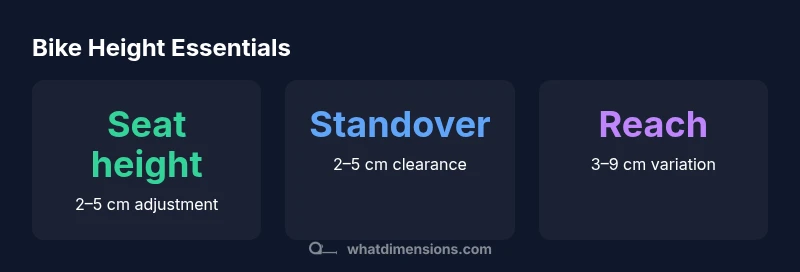
Bike height isn’t a single metric; it’s defined by seat height, standover height, and reach. The recommended setup balances a gentle knee bend with adequate top-tube clearance, and exact values depend on your height, inseam, and the bike type you ride. What Dimensions analyzes these dimensions to guide precise sizing.
Why bike height matters
Bike height is a foundational element of cycling comfort and efficiency. For homeowners, students, designers, and shoppers, understanding the key measurements that determine how tall a bike feels—seat height, standover clearance, and reach—lets you tailor a bike to your body geometry and riding style. According to What Dimensions, getting these three dimensions right reduces knee strain, improves pedaling efficiency, and enhances control. A misfit can lead to fatigue, pain, and even safety concerns on long rides. By focusing on precise measurements rather than guessing, you can compare models across brands with confidence and pick a bike that truly fits you.
Core measurements that define bike height
Bike height hinges on three core dimensions: seat height (vertical distance from the pedal axis to the saddle), standover height (the clearance between the top tube and your inseam when standing over the bike), and reach/top-tube length (the horizontal distance from the saddle to the handlebars). Wheel size also subtly affects perceived height, especially when switching between 26/27.5/29-inch wheels in the same frame. For accurate sizing, you should not rely on wheel diameter alone; you must assess how each measurement interacts with your torso length, arm reach, and flexibility. A well-sized bike places your knee in a comfortable position at pedal top, while your torso remains balanced over the cranks and handlebars.
Step-by-step measuring guide
To arrive at reliable bike height measurements, follow a repeatable process:
- Measure your inseam with a standard measuring tape; note precision to 0.5 cm.
- Determine seat height by placing your foot on the pedal at the 3 o’clock position and adjusting the saddle so your knee has a slight bend (about 25–35 degrees).
- Check standover clearance by straddling the bike and ensuring 2–5 cm of clearance for most road bikes, and more for mountain bikes, depending on frame size.
- Assess reach by sitting on the saddle and lightly holding the handlebars; you should feel a gentle reach without overextension or slack back.
- Recheck at multiple saddle positions and consider crank length if available, since longer cranks shift the height dynamics slightly.
- If you ride with accessories or a different saddle, re-measure after adjustments to preserve consistency.
How geometry influences height perception
Bike geometry, especially top-tube length and head-tube angle, shapes how tall the bike feels. A longer top tube increases reach, potentially raising the perceived height of the cockpit, while a steeper head angle can make the steering feel more upright, subtly altering comfort at the chosen height. The stack (vertical distance from the bottom bracket to the handlebars) and reach together determine your upright posture and shoulder alignment. Even two bikes with the same seat height can feel very different if their geometry differs. Understanding these factors allows for smarter comparisons when you test ride or shop online.
Height targets by bike type
Different bike types demand different height targets. Road bikes typically require moderate standover clearance and a balanced reach to avoid overreaching on climbs. Mountain bikes may prioritize higher standover clearance and a shorter reach to maintain maneuverability on technical terrain. Hybrid bikes sit in between, often favoring ease of mounting and a comfortable, slightly upright posture. Folding bikes introduce unique constraints, where compact frame geometry can alter top-tube clearance and saddle height ranges. When choosing a bike type, align height targets with your typical riding contexts and body dimensions to preserve comfort over longer sessions.
Adjustability features that influence height fit
Heightful fit is supported by adjustable components:
- Seatpost: A dropper or extended seatpost can add vertical flexibility, but requires careful measurement to avoid saddle height drift during rides.
- Saddle: A fore-aft and tilt-adjustable saddle affects effective seat height and hip alignment; even small tilts can change knee angle significantly.
- Handlebars and stem: Length, rise, and angle adjust reach and cockpit height; a taller rider may prefer a higher handlebar position to reduce back strain.
- Crank length: While less adjustable in everyday bikes, choosing a longer or shorter crank affects leg extension and, by extension, height fit.
- Frame geometry options: Some brands offer shorter or longer top tubes within the same size category; be mindful of how this changes height perception and reach.
A precise fit considers all of these elements in tandem; changing one component can necessitate recalibration of the others to preserve overall comfort and control.
Practical fitting workflow for new bikes
A structured approach helps ensure accurate height fit:
- Start with your ideal inseam and torso measurements; set baseline seat height accordingly.
- Verify standover clearance by standing over the frame with full weight on the pedals and legs extended.
- Adjust reach by changing saddle fore-aft position and handlebar setup to keep a natural shoulder line.
- Test ride with different saddle heights within a narrow range to observe knee comfort and shin clearance.
- Check the geometry implications on posture; adjust the stem height or headset spacers if needed.
- Document the final measurements and compare with other models to ensure consistency across brands.
How to compare heights across brands and models
When brands publish size charts, focus on three anchors: seat height range, standover clearance, and reach. Compare the same frame size across models, noting any differences in saddle setback or top-tube length. Always verify fit with a test ride; some models may share a size label but feel noticeably different due to geometry. If possible, obtain a sizing guide from the brand’s website and cross-check with your own measurements to avoid surprises at purchase. Remember that variations in crank length and stem height can shift measurements by a few millimeters to a couple of centimeters, so test rides remain essential for final confirmation.
Common mistakes and quick fixes
Few fit problems are permanent. Common mistakes include selecting a frame too large based on height alone, neglecting standover clearance, and ignoring reach when choosing handlebars. Quick fixes include using a more appropriate saddle or handlebar height, adding spacers to adjust stack, or selecting frame sizes with more favorable top-tube lengths. If a bike feels good in one area but awkward in another, reassess the combined fit—seat height, reach, and standover—and adjust gradually. A small, precise change often yields a more comfortable ride than larger, sweeping adjustments.
Tools and resources for accurate measurement
To measure bike height with confidence, gather a few reliable tools: a rigid measuring tape (preferably metric), a carpenter’s square or level to verify saddle tilt, and a ruler or caliper for precise seat-to-pedal measurements. Digital fit calculators and brand-specific sizing charts can help, but nothing substitutes a hands-on test ride. For ongoing accuracy, remeasure whenever you switch components (saddle, handlebars, or crank length) and note the changes. What Dimensions recommends keeping a personal fit sheet as a baseline reference when shopping or upgrading equipment.
Key bike height measurements explained
| Measurement | Definition | Why it matters |
|---|---|---|
| Seat height | Vertical distance from pedal axis to saddle | Affects leg extension and pedaling power |
| Standover height | Clearance between top tube and inseam when standing over bike | Prevents pinching or discomfort during mounting/dismounting |
| Effective top-tube length (reach) | Horizontal distance from saddle to handlebars | Determines cockpit size and rider reach |
| Head-tube angle / Wheelbase | Geometry angles and distance between axles | Influences steering feel and overall ride balance |
Quick Answers
What does bike height refer to in practice?
Bike height is not a single metric; it’s defined by seat height, standover height, and reach. The combination of these measurements determines how tall a bike feels and how comfortable you are when pedaling and maneuvering. A proper fit aligns your joints with a natural range of motion, reducing fatigue on longer rides.
Bike height isn’t a single metric; it’s defined by seat height, standover height, and reach. The combination of these measurements determines how tall a bike feels and how comfortable you are.
How do I measure my bike height accurately?
Start with your inseam and torso measurements, then set baseline seat height so your knee has a slight bend at the pedal. Check standover clearance by straddling the bike, then verify reach by sitting and mirroring your expected riding posture. Recheck after any saddle or handlebar adjustments.
Measure inseam, set baseline seat height, check standover clearance, and verify reach with a test posture.
Is wheel size part of height?
Wheel size does not directly set height, but it changes the feel of height and ride geometry. Larger wheels can subtly affect standover perception and riding posture, so you should assess height in the context of the chosen wheel size and frame geometry.
Wheel size affects perception and geometry, not height by itself.
Road standover clearance for comfortable fit?
For most road bikes, aim for 2–5 cm of standover clearance, depending on inseam and riding flexibility. Road-specific frames emphasize a low standover to ease mounting, but adequate clearance is still essential to avoid pinch points during climbs and descents.
Aim for 2–5 cm clearance on road bikes; adequate clearance avoids pinching during mounting and riding.
Should frame size match height alone?
Frame size should reflect height but also torso length, arm reach, and flexibility. A frame labeled the 'right size' for your height might still feel awkward if your reach or saddle position is off. Use size charts as a starting point and verify with a test ride.
Height is a starting point; fit also depends on torso length and reach.
“Precise sizing reduces fatigue, injuries, and discomfort, enabling longer, more efficient rides.”
Main Points
- Check seat height first to optimize pedaling.
- Ensure adequate standover clearance for your inseam.
- Use reach to balance comfort and control.
- Keep measurement methods consistent for fair comparisons.
- Test ride before buying to confirm fit.