How to Tell Bike Size: A Practical Sizing Guide
Learn how to tell a bike’s size using inseam, height, and geometry. This expert guide provides practical measurements, notes on brand variation, and fit checks for a comfortable ride.


To tell a bike’s size, match body measurements with the bike’s geometry. Start with your height and inseam, then check frame size labels (S, M, L) and key metrics like top-tube length, stack, reach, and standover height. Finally, verify fit with stand-over clearance and comfortable reach before riding. If in doubt, compare to a similarly built bike or consult a sizing chart.
How bike sizing works: frame size vs geometry
Bike sizing centers on frame size and geometry, not just a single number. Frame size is commonly labeled S, M, L or given as a seat-tube length in centimeters on some brands. However, geometry — especially top-tube length, reach, stack, and standover height — controls how you actually feel on the bike. Different manufacturers map sizes differently, so a 54 cm frame from Brand A may not feel identical to a 54 cm frame from Brand B. Understanding these terms helps you translate labels into a comfortable, efficient riding position. When sized correctly, your knee bends slightly at the bottom of the pedal stroke, your arms relax, and you can reach the handlebars without hunching. What Dimensions' analysis suggests that precise size references matter for a reliable fit across categories, including bikes, paper, and luggage, because consistent measurements reduce guesswork and returns.
Key measurements you need for accurate sizing
To tell a bike size, you should collect both the rider’s anthropometrics and the bike’s geometry. Essential measurements include: rider height, inseam length, torso and arm length, and your typical riding style (commuter, road racer, or mountain rider). Geometry measures to understand are stack, reach, top-tube length, and standover clearance. In practice, these numbers translate to a frame size that places the saddle at a comfortable height, the handlebars within easy reach, and your feet able to touch the ground for balance. Keep a notebook or digital sheet to log each metric, and note variations between brands and models. If you’re shopping online, compare all available size charts and look for cross-brand guidance to ensure you're aiming for a consistent fit. This approach makes it easier to select a frame that matches your riding goals and ergonomics.
How to measure inseam accurately
Set up on a hard, level floor with no thick socks or shoes. Stand straight with heels together and your feet about shoulder-width apart. Place a hardcover book between your legs, spine up, so the book is snug against your perineum and horizontal. Have a helper gently push the book until it just rests against you, then measure from the floor to the top edge of the book using metric or inches. Repeat once to confirm, and record the average. For better accuracy, repeat on both sides if your body is imbalanced. The inseam is the key reference when estimating standover height and frame size in centimeters or inches.
How to interpret frame size charts
Frame size charts vary by brand; a 54 cm frame from Brand A may have a different effective top-tube length than a 54 cm from Brand B. Many brands publish a recommended height range for each size, but that range is only a guide. To translate the chart into fit, compare stack and reach values; a shorter stack means you sit lower relative to the handlebars, while a longer reach pulls you forward. For road bikes, the emphasis is often on reach and top-tube length; for mountain bikes, standover clearance and seat-tube angle matter more for rider confidence. If you're between sizes, most riders opt for the smaller size with a taller seat post or a slightly longer stem to fine-tune reach.
Sizing for different bike types
Disciplines require different geometry: road bikes favor a shorter head tube and longer top tube for an aggressive posture, while mountain bikes prioritize ground clearance and taller standover. Hybrids sit in between, with more comfortable upright positioning. For women-specific frames, sizes may differ due to tilting torso and hip angles; always consult the brand's size chart and consider adjusting with the handlebar position and saddle setback. Remember that wheel size can also influence effective frame size for a given rider; smaller wheels can affect the feel of reach and standover, especially on entry-level bikes.
Validate fit with a test ride or trainer stand
Whenever possible, test ride the bike or use a trainer or stand to assess fit. Start by setting the saddle height so that your knee has a slight bend when the pedal is at the 3 o’clock position. Check reach by holding the brakes with relaxed shoulders and a light bend in the elbows; you should be able to reach the hoods without locking your wrists. Ensure you can stand over the top tube with at least a small clearance. If you can't ride, have a shop fit the frame and adjust the seat post and stem length as needed.
Common sizing mistakes to avoid
- Assuming size equals height; brands vary, and frame sizes are not universal.
- Forgetting to account for saddle setback and stem length.
- Ignoring standover clearance on bikes with large frames.
- Not testing with a realistic riding position.
- Relying on a single measurement; use multiple metrics for a reliable fit.
Special considerations for riders with long torsos or short legs
Riders with long torsos often need more reach, which can be solved with a compact frame paired with a longer stem or an adjustable handlebar. Short legs benefit from a frame with lower standover height and careful saddle-to-pedal positioning to keep knees protected. Always consider adjustable parts such as stems, seat posts, and handlebars to tailor the fit without sacrificing stability or control.
Sizing checklist before buying
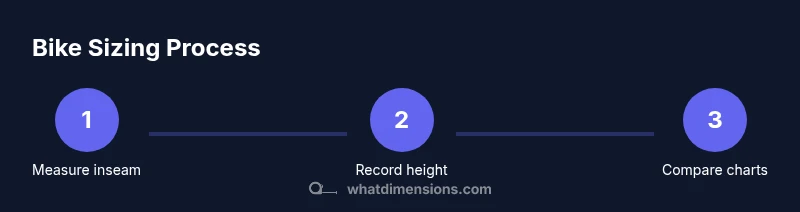
- Take inseam and height measurements first, then consult the brand’s size chart.
- Compare stack and reach values across models to ensure consistent fit.
- Check standover clearance by standing over the top tube with modest clearance.
- If between sizes, opt for the smaller frame and adjust with reasonable stem or saddle changes.
- When possible, test ride before buying, especially for road and mountain bikes.
Tools & Materials
- Measuring tape (metric and imperial)(At least 1.5 meters long for inseam and reach measurements)
- Flat surface or wall space(For accurate standing measurements and inseam setup)
- Book or ruler for inseam test(Place between legs without discomfort during inseam measurement)
- Notebook or digital device(Record all measurements and size estimates)
- Helper or mirror(Assist with precise positioning and measurement checks)
Steps
Estimated time: 30-45 minutes
- 1
Prepare your sizing workspace
Clear a comfortable area with good lighting. Gather your measuring tape, a book for inseam testing, a notebook, and a helper if available. Make sure you’re wearing minimal footwear and stand on a hard, flat surface to reduce measurement error.
Tip: Have a helper steady the book and confirm you’re standing straight during measurements. - 2
Measure inseam accurately
Stand with heels together, feet shoulder-width apart, and place a book between your legs, spine up. Have a helper press the book gently until it rests, then measure from the floor to the top edge of the book. Repeat once to confirm consistency and record the average.
Tip: Avoid bulky clothing; wear thin footwear if you’ll ride with shoes and pedal boots. - 3
Record your height and torso length
Use a wall to measure your full height and estimate torso length from collarbone to hip. Document both numbers alongside your inseam. Understanding torso length helps with saddle setback and reach decisions when comparing frames.
Tip: Have a second person verify the height measurement for accuracy. - 4
Assess frame geometry options
Look at stack, reach, and top-tube length for each frame you consider. These metrics determine how upright or aggressive your riding position will feel. Note brand variations, as the same nominal size can feel different across manufacturers.
Tip: Create a quick comparison chart to visualize differences between sizes and brands. - 5
Consult size charts and manufacturer specs
Cross-check your measurements against each brand’s recommended height range, stack, and reach values. Use multiple sources to avoid relying on a single chart. If between sizes, consider the smaller option with adjustment levers like a longer stem.
Tip: Prefer official brand charts; use independent reviews only for supplementary context. - 6
Validate fit with a live test ride or trainer
Whenever possible, test ride the bike or simulate with a trainer to confirm saddle height, reach, and standover clearance. Fine-tune saddle position and stem length to optimize reach and control before buying.
Tip: If you can’t test ride, ask for a shop fitting session after purchase to dial in the geometry.
Quick Answers
What measurements matter most when sizing a bike?
The most important measurements are inseam, rider height, top-tube length, stack, reach, and standover height. These determine whether you have a comfortable reach and proper pedal clearance. Always compare multiple metrics across brands.
Key measurements are inseam, height, top-tube length, reach, and standover height. Compare across brands to ensure a consistent fit.
Do bike brands use the same size scales?
No universal sizing exists. Brands label sizes differently and may emphasize different geometry numbers. Always consult the individual brand’s size chart and look at stack and reach values in addition to seat-tube length.
Sizes vary by brand, so check each brand’s chart and geometry values like stack and reach.
Can I size bikes for kids or teens using adult sizes?
Kids and teens typically use smaller, youth-specific frames with proportionally different geometry. For growing riders, choose adjustable setups and consider professional fitting if available.
Youth bikes have different geometry; size accordingly and seek professional fitting if possible.
Is stand-over height important for all bike types?
Stand-over height is crucial for safety and comfort, especially on mountain and city bikes where quick dismounts are common. Aim for a small clearance between the rider and top tube.
Stand-over clearance matters for safety; ensure a small gap when standing over the frame.
What should I do if I’m between two sizes?
Between sizes, start with the smaller frame and adjust with a taller seat post or a longer stem. If the rider is in between on a road bike, test a similar model to compare feel before buying.
If between sizes, try the smaller frame with adjustments to reach and saddle height.
Main Points
- Anchor sizing with inseam and height as starting points.
- Prioritize geometry (stack, reach, top-tube) for true fit.
- Brand variation means verify against multiple charts.
- Always check stand-over clearance before ride-ready.