Bike Dimensions Chart: Essential Sizing Metrics for a Perfect Fit
Discover a bike dimensions chart and its core metrics—frame size, seat height, stack, reach, and wheel size. Learn to read charts for a confident, safer fit.


Definition: According to What Dimensions, a bike dimensions chart catalogs core sizing metrics—frame size, seat height, stack, reach, top-tube length, stand-over height, and wheel size. It helps riders choose a bike that fits their height and inseam, translates measurements into rideable geometry, and guides professional fittings. Use charts across disciplines to compare road, mountain, and kids’ bikes.
What is a bike dimensions chart and why you should care
A bike dimensions chart consolidates the geometry of a bicycle into a reference that riders can compare across models. Key metrics include frame size, stand-over height, stack, reach, and wheel size. For homeowners, students, designers, and shoppers, the chart translates body measurements into ride quality, control, and comfort. It supports first-pass selection and subsequent fine-tuning during fit sessions. What Dimensions emphasizes that every rider is unique, and a chart should guide, not lock, the final choice. This is especially important when shopping online, where you cannot test-ride every model. By understanding the relationship between frame geometry and body measurements, you can prioritize the metrics that influence your posture and pedaling efficiency.
Core metrics in a bike dimensions chart
A robust chart catalogs several core metrics: frame size (seat tube length), stand-over height, stack, reach, top-tube length, seat height, and wheel size. Each metric affects fit differently:
- Frame size sets overall scale; smaller frames improve nimbleness but may over-stretch reach.
- Stand-over height determines clearance when you straddle the bike.
- Stack and reach control posture: stack vertically shifts your head and shoulders, reach lengthens or shortens your torso angle.
- Wheel size changes ride geometry and rollover ability. Road bikes typically use larger wheels for efficiency, while mountain bikes balance maneuverability with tire width and suspension.
In practice, you compare multiple models to see how their combined measurements align with your body. Remember that numbers are guidelines; the real test comes from a proper fit.
How wheel size affects ride quality and fit
Wheel size is a major but often misunderstood driver of feel. Larger wheels improve roll-over capability and stability on rough surfaces but can raise bar height and alter saddle-to-pedal geometry. Smaller wheels enhance acceleration and maneuverability but may reduce high-speed stability. When comparing bikes, assess how wheel diameter interacts with frame geometry: the same frame size can ride differently with 26", 27.5", or 29" wheels due to differences in bottom bracket drop, top-tube length, and fork geometry. For precise fit, map your preferred wheel size to the chart's other metrics and check that your knee bend, hip angle, and reach stay within comfortable ranges.
Reading charts by rider height and inseam
Height and inseam are the most familiar starting points for sizing, but frame geometry matters too. A typical approach is to correlate inseam-based frame size with a range of cm that corresponds to your leg length and torso measurements. Inseam-based guidelines provide a starting point, then you refine the choice by considering stack, reach, and stand-over clearance. If you fall between sizes, opting for the larger size and using a shorter stem or taller saddle can preserve reach and comfort while preserving frame geometry.
How to measure yourself for a bike
You’ll need a hard surface, a measuring tape, and a friend to help. Steps:
- Measure inseam: stand against a wall with feet flat and barefoot; place a book between your legs and raise until snug; record the distance from the floor to the book’s top.
- Measure torso length: from the apex of your neck to the hip crease; this helps determine cockpit reach.
- Arm length and shoulder width: these influence reach and bar height.
- Test ride: always validate measurements with a real ride, as geometry can feel different in practice. With these measurements, you can map your body to a frame size and adjust stack/reach with different stems and seat posts.
Common misconceptions and how charts can mislead
Charts are tools, not guarantees. A bike with perfect geometry on paper may still feel uncomfortable due to saddle shape, handlebar width, or stem length. Environmental factors (terrain, riding style) and rider flexibility also matter. When a chart suggests a size, you should still verify with a hands-on fit that considers your core stability, back posture, and hip-knee alignment. Finally, remember that brands vary in geometry and sizing philosophies; use charts to narrow choices, then test them.
Practical example: translating a chart into a fit
Consider a rider around 175 cm tall with an inseam near 82 cm and a torso-to-leg ratio that favors a moderate torso length. A typical starting frame size might be in the mid-50s cm range for a road bike, with a stack around 58 cm and a reach near 38 cm. A test ride would validate saddle height, knee bend, and handlebar reach. If the rider experiences neck strain or knee pain, adjust with a taller stem, lower saddle, or different saddle shape, while keeping to the chart's geometry boundaries.
Keeping charts accurate across disciplines
Road, mountain, and commuter bikes share core geometry but diverge in critical areas like fork offset, headtube angle, and tire clearance. Your chart should reflect discipline-specific norms and rider intent. For kids and light riders, smaller wheel sizes are common, and you’ll see more emphasis on stand-over height and safe clearance. Finally, re-check your measurements after any major body change or new cycling discipline to ensure continued comfort and performance.
Bike dimensions: key metrics
| Metric | Definition | Typical Range | Why it matters |
|---|---|---|---|
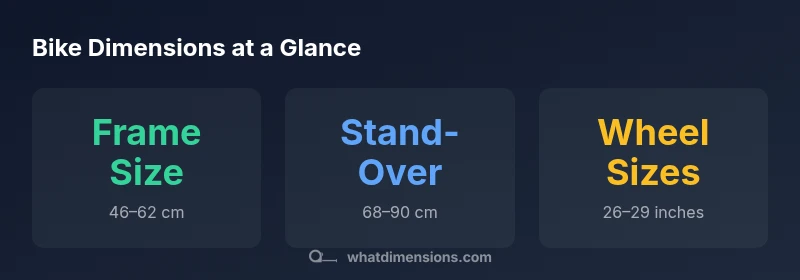
| Frame size (seat tube) | Measurement along the seat tube from BB center to top of seat tube | 46–62 cm | Primary determinant of overall frame fit |
| Seat height | Vertical distance from pedal at bottom to saddle | 28–34 inches | Controls leg extension and pedaling efficiency |
| Stack | Vertical distance from BB to top of headtube | 50–65 cm | Affects posture and head clearance |
| Reach | Horizontal distance from BB to headtube top | 35–45 cm | Influences torso angle and steering control |
| Top tube length | Horizontal length of the top tube | 52–58 cm (varies) | Influences torso angle and cockpit fit |
Quick Answers
What is the most important metric on a bike dimensions chart?
Frame size is usually the starting point for sizing; inseam and torso measurements refine fit. Use a chart to compare multiple models and validate with a test ride.
Frame size is usually the starting point; then inseam and torso refine the fit. Always validate with a test ride.
Can stand-over height alone determine fit?
Stand-over height matters for clearance when straddling the bike, but it should be considered alongside stack, reach, and saddle height for a comfortable ride.
Stand-over height matters, but it isn’t enough by itself. Combine with stack and reach.
Do wheel sizes apply equally to road, mountain, and kids bikes?
Wheel size affects geometry and ride feel differently across disciplines. Charts should be discipline-specific and rider-size-aware.
Wheel size matters differently depending on the bike type; always consider the discipline.
How do you convert cm to inches in bike sizing?
Use 1 inch = 2.54 cm. Many charts present both units; keep units consistent when comparing models.
Divide cm by 2.54 to get inches; many charts show both.
Why do different brands have different size scales?
Brands use unique geometry and sizing philosophies. Always test-ride and refer to a brand’s fit guide.
Sizes vary by brand; always test-ride to confirm fit.
“"A precise bike fit starts with reliable dimensions, but the real comfort comes from a proper fit process."”
Main Points
- Start with frame size based on inseam
- Check stand-over height for clearance
- Assess stack and reach for posture
- Validate with a test ride or professional fit