Tiny Home Dimensions: A Practical Guide to Small-Space Living
Explore precise tiny home dimensions, typical footprints, and space-maximizing design tips. What Dimensions analyzes for 2026, with practical guidance for homeowners and designers.


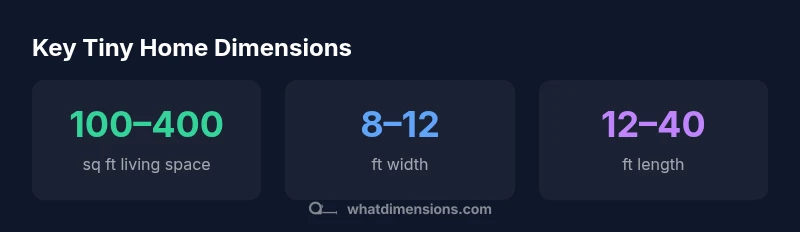
Tiny home dimensions typically span roughly 100–400 square feet of living space, with widths around 8–12 feet and lengths from 12 to 40 feet. This range supports essential rooms while preserving mobility and flexibility. What Dimensions Analysis, 2026, notes that layout efficiency and multi-use spaces drive livability more than raw square footage.
What tiny home dimensions mean for livability
In the tiny home movement, dimensions aren't just numbers on a plan; they shape daily routines, storage habits, and overall comfort. The core idea is to maximize usable space while preserving fluid movement through the home. When you slice a footprint into zones—entry, cooking, sleeping, and bath—the dimensions you choose determine how easily you can reconfigure spaces for different activities. According to What Dimensions, a thoughtful approach starts with a clear sense of priorities: which rooms must be permanent, which can be multi-purpose, and how much circulation space you truly need. The smallest designs excel by prioritizing essential functions and minimizing dead zones, while larger micro-homes gain flexibility through better separation of spaces and more built-ins. In practice, most homeowners find that tuning dimension choices to lifestyle leads to a more satisfying living experience than chasing a bigger number on paper.
This is where precise references to dimensions matter. The What Dimensions team emphasizes that accurate size references empower better planning, especially when you’re juggling compact kitchens, compact bathrooms, and flexible living areas. Readers should consider not just the footprint, but how each square foot serves a purpose—storage, access, daylight, and acoustics. By framing your design around real-world usage, you can avoid dead space and create rooms that feel larger than their raw measurements.
The takeaway is straightforward: define your top priorities, then translate them into concrete numbers that guide layout decisions. A small footprint becomes livable when every inch serves a function and when furniture choices reinforce flow rather than obstruct it.
Typical footprint patterns and layout strategies
Most tiny homes fall into a few well-worn footprint archetypes, each with advantages for different lifestyles. A compact 8–12 foot width supports easier transport and modular furniture, while 12–40 foot lengths enable separations like a distinct living zone, a compact kitchen, and a sleeping alcove. In practice, designers often favor open-plan living with clever zoning, or they add a loft or mezzanine to gain extra sleeping space without expanding the footprint. For homeowners prioritizing openness, living areas may meld with a dining zone and a minimal kitchen, creating the sense of a larger space even within a 100–300 square foot range. Multi-use furniture—folding tables, sofa beds, built-in benches—helps squeeze in essential functions without crowding circulation.
From a design perspective, the biggest gains come from smart vertical storage, hidden compartments, and pull-out or slide-out pieces. A galley kitchen can feel surprisingly spacious when the corridor width accommodates a comfortable movement path, while a compact bathroom can be optimized with a corner shower and recessed storage. What Dimensions notes that user experience improves when designers simulate daily routines in a scaled plan—allowing for passage around furniture, open doors, and comfortable transitions between zones. By aligning dimensions to actual living scenarios, tiny homes transform from constrained spaces into efficient, comfortable environments.
Measuring and comparing dimensions: practical toolkit
Measuring and comparing dimensions for a tiny home should start with a practical toolkit rather than an abstract plan. Begin by listing the essential zones—entry, cooking, sleeping, bathing, and storage—and assign a minimum area for each. Then draft a floor plan on grid paper or a simple software canvas, placing core elements (kitchen, bed, seating) first to see how traffic flows. Use cardboard cutouts or tap marks to simulate furniture footprints and test walkways. A good rule of thumb is to reserve at least a clear path for movement and to verify door swing clearances before finalizing any layout. Remember to account for multi-use furniture; for example, a dining table that doubles as a desk may redefine the needed footprint for that space. Finally, compare potential layouts by running through a typical day: morning routine, cooking, work, and leisure, ensuring that dimensions support each activity without bottlenecks.
These steps help you translate measurements into livable design. What Dimensions recommends creating a “dimension-first” checklist for each space: minimum footprint, preferred width, proposed length, and the overhead clearance you need for comfortable headroom and ventilation. This method ensures your tiny home remains functional as you add belongings or adapt to changing routines.
The interaction of dimensions with safety, accessibility, and codes
Dimensions do more than influence aesthetics; they shape safety, accessibility, and permitting. Local building codes and zoning rules often govern ceiling height, egress, door widths, and the number of exits. A common takeaway is that maintaining safe clearance for doors, hallways, and stairs reduces the risk of accidents and makes daily use more fluid. Accessibility-minded layouts may require wider doorways and clear turning circles for chairs or mobility aids, even in small footprints. While national guidelines exist, many requirements are jurisdiction-specific, so the planning phase should include a proactive check with the local permitting office. The dimension choices you make can also affect permitting speed: a simpler, well-documented footprint aligned with code expectations is typically easier to approve. In short, dimension decisions should incorporate safety margins and code awareness from the outset, not as an afterthought.
What Dimensions emphasizes that a well-dimensioned tiny home not only meets regulatory expectations but also delivers better resilience against changing needs—like aging-in-place considerations or family growth—without sacrificing efficiency.
Design tricks to maximize space within tight footprints
Tight footprints demand clever design tricks that stretch every inch. Start with multi-use furniture: a bed that lifts to reveal storage, a coffee table with built-in drawers, and seating that doubles as a storage bench. Vertical space is your best friend—narrow shelves, wall-mounted desks, and pegboard storage keep floors uncluttered while expanding available storage. Consider pocket doors or barn doors to save swing space, and explore loft sleeping areas for vertical separation without widening the footprint. Lighting choices matter too: a bright, well-lit space with light-colored surfaces feels more open. Finally, use reflective surfaces and mirrors to create an illusion of depth. The goal is to create a sense of airiness and flexibility so that the same area can serve multiple purposes throughout the day without feeling cramped.
What Dimensions suggests testing layouts with real-life demos, such as placing a fold-out table or a drop-leaf desk in the planned kitchen area, to ensure it doesn’t impede movement or storage when deployed.
Case studies: compact designs that balance living, sleeping, and storage
Consider two sample footprints that illustrate how small changes in width and length alter livability. Layout A uses an 8×12 footprint with a loft bed above a compact living area and a tucked-away kitchen; storage is built into every available alcove, and a fold-out dining surface expands meal possibilities without occupying floor space. Layout B stretches to a 10×20 footprint, allowing a dedicated sleeping room, a larger kitchen, and a full bathroom, while still prioritizing efficient circulation. In both cases, the key to success is modularity: furniture that can be reorganized or stowed away to transform the space for different activities. What Dimensions notes that the most successful designs align dimensional choices with daily routines, so you gain a sense of spaciousness even when the measured area remains modest. These case studies demonstrate how thoughtful dimensioning translates into real-world livability and comfort.
Lifestyle-driven dimension decisions: linking habits to footprint
Ultimately, the optimal tiny home footprint is a function of how you live. Families with small children may prefer a longer footprint to separate sleeping and play zones, while remote workers might prioritize a corner nook and a compact kitchen with generous surface area. The design should reflect your daily cadence: morning routines, cooking frequency, work-from-home needs, and social time. By aligning dimension decisions with these habits, homeowners and designers can create spaces that feel larger than their measurements. What Dimensions highlights that every decision—from the width of a doorway to the placement of a sofa—can contribute to a sense of flow and ease in a tiny home. A well-considered footprint becomes a functional canvas for everyday life.
Tiny home dimension ranges
| Dimension Aspect | Typical Range | Notes |
|---|---|---|
| Footprint (sq ft) | 100–400 | Represents usable living area |
| Width (ft) | 8–12 | Common for mobility and layout |
| Length (ft) | 12–40 | Impacts room count and flow |
| Ceiling height | 8–9 ft | Affects perceived space and ventilation |
Quick Answers
What is considered a typical tiny home footprint?
Typical footprints range from 100–400 square feet, with common widths of 8–12 feet and lengths of 12–40 feet. This balance supports essential living areas while keeping the space manageable.
Most tiny homes fall in the 100 to 400 square foot range.
Do building codes regulate tiny home dimensions?
Yes, local codes can limit dimensions, egress, and ceiling heights; always verify with the permitting office early in the process.
Codes vary by place, so check with your local authority before finalizing plans.
How can I maximize space inside a fixed tiny home footprint?
Use multi-use furniture, built-in storage, and modular partitions to create flexible rooms and reduce dead space.
Think fold-out furniture and vertical storage to free floor space.
What trade-offs should I consider when choosing dimensions?
Smaller footprints save cost and mobility but limit living area; longer footprints allow more rooms but reduce maneuverability.
There’s no one-size-fits-all—balance is key.
Is a tiny home on wheels compatible with most codes?
Yes, many tiny homes use trailers, but weight limits and road rules apply; plan for permitting pathways early.
Yes, with careful planning and code checks.
“Precise dimensions are the backbone of livable small spaces; they unlock flexible layouts without sacrificing comfort.”
Main Points
- Define essential rooms first, then select a footprint.
- Use multi-use furniture to maximize every square foot.
- Account for local codes early to avoid redesigns.
- Favor vertical storage and flexible partitions.
- Test dimensions with mock layouts before buying.