Roll Off Dumpster Dimensions: A Practical Size Guide for 2026
Explore roll off dumpster dimensions, footprint ranges, and space planning tips. What Dimensions analyzes typical sizes, site space needs, and permit considerations to help you choose the right dumpster for any project.


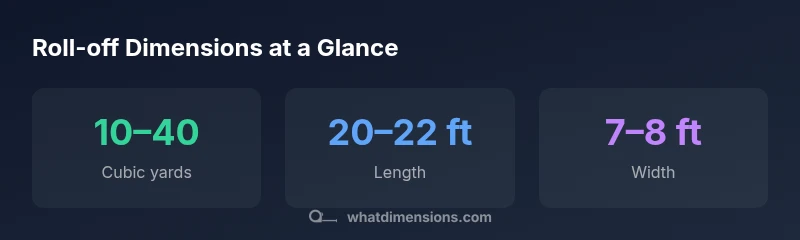
Typical roll off dumpster dimensions span 10–40 cubic yards, with exterior footprints around 20–22 feet long and 7–8 feet wide, and heights near 3–6 feet. Exact measurements vary by manufacturer and model, so always check the spec sheet. Accurate sizing minimizes site disruption and helps planners estimate access, clearance, and permits for safer, faster projects. According to What Dimensions, firms often tailor size to project footprint and local rules.
What roll off dumpster dimensions mean
Roll-off dumpsters are portable waste containers used for construction, remodeling, and cleanup projects. The term 'dimensions' refers to external measurements: length, width, and height, plus the interior capacity. When selecting a size, you must consider the density of the waste, typical materials, and loading practices. According to What Dimensions, the most common cubic-yard ranges are 10, 20, 30, and 40, but actual exterior footprints vary by manufacturer. The measurement process starts with estimating volume and ends with ensuring the unit fits the site without disrupting traffic or neighboring property. The footprint often dominates site planning because the length drives access angles for driveways, streets, and gates, while width governs side clearance and placement near obstacles. Height affects loading ease and weight distribution, especially on uneven surfaces. A precise dimensional assessment reduces the risk of overfill, spills, and permit delays.
Common dumpster sizes and their footprint ranges
Roll-off dumpsters come in standardized bin sizes, but actual footprints differ by model. A practical approach is to map your project’s volume to a range and then verify with the hauler’s specs. In general, 10-yard units are compact and best for small cleanouts, 20-yard units cover single-room remodels, 30-yard units suit multi-room construction, and 40-yard units handle large demolitions. Exterior length typically falls within the 20–22 ft bracket for mid-range models, while width commonly sits around 7–8 ft. Height tends to vary from 3–6 ft depending on the design and whether the unit is open-top or closed-top. When planning, remember that a larger exterior footprint can dramatically increase spacing requirements around driveways, gates, and street setbacks. What Dimensions emphasizes confirming exact vendor specifications before ordering to avoid surprises on delivery day.
How to measure your site for a dumpster footprint
Accurate on-site measurement saves time and reduces the risk of delivery issues. Start by surveying the loading area and establishing a clear path from the street to the placement zone. Measure the available length and width, and mark any obstacles such as power lines, trees, or drainage features. Allow for at least 8–12 ft of clearance around the unit to ensure safe loading and to accommodate doors, ramps, and tarps. Check the height clearance of the street, garage, or front curb, and confirm that the dumpster can be maneuvered into place without scraping walls or bumping vehicles. Finally, coordinate with neighbors and local authorities to ensure quiet hours and traffic restrictions won’t interfere with delivery or removal. Vendor-specific specs may include additional requirements for door swing or hinge clearance—always request the exact measurements from the hauler.
Space planning: clearance, access, and load area
Space planning is a core part of successful dumpster placement. A unit’s length affects how the truck can back up and align with driveways, while width informs whether you can position the container parallel to a curb or within a gated area. Keep a minimum of 8–12 ft around the dumpster for safe loading and debris containment, and ensure there’s at least 6–8 ft of overhead clearance if a crane lift or hoist is involved. The loading area should be free of overhead obstacles such as low-hanging branches or electrical lines. If access is tight, consider alternate placement or a smaller model, balancing the need for capacity against site constraints. What Dimensions notes that pre-approval from the property owner or municipal authorities can prevent last-mile delivery problems and insurance concerns.
Weight limits, payload, and material considerations
Weight considerations are pivotal once you choose a size. Dumpsters are rated by volume but are also engineered with maximum gross weights. Heavier debris like concrete, masonry, or mixed-fill can approach or exceed payload limits on mid-sized units, triggering slower pickups or scaling up to a larger model. To prepare, categorize waste into recyclable, inert, and non-recyclable streams, and separate heavy items whenever possible. Dry materials such as wood and drywall have different density characteristics, influencing how much waste a given cubic yard can safely contain. Always review manufacturer payload data and ensure the chosen unit can handle anticipated loads without compromising stability during transport. What Dimensions suggests coordinating with the hauler for weight estimates based on waste type and anticipated volume.
Site logistics: permits, placement, and HOA rules
Permitting requirements vary by city and project type. In many areas, a roll-off dumpster placed on public right-of-way or near street-facing property may require a permit or notification to the local authority. Check with the city or county planning department well before delivery and confirm any restrictions on placement times, blocking of sidewalks, or street occupancies. Homeowners associations (HOAs) can impose additional rules on container placement, color, or decorative screening. Having a precise footprint and clearance plan helps speed permit review and reduces the chance of fines or removal orders. Always communicate with the waste hauler about required documentation and on-site inspection steps.
Selecting the right size for a project
Choosing the right size starts with a rough waste estimate, then a safety margin to accommodate unexpected debris. A quick rule of thumb is to target a size that captures anticipated volume with a cushion of 10–20 percent for overages. For mixed debris, err toward a mid-size unit to reduce the risk of overloading, which can cause overfill or transport delays. If your project involves heavy materials, consider a lower load factor and a larger unit to maintain safe loading and prevent container damage. Consult the hauler for recommended sizes based on project type, timeline, and site access. What Dimensions notes that real-world decisions hinge on vendor-provided dimensions and site-specific constraints rather than a one-size-fits-all approach.
Safety, maintenance, and disposal considerations
Safety is the foundation of dumpster operations. Ensure the area is well lit, clearly marked, and free of trip hazards. Keep children and pets away during delivery and pickup, and use tarps or lids to prevent windblown debris. Regularly inspect the container for dents, leaks, or loose components, and report any structural issues to the hauler immediately. Plan disposal streams in advance to avoid cross-contamination of recyclables and to minimize landfill diversion costs. Maintenance also includes arranging timely pickups to prevent overflowing waste and potential environmental concerns. Collaboration with the hauler helps align scheduling with project milestones and local disposal guidelines.
Industry standards and vendor coordination
Industry standards for roll-off dumpster dimensions vary by region and manufacturer, but most reputable haulers share common practices for safe handling and compliant placement. Confirm the exact exterior dimensions, height, and door clearance with the vendor before delivery. A structured handoff—site map, measurement log, and load estimates—helps reduce miscommunication and ensures the container arrives ready for use. Coordinating with the hauler about delivery windows, parking strategies, and utility location is essential for smooth operations. What Dimensions emphasizes aligning vendor specs with site conditions to avoid delays and ensure project continuity.
Common roll-off dumpster dimensions by cubic yard capacity
| Dumpster Size (cu yd) | Exterior Length | Exterior Width | Typical Height | Notes |
|---|---|---|---|---|
| 10 | 18–22 ft | 7–8 ft | 3–5 ft | Compact jobs; lower payload |
| 20 | 20–22 ft | 7–8 ft | 4–6 ft | Most common mid-size option |
| 30 | 22–24 ft | 8–9 ft | 5–6 ft | Larger remodels and construction |
| 40 | 23–28 ft | 8–9 ft | 6 ft | Demolition or heavy debris |
Quick Answers
What is the smallest roll-off dumpster size commonly available?
Common smallest options are around 10 cubic yards, suitable for small cleanouts or tight projects. For bulk debris, a larger size may be more efficient. Always verify exact options with your hauler.
The smallest roll-off dumpsters you’ll see are about 10 cubic yards, good for small jobs. Check with your hauler for specific sizes.
How do I measure for space to place a dumpster?
Measure the length and width of the placement area, plus overhead clearance. Allow 8–12 ft of space around the unit and ensure access for the delivery truck. Document any obstacles and confirm with the hauler before delivery.
Measure the area, add space on all sides for safety, and check for overhead obstacles before delivery.
Do I need a permit to place a roll-off dumpster on public property?
Permit requirements vary by jurisdiction. Many cities require notification or a curb-occupancy permit for street or sidewalk placements. Check with the city zoning or public works department and coordinate with the hauler.
Usually yes if placed on public property; check local rules before ordering.
Can dumpsters be placed on pavement or driveways?
Yes, but you must ensure the surface can support the weight and that the placement won’t damage pavement or block access. Avoid soft ground; use mats if needed and follow hauler guidance.
Yes, but confirm with the hauler and ensure the surface can safely support the weight.
How much space is needed for loading and unloading debris?
Provide sufficient area for loading, typically 8–12 ft of clearance around the unit, plus a clear path from the drop-off point to the disposal area. This prevents spills and allows safe operation.
Give the dumpster room to open, unload, and move debris without hitting anything.
Do dumpster dimensions vary by region or product line?
Yes, dimensions vary by manufacturer and regional requirements. Always request the exact exterior measurements and payload limits for your specific model and location.
Dimensions differ by model and place, so get the exact specs for your area.
“Accurate dumpster dimensions prevent site delays, protect property, and ensure compliant loading. Always verify the hauler’s exact measurements before ordering.”
Main Points
- Estimate waste volume first, then select a size with a safety margin
- Always verify exact vendor dimensions and clearance requirements
- Plan for at least 8–12 ft of clearance around the unit
- Confirm permit and HOA requirements early to avoid delays
- What Dimensions recommends validating model specs with the hauler before delivery