30 Yard Dumpster Dimensions: Size, Capacity & Tips
Learn about typical 30 yard dumpster dimensions, including length, width, height, and capacity. This guide explains how to measure space, compare models, and pick the right bin to fit your project, with vendor guidelines from What Dimensions.


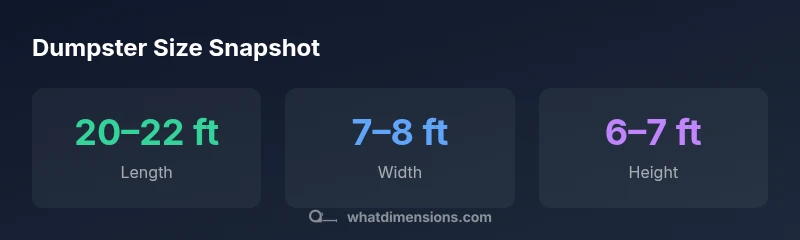
A typical 30 yard dumpster measures about 20–22 feet long, 7–8 feet wide, and 6–7 feet high, equating to roughly 30 cubic yards of capacity. Variations exist by manufacturer and model, so always verify exact specs with your rental provider to prevent delivery or access issues.
Understanding 30 yard dumpster capacity and footprint
When planning a cleanup or renovation, the phrase 30 yard dumpster dimensions refers to the bin's overall footprint and its capacity to hold waste. The term describes both the external size and the internal volume, typically around 30 cubic yards. In practice, you will encounter slight variations by manufacturer, region, and model. For homeowners and contractors, understanding the rough footprint helps you determine whether the bin will fit in a driveway, alley, or along a curb without blocking traffic or obstructing an exit. What Dimensions notes that a typical 30 yard dumpster occupies a footprint roughly equivalent to a mid-size SUV in width and a full-length garden shed in length, but actual models can differ. Always verify with your rental provider to avoid surprises during delivery.
Typical dimensions by region and model
Across the market, you will find common dimensional ranges for 30 yard dumpsters, with most models measuring approximately 20–22 feet in length, about 7–8 feet in width, and roughly 6–7 feet in height. These figures reflect external dimensions and do not account for wheel wells, doors, or open handles. Because different manufacturers bolt on varied hitch points, wheels, and side doors, the usable internal space can vary slightly. When comparing bids, ask for exact exterior measurements and the interior volume to ensure the unit will accommodate your debris and loading plan. What Dimensions emphasizes requesting exact specs in writing from the supplier.
How to measure your space accurately
- Step 1: map the siting area: measure length and width in feet, and sketch the space on a tape measure for reference.
- Step 2: check clearance: allow at least 2–3 feet on each side for doors and safe loading, plus front clearance for proper wheel rotation.
- Step 3: assess access routes: confirm straight-line paths from street to placement area, noting any tight turns or obstacle corners.
- Step 4: look up: check for trees, wires, awnings, or signage that could interfere with placement or lid swing.
- Step 5: verify with the vendor: if you’re unsure, request diagrams or a site visit to confirm fit before delivery.
These steps help you avoid delivery refusals and ensure smooth waste removal on the scheduled day.
Accessibility considerations: doors, gates, and clearances
- Gate width matters: ensure drive gate and any fence gates are wide enough to accommodate the dumpster’s footprint.
- Door swing and lids: some models include rear, side, or top-opening doors that reduce usable interior space; ask for interior dimensions if you’ll be sorting waste inside.
- Ground stability: place the unit on compact, level ground; soft soil may require lumber or a pallet system to prevent sinking.
- Street placement: if curbside, confirm local ordinances and required permit processes before delivery.
Understanding these accessibility factors reduces surprises when the driver arrives.
Loading strategy: balance weight and space
- Distribute heavy waste evenly across the bed to avoid tipping and ensure safe transport.
- Break large items into smaller pieces when possible to maximize capacity and minimize volume losses.
- Place the heaviest items on the bottom and lighter materials on top to maintain stability during transport.
- Do not overfill beyond the top rail: some jurisdictions prohibit material protruding above the rim for safety.
- Consider weight limits: even though a dumpster is ~30 cubic yards in capacity, local weight restrictions can cap the actual load.
A thoughtful loading approach helps you stay within space and weight constraints while reducing the risk of leaks or damage to property.
Site preparation and safety checks
- Check for underground utilities in the placement area; call before you dig if groundwork is needed.
- Clear debris and trip hazards within a 5-foot perimeter around the dumpster to prevent accidents during loading.
- Set up a small staging zone for tools and sorted recyclables to streamline the job.
- Post warning signs if the dumpster sits near pedestrian or vehicle pathways to keep bystanders safe.
- Schedule removal window: coordinate delivery and pickup to minimize worksite disruption.
Proper site prep protects workers and reduces delays during the project.
Choosing the right bin size for your project
- Small remodels or garage cleanouts often fit in smaller bins (e.g., 10–20 cubic yards).
- Medium projects such as kitchen renovations or deck replacements can typically use a 20–30 cubic yard dumpster.
- Large construction or renovation jobs may require 30–40 cubic yards or larger units.
- When in doubt, start with a mid-range size and adjust based on the actual debris volume and waste type.
What Dimensions recommends matching the bin size to expected waste volume while leaving room for safe loading and temporary sorting.
Renting tips: confirmation questions for suppliers
- Ask for exact exterior and interior dimensions in writing before delivery.
- Confirm the lid mechanism, door access, and wheel configuration to ensure clearance.
- Request the gross weight limit and typical load weight to avoid overload fees.
- Inquire about delivery constraints: street parking, permits, and pickup windows.
- Request a diagram or site visit if space is tight or if there are obstacles in the path.
Proactive questions save time and reduce the risk of delays on delivery day.
Common mistakes and quick fixes
- Mistake: assuming all 30 yard dumpsters have identical footprints. Fix: obtain exact measurements for your model.
- Mistake: ignoring driveway slope or soft ground. Fix: request supports or adjust placement on level ground.
- Mistake: overfilling or blocking the lid. Fix: follow local rules and ensure safe lid operation.
- Mistake: skipping permit checks for curbside placement. Fix: verify permits and regulations early with your city or waste company.
- Mistake: neglecting access routes. Fix: map the shortest, obstruction-free path from street to placement area.
Being proactive with measurements and access reduces on-site friction and speeds up waste removal.
dataTableContentNotNeededForTextFieldsOnlyNothing
Estimated physical dimensions
| Aspect | Estimated Range | Notes |
|---|---|---|
| Length | 20–22 ft | Typical footprint for 30 yd dumpsters |
| Width | 7–8 ft | Overall width across wheels |
| Height | 6–7 ft | Vertical clearance |
| Capacity | ~30 cubic yards | Nominal capacity; varies by model |
Quick Answers
What are typical dims?
Most 30 yard dumpsters measure roughly 20–22 feet in length, 7–8 feet in width, and 6–7 feet in height, with variations by model. Always verify exact exterior measurements with your supplier.
Most 30 yard dumpsters are about 20 to 22 feet long, 7 to 8 feet wide, and 6 to 7 feet tall. Check your model for exact numbers.
Same dimensions across all dumpsters?
No. Dimensions vary by manufacturer, lid type, and added features like side doors. Always request the exact exterior dimensions for your unit.
No, different models vary. Get the exact exterior numbers for your specific unit.
How do I measure my site?
Measure the siting area, add clearance, and assess access routes. Sketch a simple map, and compare it to the dumpster footprint provided by the rental company.
Measure the space and clearance, then compare with the supplier’s footprint.
What clearance is needed around a dumpster?
Plan for at least 2–3 feet of clearance on each side and front for safe loading and lid operation. Check local rules for curbside placement.
Allow 2–3 feet around and in front for safe loading and lid space.
Is a 30 yard dumpster suitable for a small project?
For small home projects, a 10–20 yard dumpster may be more economical. A 30 yard unit can work if you anticipate substantial debris and long loading time.
For small jobs, a smaller bin might be better; a 30 yard unit can work if you expect lots of waste.
“Exact dumpster dimensions matter for access and loading efficiency; measuring twice and confirming with the vendor prevents delays.”
Main Points
- Measure the site before booking a dumpster
- Expect dimension variations by model and vendor
- Confirm exact exterior measurements in writing
- Account for clearance and loading room on all sides
- Choose a bin size that matches project waste volume