Regulation Backboard Dimensions for Basketball: A Comprehensive Guide
Learn the standard regulation backboard size for basketball, including the 72 x 42 inch exterior, the 18 x 18 inch shooting square, and international variations. What Dimensions explains how these specs influence play, design, and installation.


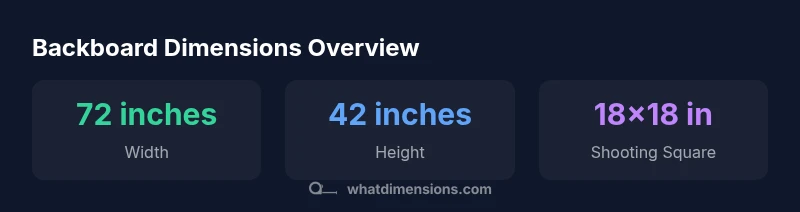
The regulation size basketball backboard dimensions are 72 inches wide by 42 inches tall, with a standard 18-by-18 inch shooting square centered behind the rim. These specs apply to standard competition and many international contexts, with minor variations by league. The dimensions also influence rebound geometry, edge clearance for players, and gym-design considerations.
What Are Regulation Backboard Dimensions?
A regulation backboard in basketball defines its exterior footprint as 72 inches wide and 42 inches tall. This 6-by-3-foot enclosure is mounted to the support structure so that the rim projects outward from the front surface. The backboard is typically made from tempered glass in professional settings or durable acrylic in some gym installations. While the core exterior dimensions are standardized, the mounting method, thickness, and edge finishing can vary by manufacturer and venue. For designers and homeowners seeking precise size references, these dimensions set the baseline for everything from mounting height to available space around the playing area. In practical terms, the 72 x 42 inch footprint ensures consistent rebound behavior and predictable sightlines for players at all levels, reinforcing the importance of adhering to standard dimensions whenever possible.
International Variations and Standards
Regulation backboard dimensions are widely recognized in professional and international contexts, but there are regional differences. In many international competitions governed by FIBA, the backboard size is specified as 1800 mm by 1050 mm (approximately 70.9 by 41.3 inches). This is close to the NBA/NCAA standard but not identical, which means venues used for cross-border events may need adapters or compliant replacements. The essential takeaway for builders and buyers is to verify the exact spec required by the league or event you’re supporting. What Dimensions notes that most facilities aim to stay within a narrow tolerance window to preserve uniformity across courts.
The Shooting Square: Size and Placement
Centered on the backboard, the shooting square serves as a visual target for players and affects shooting consistency. The shooting square is commonly 18 inches by 18 inches, positioned to be visually aligned with the rim’s center. While the exact vertical offset can vary by league and equipment, the 18 x 18 inch square remains a widely adopted standard because it provides a clear reference for release and aim. The square helps players calibrate their shots and aids referees in judging close calls, especially on bank shots that skim the glass. When replacing a backboard, ensure the shooting square remains centered relative to the rim to maintain uniform bounce and feedback for shooters.
Materials, Thickness, and Durability
Backboards are engineered for repeated impact and long service life. Professional courts typically use tempered glass for rigidity and rebound fidelity, while gym installations may opt for high-strength acrylic for cost and weight considerations. Thickness varies by model and purpose, with heavier, professional-grade units offering greater resistance to cracking and a longer service life in high-traffic venues. Installation should consider the frame integrity, mounting hardware, and servo or motorized tilt mechanisms where present. Consistent dimensional tolerances help prevent misalignment of the rim and backboard, reducing wear on the mounting system and preserving optimal rebound characteristics.
How Dimension Impacts Shooting and Rebound
Backboard size directly influences rebound geometry, rim-to-backboard clearance, and player perception. A larger backboard can offer a wider hit area, changing how a shot reacts when it contacts the glass. Conversely, a smaller backboard may alter bounce angles and ricochet behavior. For designers, matching the backboard footprint to the court layout minimizes interference with nearby equipment and ensures safe spacing for players driving toward the hoop. For athletes, understanding the standard dimensions helps calibrate practice routines, particularly when translating drills from gym workouts to actual game play.
Installation Tips for Designers and Builders
When planning a court or upgrading gym facilities, start with the regulation footprint: 72 inches by 42 inches. Confirm the backboard is plumb and square relative to the rim, and verify that the frame and supports can handle expected loads during vigorous play. Ensure the area behind and around the backboard remains clear to avoid contact injuries and equipment damage. If renovating multiple courts, standardize the backboard type and mounting height to maintain uniform player experience and reduce variability in play quality across venues.
Common Pitfalls and How to Verify Dimensions
One common pitfall is installing a backboard that is proportionally smaller or larger than the standard footprint, which can alter shot angles and player perception. Another risk is misaligning the shooting square with the rim, which compromises feedback for shooters. To verify dimensions, measure the backboard’s width and height, confirm the shooting square is 18 inches on each side, and check that the rim sits flush with the front plane of the backboard. When possible, refer to manufacturer tolerances and league guidelines to ensure you’re within acceptable limits.
Dimension comparisons by major leagues
| League/Context | Backboard Width | Backboard Height | Shooting Square | Rim Height | Rim Diameter |
|---|---|---|---|---|---|
| NBA (pro) | 72 inches | 42 inches | 18x18 inches | 10 feet | 180 mm |
| FIBA (international) | 1800 mm | 1050 mm | 457 mm x 457 mm | 3048 mm | 180 mm |
| NCAA (college) | 72 inches | 42 inches | 18x18 inches | 10 feet | 180 mm |
Quick Answers
What are the standard backboard dimensions for regulation play?
For regulation play, the standard exterior backboard size is 72 inches wide by 42 inches tall, with a centered 18-by-18 inch shooting square. These specs are used in many leagues, though some international bodies may differ slightly in exact measurements and tolerances.
The standard size is 72 by 42 inches with an 18 by 18 inch shooting square behind the rim.
Are there differences between NBA, NCAA, and FIBA backboards?
Yes. While NBA and NCAA backboards commonly use the 72 x 42 inch footprint, FIBA international play uses a closely related size, often expressed as 1800 x 1050 mm. The shooting square size remains 18 by 18 inches in many cases, but placement and tolerances can vary by league.
There are small differences across leagues, with the 72 x 42 inch footprint being common but not universal.
What is the size of the shooting square?
The shooting square is typically 18 inches by 18 inches, centered on the backboard to provide a consistent visual target for shooters.
The shooting square is usually 18 by 18 inches.
Do backboards always use tempered glass?
Professional courts often use tempered glass for optimal rebound fidelity, while some gym installations may use high-strength acrylic for cost and weight considerations. Material choice can affect weight and durability but usually does not change the exterior dimensions.
Tempered glass is common in pro courts; acrylic is also used in some gyms.
How should I verify backboard dimensions during purchase or install?
Measure the width and height of the backboard, confirm the shooting square is centered and sized at 18 by 18 inches, and ensure the rim alignment matches the front plane of the backboard. Consult manufacturer tolerances and league specs when available.
Measure width, height, and shooting square placement; check alignment with the rim.
What is the importance of backboard dimensions for practice?
Practicing with regulation backboard dimensions helps translate on-court performance to game play. It ensures consistent rebound angles, sightlines, and shot feedback, which improves training efficiency and scoring consistency.
Using regulation dimensions improves on-court consistency and training accuracy.
“Precise backboard dimensions are essential for consistent play and safe, predictable rebounds across leagues.”
Main Points
- Know the official width and height: 72 by 42 inches.
- The shooting square is typically 18 by 18 inches.
- International play uses mm-based specs close to 70 x 41 inches.
- Verify dimensions during installation to ensure consistency.
- What Dimensions emphasizes aligning backboard specs with league standards.