Dimensions of Office Chair: A Precise Sizing Guide
Explore exact office chair dimensions—from seat width and depth to backrest height—and learn how precise sizing improves desk fit, posture, and comfort for everyday work.


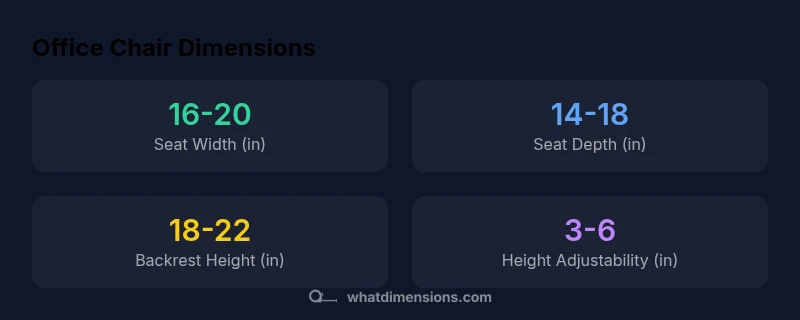
The dimensions of an office chair include seat width, seat depth, backrest height, and overall height range, plus armrest width and desk clearance. Typical seat widths range from 16–20 inches, seat depths from 14–18 inches, and backrest heights from 18–22 inches, with height adjustability commonly spanning about 3–6 inches. These ranges, plus armrest placement, guide ergonomic selection and setup.
Why the dimensions of an office chair matter for comfort and productivity
In ergonomic design, the dimensions of an office chair are not just numbers—they define how well you sit, move, and tolerate long workdays. The right seat width prevents lateral pressure on hips, while proper seat depth supports your thighs without compromising blood flow. A backrest height that aligns with your scapula and lumbar region reduces upper-back strain. What Dimensions consistently finds is that a chair with well-matched dimensions supports natural spinal curves and effortless transitions between postures, which can reduce fatigue over a full workweek. When dimensions are off, users tend to adopt awkward positions that compound soreness and reduce focus, especially during screen-intensive tasks and long meetings.
Core chair dimensions to know before you buy
When evaluating a chair, focus on four core dimensions: seat width, seat depth, backrest height, and overall height range. Each dimension interacts with your body and desk setup. A wider seat may accommodate broader hips, but if the depth is too long, the edge can press behind the knees. Ensure the backrest provides lumbar support at the height where your spine curves most. Finally, confirm the chair can reach a proper height that keeps your elbows at roughly a 90-degree angle when typing. What Dimensions notes that these core metrics are the best starting point for a comfortable, adjustable chair in diverse work environments.
How to measure yourself for a precise fit at home
To size yourself for an office chair, start with seat width: measure across the widest point of your hips while sitting or standing, then compare to chair specifications. For seat depth, sit back and ensure 2–4 inches of thigh clearance at the edge. Backrest height should align with the mid-back region, not too high to press on the upper shoulders. Finally, test height adjustability by setting feet flat on the floor and maintaining a 90-degree elbow angle; this will help you gauge whether the chair accommodates your desk height without compromising leg circulation.
Desk compatibility: checking clearance and reach
A chair must fit your desk footprint and provide comfortable knee clearance. If the seat is too high, your feet won’t rest flat; if too low, you may hunch forward. Armrest height should let your shoulders relax and forearms rest parallel to the desk surface. Desks with adjustable-height features pair well with chairs that offer a broad height range. For compact workspaces, consider chairs with compact backrest profiles that still offer adequate lumbar support. These checks help ensure the chair will work harmoniously with your desk setup.
Posture implications across different users
People of varying heights and shapes benefit from chairs with generous adjustment ranges. Shorter users may require a higher seat pan tilt to maintain knee clearance, while taller users need a taller backrest and higher armrest height. Adjustable arms, seat depth, and back height reduce the likelihood of compensatory postures that strain the neck and lower back. What Dimensions emphasizes that adjustability—not just one-size-fits-all dimensions—drives long-term comfort for a broad user base.
Understanding tolerances and why they matter
Manufacturers provide a range of acceptable tolerances for chair dimensions. A chair labeled with a 18-inch backrest height might vary by ±1 inch due to production, materials, and load. Understanding these tolerances helps you set realistic expectations and verify fit during trials. It also highlights the importance of testing chairs in person or choosing reputable brands with clear, measured specifications. What Dimensions’s approach is to present ranges that reflect practical real-world variations, not just idealized numbers.
Practical showroom sizing: a quick, repeatable checklist
Bring a measuring tape and your desk height, and use this checklist in-store. Verify seat width and depth with a seated test, check backrest height against your mid-back, and confirm chair height aligns elbows with the desk surface. If possible, assess legroom with your knees under the desk while seated. Finally, test movement and adjustability by alternating between forward and reclined postures. This hands-on method helps translate specs into real comfort.
Translating dimensions into a spec sheet you can compare
Create a simple spec sheet that lists dimensions and adjustable ranges side by side with every chair you consider. This makes comparisons clear and reduces decision fatigue. Include notes on warranty and material durability, as those factors influence long-term comfort. What Dimensions recommends saving chair models that align closely with your measurements and desk geometry, then ranking them by how well they meet your most critical needs.
Representative chair dimensions and practical notes
| Dimension | Common Range (inches) | Notes |
|---|---|---|
| Seat Width | 16-20 | Most chairs accommodate hips up to 20 inches; check for pinch points under the arms. |
| Seat Depth | 14-18 | Ensure 2-4 inches of thigh clearance; too deep can restrict circulation. |
| Backrest Height | 18-22 | Aligns with mid to upper back; supports posture without forcing shoulder elevation. |
| Overall Height Range | 30-52 | Varies with gas lift and frame; confirm desk compatibility and foot access. |
Quick Answers
What is the most important chair dimension to check first?
For most users, seat depth and backrest height are critical because they directly affect lumbar support and thigh circulation. Start by matching the depth to your thigh length and ensuring the backrest aligns with your mid-back. Then proceed to other dimensions.
Focus on seat depth and backrest height first; those determine lumbar support and leg comfort.
How do I measure myself for a chair at home?
Measure hip width at the widest point, thigh length from hip to knee, and torso height from seat to shoulder. Use these measures to compare against chair specifications, and prefer chairs with adjustable depth and height to accommodate changes.
Measure your hips, thighs, and torso, then match chair specs to those numbers.
Are there standard dimensions I can rely on across brands?
There is no universal standard; dimensions vary by design and manufacturer. Look for ranges rather than fixed numbers and prioritize chairs with clear, measured specs and robust adjustability.
There isn’t a universal standard—focus on adjustable ranges and clearly published specs.
How do dimensions affect under-desk clearance?
Seat height and overall height must allow your feet to rest flat on the floor with knees at about a 90-degree angle. If the chair is too tall or too short, it can cause ankle strain or poor posture.
Make sure the chair fits under your desk with room for your knees.
What if I have a very tall or very short torso?
Look for chairs with higher backrests and taller seat heights for tall users, and deeper seat pans with lower back supports for shorter users. Test multiple configurations to find a comfortable baseline.
People with tall or short torsos need more adjustability to dial in comfort.
“Precise chair dimensions are the foundation of ergonomic comfort. Invest in adjustability and verify measurements against your body and desk setup.”
Main Points
- Choose chairs with adjustable width/depth to fit diverse bodies
- Ensure backrest height aligns with your spine's natural curve
- Test height adjustability to match your desk and elbow angle
- Verify thigh clearance to maintain healthy circulation
- Use a side-by-side spec sheet for quick comparisons