Desk Chair Dimensions: A Practical Buyer's Guide for Comfort
Learn desk chair dimensions that influence comfort, ergonomics, and fit with your workspace. This guide covers seat height, depth, backrest, and adjustable features—backed by What Dimensions Analysis, 2026.


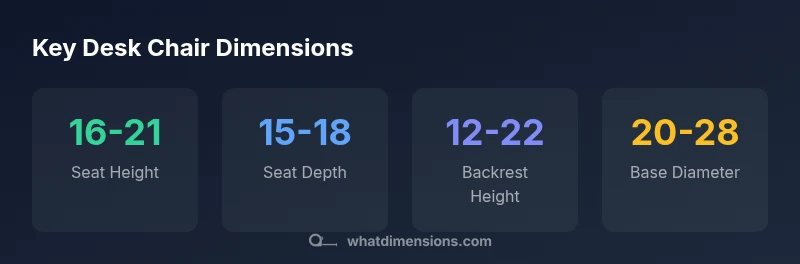
Desk chair dimensions typically center on a seat height of 16–21 inches from the floor, seat depth 15–18 inches, and backrest height 12–22 inches. For most home work setups, a chair with adjustable height and a 16–18 inch seat width fits a wide range of users and desk heights. What Dimensions guides you through practical ranges for real-world spaces.
Understanding desk chair dimensions
According to What Dimensions, desk chair dimensions matter for fit and long-term comfort in homes and offices. The What Dimensions team analyzed typical ranges to help homeowners, students, designers, and shoppers pick chairs that support proper posture while fitting within standard desk heights. In practice, the most important measurements are seat height, seat depth, and backrest height, along with armrest reach and overall footprint. This guide uses practical ranges based on real-world work setups and reflects diverse body sizes and desk configurations. When you choose a chair, you should consider how your desk height interacts with your seated posture, how much knee room you have, and whether your arms can rest comfortably at your desk without elevating or slouching.
Key measurements you should know
To compare chairs quickly and avoid post-purchase regrets, focus on a core set of dimensions:
- Seat height (floor to seat): Typically 16–21 inches. This range aligns with most standing desk heights and standard desks, and it can be adjusted on most ergonomic chairs.
- Seat depth (edge of seat to backrest): Commonly 15–18 inches. A deeper seat supports thighs, but too deep can limit circulation if knees touch the edge.
- Seat width: Usually 16–20 inches; wider seats provide hip room but can reduce leg clearance on tight desks.
- Backrest height: Often 12–22 inches above the seat, affecting upper back and shoulder support.
- Armrest reach/width: Adjustable armrests help keep shoulders relaxed and forearms parallel to the desk.
- Base footprint: A stable base, often around 20–28 inches diameter, affects stability and the ability to maneuver in tight spaces.
- Weight capacity: Look for chairs rated to support your body weight with some headroom.
Ergonomics: how chair dimensions interact with your desk
The fit between chair and desk is a dynamic relationship. If your seat height places your elbows too high or too low relative to the desk surface, you’ll likely adopt awkward postures, straining shoulders and neck. A chair that is too tall may leave your feet hovering, reducing blood flow and comfort; one that is too short can force a knee bend that compresses the lower back. Desk height is typically around 29–30 inches for many homes and offices, but actual ranges vary. Within those constraints, you want a chair with adjustability in height, depth, and lumbar support so you can tailor the posture to your physiology. What Dimensions research indicates that the most versatile chairs accommodate a broad range of users while maintaining ergonomic alignment across different desk heights.
Desk chair dimension quick reference for fit and ergonomics
| Dimension | Common Range (inches) | Importance | Notes |
|---|---|---|---|
| Seat width | 16-20 | Hip clearance and edge comfort | Lower edge should not press thighs |
| Seat depth | 15-18 | Knee clearance and thigh support | Front edge should not press behind knees |
| Seat height (floor to seat) | 16-21 | Foot positioning with desk height | Aim for 2-3 inches of clearance for legs |
| Backrest height | 12-22 | Upper back support and posture | Higher backs support shoulders; shorter backs support lumbar range |
| Armrest width/adjustment | Varies | Shoulder comfort and elbow support | Include width adjustability in checklist |
Quick Answers
What is the most important desk chair dimension to consider?
Seat height and depth are typically the most critical for desk alignment. If these numbers don't align with your desk, you may slouch or strain the knees. Look for chairs with reliable height and depth adjustment.
Seat height and depth are key. Make sure you can adjust them to align with your desk to avoid strain.
How do I measure my desk to ensure chair compatibility?
Measure desk height, depth, and the clearance around the chair when pushed in. Compare these with the chair’s minimum and maximum range and test whether your forearms rest parallel to the desk.
Measure your desk height and depth, then compare with the chair’s adjustable range.
Do I need an adjustable backrest or lumbar support?
Adjustable backrests help maintain proper thoracic support as you move. Lumbar supports that can be tuned to your curve reduce lower back strain during long sessions.
Adjustable back support helps keep your spine healthy.
Can a chair with fixed dimensions work for multiple users?
Fixed-dimension chairs are less forgiving when user heights vary. An adjustable chair broadens compatibility, making it more likely to fit several people comfortably.
Adjustability matters for different body sizes.
What desk height suits most chairs?
Most desks are in the 29–30 inch range, but chairs should offer height adjustment to match your specific desk. If your desk is higher or lower, look for chairs with wider height range.
Aim for a desk around 29–30 inches, with adjustable chair height.
What should I consider if I have a small workspace?
In small spaces, prioritize a compact chair with a small footprint and high adjustability. A chair that tucks neatly under the desk and has a narrow base helps maximize floor space.
Choose a chair with a small footprint and good adjustability.
“Good desk chair dimensions are not one-size-fits-all; the right measurements align your hips, knees, and spine with your desk. This alignment reduces fatigue and supports long work sessions.”
Main Points
- Measure your workspace before buying to ensure fit
- Prioritize adjustable height and depth for versatility
- Ensure knee clearance and arm alignment with the desk
- Verify backrest support matches your torso height
- Check base stability and wheel suitability for your floor