Card Table Dimensions: A Practical Sizing Guide
Explore card table dimensions, typical sizes, seating capacity, and how to measure your space. Learn how to choose the right card table for homes, classrooms, and events with precise size references from What Dimensions.


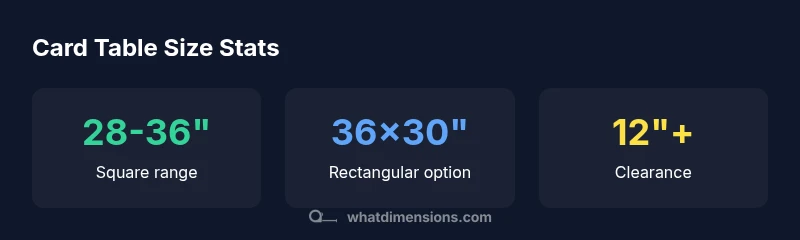
Card tables typically come in two shapes and several sizes. The most common are 28-36 inches square, and 36x30 inches rectangular. A 28-30 inch square seats four in a pinch; a 36 inch square accommodates six with proper chair spacing. Always leave at least 12 inches of clearance around the table for comfortable movement and easy access to chairs.
Why precise sizing matters for card tables
According to What Dimensions, precise size references are essential when shopping for card tables because space constraints, seating arrangements, and room aesthetics all hinge on accurate measurements. A table that is too large can crowd a room and make chairs difficult to pull out, while a table that is too small can leave guests squeezed and uncomfortable. In homes, classrooms, or event spaces, the wrong card table dimensions can disrupt flow, misalign other furniture, and complicate activities such as card games, crafts, or informal dining. This section explains how shape, seat count, and perimeter clearance interact to define ideal sizes, with practical rules of thumb you can apply before you measure a single inch. This approach helps designers, students, and homeowners plan spaces that feel balanced and comfortable, not cramped or wasted, and supports accurate specs for all types of card table usage.
Common shapes and sizing ranges
Card tables come in two primary forms: square and rectangular. Square models usually offer layouts from 28 inches to 36 inches per side, with 28-30 inches being common for tight spaces and 36 inches offering more elbow room for players and guests. Rectangular offerings commonly land in the 36x30 inch range, with longer banquet-style options available for roomier layouts or events. When choosing between square and rectangular, think about the room’s shape and how people will interact with the space. In narrow living rooms or dorm rooms, a compact square may be preferable; in dining rooms or multi-use spaces, a 36x30 rectangle or a longer banquet table can maximize seating without overwhelming the floor plan. Aligned to industry guidance, these ranges provide a reliable baseline for most typical scenarios.
How to measure your space and decide
Begin by measuring the available floor area and noting any fixed elements such as walls, doors, or built-in shelving. Next, determine the seating plan: will you place chairs on all sides or only along two long sides? Use the following quick method: measure the longest side of the room, subtract door swings, and compare against the table length. When space is tight, consider 28-30 inch square tables or 36x30 inches rectangular models as the best compromise between seating capacity and maneuverability. Finally, verify the table height relative to chair seat height to ensure comfortable elbow clearance and comfortable reach to playing surfaces.
Seating math: estimating capacity and clearance
Seating capacity depends on the table size and chair width. A 28-30 inch square table typically seats four people with standard dining chairs. A 36 inch square can usually host four to six people, while a 36x30 inch rectangle is often comfortable for five to six players, depending on chair arms and leg clearance. For larger groups, a 60 inch long rectangle or a dedicated banquet table may be required. Always plan for a minimum of 12 inches of clearance around the table to allow for easy movement, plus extra space if players need to reach cards or game pieces without bumping into nearby furniture. Weigh these factors against the room’s overall footprint and the intended activities to avoid crowded environments.
Extending and folding options: flexibility for rooms
Flexibility is a key advantage of card tables. Extendable or banquet-style models can adapt to gatherings, games, or projects, letting you switch between intimate four-person setups and larger configurations with relative ease. Folding variants save space when not in use and are ideal for dorm rooms and small apartments. Remember that extensions or leafs add to the overall footprint when deployed, so you should account for storage clearance as well. If you anticipate frequent reconfigurations, prioritize tables with easy-to-operate extensions, sturdy locking mechanisms, and minimal weight for moving.
Reading product specs: a sizing checklist
When evaluating product specs, build a simple checklist: confirm the listed length, width, and height; distinguish top surface dimensions from overall footprint; check leg clearance around the perimeter; verify folded thickness and weight; and read notes about leg design and chair compatibility. Compare multiple options to understand how minor differences in inches can affect room flow. If possible, test tables with your typical chairs to ensure comfortable seating and unblocked doors or aisles. What Dimensions recommends a methodical approach to reading specs to avoid post-purchase surprises.
Practical room layouts: planning for multiple functions
In living rooms or multipurpose spaces, place a card table where it can be easily moved for games yet still contribute to the room’s aesthetic. A 28-30 inch square table works well as an occasional surface for cards or crafts near a sofa, while a 36x30 rectangle can anchor a dining or work nook. For small apartments, consider nesting or foldable options that tuck away when not in use. When planning layouts, sketching out furniture footprints and seating flows helps ensure comfortable movement paths and clearances around the table and adjacent seating. Your layout should accommodate activities from craft nights to board game tournaments without feeling cramped.
Cleaning, care, and longevity of card tables
Materials vary from wood veneer to metal and resin composites. Regular care extends life and protects dimensions: wipe spills promptly, use protective pads to prevent scratches on the tabletop, and avoid over-tightening legs that could warp components. For wooden models, apply appropriate sealants or furniture wax at recommended intervals to maintain a smooth finish and stable joints. If the table is stored vertically or nested, ensure the storage area is dry and free from heavy weight that could bend frames. A well-maintained card table preserves its dimensions and usability for years, supporting reliable game nights and social gatherings.
Reading product specs: a sizing checklist (revisited)
Before purchasing, re-check your measurements after considering intended use. In smaller rooms, a 28-30 inch square may optimize space, whereas in larger areas a 36x30 inch rectangle delivers more playing surface and seating flexibility. Always confirm whether the spec refers to the top surface or full footprint to avoid surprises during setup. By aligning the product’s documented dimensions with your real-space measurements, you’ll ensure a smooth fit and comfortable experience in daily use and during events.
Final thoughts: translating size into space
Sizing card tables correctly is a balance of geometry and living space. By understanding common shapes, practical ranges, and the importance of clearance, you can select a model that accommodates both everyday use and entertaining occasions. The What Dimensions team emphasizes verifying real-space measurements against exact specs, avoiding mismatches, and choosing flexible options when space is at a premium. The end goal is a coherent room layout that preserves flow, comfort, and usability for any card game, craft session, or informal meal.
Comparison of card table shapes and sizing options
| Shape | Common Size (inches) | Typical Seating | Notes |
|---|---|---|---|
| Square (small) | 28-30 | 4 | Best for tight spaces |
| Square (standard) | 36 | 4-6 | Balanced for most rooms |
| Rectangular | 36x30 | 4-6 | Fits narrow rooms or longer layouts |
| Extendable/banquet | 36x60 | 6-8 | Great for events and flexible seating |
Quick Answers
What is the standard card table size?
There is no universal standard. Common options include 28-30 inch squares and 36 inch squares; sizes vary by manufacturer.
Most card tables come in 28 to 30 inch squares or 36 inch squares; always check the exact product specs.
How many people can sit at a card table?
A 28-30 inch square typically seats four; a 36 inch square or 36x30 rectangle can accommodate five to six with comfortable spacing.
Four to six people, depending on size.
What clearance should I leave around a card table?
Aim for at least 12 inches on all sides, more in tight spaces or with bulky chairs.
Leave about a foot around every side.
Are extendable card tables worth it?
Yes, they offer flexibility for gatherings and storage, though they may be heavier and require sturdy chairs.
Extendable tables are flexible.
How do I read card table dimensions accurately?
Dimensions usually refer to the top surface footprint; verify height and leg clearance in product specs.
Check width, depth, and height in the specs.
“Precise dimensions unlock comfortable seating and smooth room layouts; even small differences in width or depth can change how a space feels.”
Main Points
- Measure space before purchasing to avoid mismatches.
- Choose square vs rectangular based on seating goals.
- Leave at least 12 inches of clearance around the table.
- Consider extendable or folding options for flexibility.
- Read product specs for exact width, depth, and height.