Brick Dimensions: Standards, Tolerances, and Measurements
Understand brick dimensions, regional size standards, tolerances, and practical measuring tips to plan accurate material quantities and ensure a smooth masonry process.


According to What Dimensions, brick dimensions vary by region and brick family, with standard tolerances that influence fit in any masonry project. For homeowners, students, and designers, understanding typical size bands helps in estimating material needs, planning mortar joints, and avoiding costly rework. This quick answer introduces common size ranges and points you to practical measuring methods and references.
Understanding Brick Dimensions: Why They Matter
Brick dimensions are more than a catalog entry; they define how masonry layouts meet doors, windows, and structural systems. In practice, people confuse nominal sizes with actual working measurements. A standard brick may be described by its nominal length, width, and height, but the true fabricated size shifts slightly due to manufacturing tolerances and the presence of mortar joints in finished walls. For architects, contractors, homeowners, and students, grasping these distinctions helps you forecast material quantities, plan cavity widths, and avoid costly rework. What Dimensions emphasizes that the core idea is consistency: using defined size bands and documented tolerances makes it possible to coordinate brick courses, control the alignment of reveals, and ensure repeatable results across batches. In the following sections, we explore typical size families, how regional differences surface, and practical methods for verifying dimensions on site.
Common Brick Size Families Across Regions
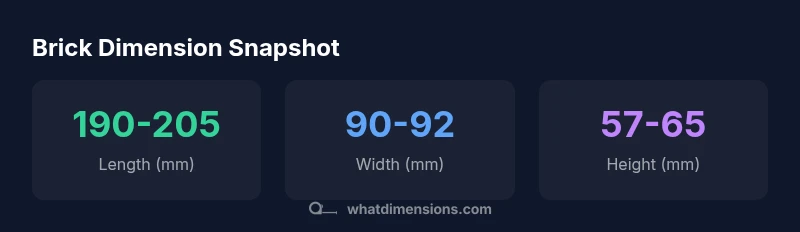
Brick size families cluster around three axes: length, width, height. In North America, you’ll encounter nominal US standard bricks around 190-205 mm long, about 90-92 mm wide, and 57-65 mm tall when measured after firing and curing. Modular variations bring a longer length with similar width and height ratios, while full-size or engineering bricks can depart noticeably from the baseline. Across Europe and parts of Asia, European standards often list dimensions in millimeters with tighter tolerances, commonly around 214-215 mm in length, 102 mm in width, and 65-70 mm in height. In practice, builders mix and match within these families, but their work depends on predictable joints, bed thickness, and straight, level courses. When planning a project, consult supplier data sheets to confirm the exact numbers for the batch you intend to use.
Tolerances and Real-World Variations
Manufacturers build bricks to tolerances that compensate for processing differences, raw material variability, and kiln conditions. Even within a single batch, you may see small deviations that accumulate that influence the alignment of a wall. Across a project, these differences influence mortar joint thickness, grout volumes, and the alignment with openings. What Dimensions Analysis, 2026, notes that the effective working dimensions evolve as bricks are laid, joints are mortared, and plumb lines are checked. Designers should incorporate a practical tolerance envelope when drafting plans and BOMs, and installers should verify a few bricks from each batch on the jobsite before fabricating shelves, reveals, or jambs. The key takeaway: dimension planning is an ongoing process, not a one-time measurement.
How to Measure and Verify Brick Dimensions
Accurate measurement starts with calibrated tools and a clear method. On-site, measure length, width, and height on multiple bricks from the same batch, then record the range you observe. Use a digital caliper for the most consistent results, paired with a steel tape for field checks. Note whether you are recording nominal dimensions (as referenced in catalogs) or actual finished dimensions. If your project spans multiple batches, measure each batch independently and compare to supplier specifications. Keep a written log that ties each dimension to the batch code, brick type, and project phase. Finally, communicate any out-of-tolerance findings to procurement so substitutes or adjusted layouts can be planned early.
Practical Implications for Mortar Joints and Grout
Mortar joints are the invisible variable that can shift the effective brick footprint in a wall. The thickness of joints—whether in standard bed joints or horizontal joints—adds to the overall thickness of the assembly. In practice, plan for a small, consistent joint thickness and verify the cumulative effect across a wall length. This is especially important for openings, cabinet panels, and built-in fixtures where precise clearances matter. Documentation should include joint tolerances alongside brick dimensions, so field teams can verify fit during installation and avoid last-minute rework.
Regional Standards and Notable Examples by Country
Different countries anchor brick dimensions to national or regional standards. In the United States, industry practice often follows ASTM-based references, while local jurisdictions may apply their own tolerances for brickwork and veneer. Europe commonly references BS EN standards that harmonize geometry and tolerances across member states. The goal of these standards is to reduce mismatch between bricks from different suppliers and ensure predictable behavior in walls and facades. Designers who work across borders should check the latest edition of applicable standards and confirm the exact numbers with suppliers before ordering.
Sourcing and Documentation for Construction Projects
Documentation is your ally when working with bricks, because dimension data travels with product codes, certifications, and batch numbers. Start with the supplier’s data sheet, which lists nominal and actual measurements, tolerances, and packaging details. Build your bill of materials around the documented ranges, and specify the batch you intend to purchase to minimize surprises. For projects that require a precise fit, consider ordering a small test lot and validating the dimensions in place before committing to larger quantities. What Dimensions recommends annotating your plans with both nominal sizes and measured actuals to guide future remodels.
Design Considerations for Builders and Designers
Designers should plan around a dimension envelope that accommodates variations while preserving the intended aesthetics and structural integrity. Use CAD models that incorporate tolerances for brick length, width, and height, plus joint gaps, so walls align with openings and fixtures. For renovated spaces, include explicit notes on the maximum allowed variation and specify acceptable substitution bricks. Communicate clearly with contractors, suppliers, and clients about the dimension strategy, because consistent references save time and money and deliver predictable results on the jobsite. In sum, a rigorous approach to brick dimensions translates into faster build cycles and fewer surprises during final inspection.
Common brick size ranges by region
| Brick Type | Length (mm) | Width (mm) | Height (mm) |
|---|---|---|---|
| US standard brick (nominal) | 190-205 | 90-92 | 57-65 |
| US modular brick | 194 | 57 | 92 |
| UK standard brick | 214-215 | 102 | 65-70 |
Quick Answers
What are the most common brick dimensions in the United States?
In the US, common sizes include nominal lengths around 190-205 mm, widths about 90-92 mm, and heights around 57-65 mm. Modular bricks offer similar proportions with different lengths. Always check the supplier data sheet for the exact batch you’re using.
In the US, typical bricks are about 7.5 to 8 inches long, 3.5 inches wide, and 2.25 inches tall, but always verify with the supplier.
How do mortar joints affect overall brick dimensions?
Mortar joints add thickness to the wall and can shift the effective dimensions of each brick-by-brick course. Plan for consistent joint thickness and verify the cumulative effect along walls, jambs, and openings.
Joints add thickness, so plan for a consistent gap across the wall.
What tolerances are typical for brick dimensions?
Tolerances are typically small and vary by region and brick type. Expect minor deviations per brick, which accumulate across a wall. Always confirm with the batch supplier and document any variance in your plans.
Bricks usually have small tolerances; check each batch and document any variance.
How should I record brick dimensions for a remodeling project?
Record length, width, height for each batch, note nominal vs actual sizes, and include mortar joint thickness in your logs. Link dimensions to batch codes and project phase to keep changes traceable.
Note the exact dimensions and batch IDs so remodeling doesn't surprise you later.
Are there bricks with non-standard or oversized dimensions?
Yes, decorative or engineered bricks can deviate from standard sizes. Always verify with the supplier, and consider testing a small batch before full-scale ordering.
Some bricks are non-standard; confirm with the supplier and test a sample batch.
“Brick dimensions underpin precise layouts and easy integration with standard mortar beds. Consistent size references save time on-site and reduce rework.”
Main Points
- Know regional ranges before budgeting materials
- Account for mortar joints when calculating fit
- Use ranges to accommodate tolerances and batch variation
- Verify dimensions with supplier documentation before purchase
- Document brick dimensions for future renovations