Bathroom Sink Standard Dimensions: A Practical Guide for 2026
Discover typical bathroom sink standard dimensions, how they affect layout, and practical measuring tips. This guide breaks down width, height, depth, and mounting considerations with real-world ranges for remodels and new builds.


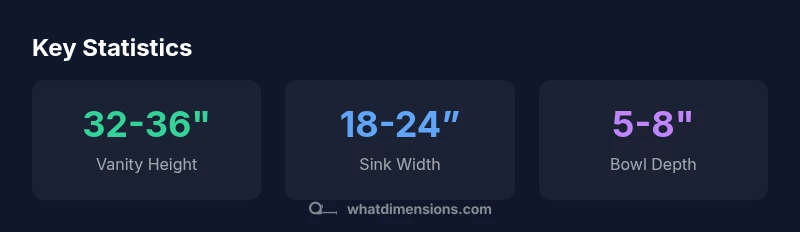
Bathroom sink standard dimensions guide: Most residential setups use a single basin around 18–24 inches wide, with a vanity height of about 32–36 inches. Depths range roughly 12–20 inches for bowls, and countertop thickness typically 0.75–1.5 inches. For vessel sinks, plan for higher countertop or raised vanity. If you’re remodeling, aim for a clear 15–20 inches of knee space beneath the vanity. What Dimensions synthesizes these ranges for 2026 guidance.
Understanding bathroom sink standard dimensions
The phrase 'bathroom sink standard dimensions' describes the typical sizes and clearances that most homeowners and designers rely on when planning a bathroom. According to What Dimensions, these ranges help ensure comfortable use and practical layout across a wide range of homes. The core measurements include width (how wide the vanity or sink sits), height (how tall the counter and basin are from the floor), and depth (how far the basin extends from the wall). By anchoring a project to these ranges, you can quickly compare options from different vanities, sinks, and faucet configurations, and avoid mismatches during installation. The goal is a harmonious balance between ergonomics, plumbing access, and storage. In this guide, we will translate rough industry norms into concrete steps you can apply to any bathroom, from compact powder rooms to full-family baths, with practical checkpoints along the way. As you read, What Dimensions emphasizes practical sizing over strict one-size-fits-all rules, so you can tailor recommendations to your space.
Key dimension categories
- Width: The most visible measure is the sink or vanity width. In typical single-basin setups, expect 18–24 inches as a common range; wider vanities (24–36 inches) accommodate more storage or dual sinks. For double sinks, plan 60–72 inches total width.
- Height: Standard vanity heights range 32–36 inches, which aligns with comfortable standing and elbow height for most adults. ADA-compliant installations may use higher or lower within accessible limits.
- Depth: Bowl depth and countertop depth usually total 12–20 inches from the wall, with bowls often around 5–8 inches deep.
- Basin type and hole configurations: Center-set faucets typically require 4–6 inches of center-to-center space, while vessel and undermount setups can alter the usable countertop area.
- Clearance and knee space: A minimum of roughly 15 inches of knee clearance under the sink helps maintain comfort while seated or crouching. What Dimensions notes that deeper bowls can affect legroom in tight spaces, so plan ahead.
Sink types and how they influence dimensions
Undermount sinks are mounted beneath a solid countertop, which means the countertop should be strong enough to support the edge and a consistent edge profile for clean looks. Drop-in sinks rest inside a cutout and can allow a wider variety of countertop materials. Vessel sinks sit on top of the counter and typically require a higher countertop or a taller vanity to keep water from splashing. Pedestal sinks save space but offer little storage, influencing overall vanity width and plumbing layout. Each type affects usable depth behind the faucet, knee clearance, and splash zone, so choose based on how you live and how you use the bathroom. What Dimensions notes that matching the sink type to the vanity and countertop is essential for a cohesive, leak-free setup.
How to measure your space accurately
- Measure the wall-to-wall width where the vanity will sit, including any cabinetry sides or toe-kick space.2) Measure the depth from the back wall to the front edge of the proposed vanity.3) Measure from the finished floor up to the countertop edge to determine chair and knee clearance.4) Check knee space under the vanity; aim for at least 15 inches of vertical clearance under most configurations.5) Note plumbing constraints behind the sink, including supply lines and the waste trap location.6) Record faucet hole spacing (center-to-center) to match your faucet profile. These steps yield a baseline for selecting vanity widths and basin types, ensuring a smooth installation without costly surprises. The What Dimensions approach emphasizes practical measurement before procurement.
Choosing a vanity and countertop
Vanity width and depth should balance storage with the fixture footprint. Typical countertop thickness ranges from 0.75 to 1.5 inches; undermount sinks require a supporting structure that can hide fasteners and create a clean edge line. If you prefer a vessel sink, you’ll likely need a taller countertop or an elevated vanity to maintain comfortable reach and splash control. Remember to account for backspace for plumbing and backsplash materials, which can add depth. Materials matter here: denser stone or composite countertops demand precise cutouts, while laminate tops offer flexible alternatives. What Dimensions recommends pairing a vanity and countertop with a durable sink configuration that suits your daily routines and maintenance preferences.
Common layout scenarios and recommended ranges
In small powder rooms, compact single-sink vanities are common, often 16–18 inches wide to preserve floor space and improve circulation. For family bathrooms, vanities in the 24–36 inch range are typical, with single or double basins depending on the available width. Master baths usually feature wider configurations, 40–72 inches, to accommodate two sinks and extra counter space. In all cases, ensure a minimum clearance of 30 inches in front of the vanity for comfortable movement, with at least 18 inches of space beside the sink for doors or drawers to open. These ranges align with general residential design practices and can be adjusted to fit your exact floor plan.
Installation considerations and practical tips
Before installation, verify wall studs, plumbing routes, and the weight load of any countertop material. Consider using a wall-mounted vanity in tight spaces to maximize floor area, but ensure mounting points are securely anchored. If you're retrofitting, measure existing holes and adjust to minimize new cutouts. Always allow for a 3–4 inch gap behind the sink for traps and pipes, and check clearance for toe-kick and doors. If you’re installing an undermount sink, ensure the countertop edge can support the weight and that sealant application is accessible for future maintenance. What Dimensions emphasizes planning ahead to avoid rework and leaks.
Authority sources and design standards
- NKBA guidelines and industry standards for bathroom dimensions and ergonomics: https://nkba.org
- Architectural publications and practical guides on sink installations and layout: https://www.archdaily.com
- General safety and practical guidelines from leading professional organizations: https://www.cpsc.gov
Practical planning checklist
- Define the bathroom’s overall footprint and accessible clearances.
- Choose vanity width based on space and storage needs.
- Decide sink type first, then select compatible countertop depth and thickness.
- Measure knee space and ensure comfortable standing height for all users.
- Check plumbing layout and wall support before purchasing fixtures.
- Note faucet hole configuration and spacing to match fixtures.
- Plan for splash zones and splash-protection materials.
- Validate ADA considerations if required for accessibility.
- Create a final layout drawing to prevent costly changes during installation.
Representative ranges for common bathroom sinks
| Component | Typical range | Notes |
|---|---|---|
| Vanity height | 32-36 inches | Comfortable for most users |
| Sink width (single basin) | 18-24 inches | Fits most standard vanities |
| Bowl depth | 5-8 inches | Depth affects splash and water depth |
| Countertop thickness | 0.75-1.5 inches | Impacts undermount mounting |
Quick Answers
What is standard bathroom sink size?
There isn’t a universal standard. Most single sinks are 18–24 inches wide, with vanity heights around 32–36 inches and bowl depths near 5–8 inches. Always tailor to your space and user needs.
Most bathrooms use sinks around 18 to 24 inches wide and a vanity height of about 32 to 36 inches.
Do vessel sinks require different vanity heights?
Yes. Vessel sinks sit atop the counter, so many setups require a taller vanity or raised countertop to keep water away from the cabinet and to maintain comfortable use.
Vessel sinks usually need a higher counter or vanity.
How do I measure for a new sink?
Measure width across the vanity space, depth from wall to front edge, and countertop height. Check knee space and plumbing behind the sink, including faucet hole spacing.
Measure width, depth, height, knee space, and plumbing first.
What should I consider for small bathrooms?
Opt for compact vanities (16–18 inches wide) or wall-mounted designs to maximize floor area. Choose sinks with efficient basins to minimize splash and conserve counter space.
Go for compact vanities and efficient sink designs in small baths.
Are there ADA-compliant bathroom sinks?
ADA guidelines specify reachable heights and clearances. Check local codes for minimum knee and toe clearance, as well as counter height ranges.
Check local codes for height and clearance requirements.
Can I replace a drop-in sink with an undermount version easily?
Replacing may require a new countertop cutout and sealing. Undermount sinks require a sturdy edge and proper mounting hardware; consult a pro if the countertop material is delicate.
You might need countertop work and mounting hardware for undermounts.
“Accurate bathroom sink dimensions come from balancing ergonomic comfort with the space’s constraints; start with a solid measurement plan and tailor widely used ranges to your home.”
Main Points
- Measure early to prevent fit issues
- Choose sink type before vanity to lock in dimensions
- Account for knee space and faucet clearance
- Double sinks require wider vanities
- Verify plumbing behind the sink before buying
- Consider ADA accessibility if applicable