Sink Base Cabinet Dimensions: A Practical Guide for 2026
A data-driven guide to understanding sink base cabinet dimensions, with typical ranges, measurement steps, and planning tips to ensure a precise, installation-ready fit for kitchens and bathrooms.


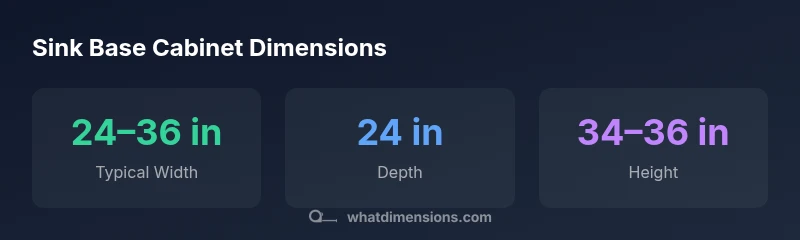
Sink base cabinet dimensions typically define the footprint for under-sink storage. Most standard bases are 24 to 36 inches wide, 24 inches deep, and about 34 to 36 inches tall, with extra clearance for plumbing and adjustable feet. When planning, consider rough-in plumbing, toe-kick height, and future faucet or disposal access.
Understanding sink base cabinet dimensions
According to What Dimensions, precise measurements save time and prevent installation rework when planning sink base cabinet dimensions. In practice, the base cabinet sets the footprint for under-sink storage, and its width, depth, and height must align with the sink, countertop, and any appliances. Many kitchens rely on standard sizing for compatibility, but variations exist for custom sinks, double bowls, and different countertop edge profiles. This section explains how to interpret each dimension and how to translate room constraints into a workable cabinet size. We discuss how rough openings, toe-kicks, and plumbing clearances influence the final spec. Remember that real-world installations often require minor adjustments to fit hoses, traps, and shutoff valves without crowding the cabinet interior. The goal is a clean, accessible space where the sink, faucet, and garbage disposal can operate without conflict while maintaining a balanced look with adjacent cabinetry.
Typical dimension ranges you should plan around
When planning sink base cabinet dimensions, start with standard width options. In most kitchens, common widths fall in the 24–36 inch range, which covers single- and double-bowl sinks and leaves space for doors and adjacent base units. Depth is typically 24 inches, a balance between countertop support and plumbing access. Height usually sits around 34–36 inches to align with standard countertops and eye level for comfortable use. Note that some projects use deeper or shallower cabinets depending on backsplash design, appliance clearances, or a desire for more interior storage. If you’re pairing a wall countertop with a taller sink or an offset faucet, you may need to adjust toe-kick height or cabinet leg options. Always cross-check with your sink dimensions and faucet specs before purchasing.
How to measure for a new sink base cabinet
Begin by recording the face-frame width you want to expose and the interior depth needed for the sink, plumbing, and accessories. Measure the distance between side walls, excluding the finished cabinet face, to determine the rough opening width. For depth, measure from the toe-kick area to the back wall, ensuring space for plumbing fixtures and the garbage disposal if applicable. Height is measured from the finished floor to the underside of the countertop; account for backsplash or tile thickness. Create a quick sketch showing the sink outline, faucet location, disposal, and trap, then translate those measurements into cabinet dimensions with a margin for error like 1/8 to 1/4 inch. Finally, confirm that the chosen width accommodates the doors and drawers on either side without rubbing. This careful approach reduces rework and improves fit.
How sink type affects base cabinet dimensions
Single-bowl and double-bowl sinks have different footprint requirements; undermount and drop-in styles also influence cabinet depth and interior clearance. Farmhouse or apron-front sinks often require wider bases to accommodate the apron and plumbing space behind. For vessel sinks perched above the counter, you may need higher countertops or a shallower cabinet to maintain line-of-sight with the faucet. If you install a garbage disposal, leave extra space behind the cabinet to allow for trap configuration and service access. When choosing dimensions, consider the sink’s weight, drainage orientation, and whether there will be a dishwasher or dishwasher air gap nearby. The goal is symmetry with adjacent cabinetry while preserving essential working clearances.
Custom and semi-custom options
While standard sizes cover most projects, custom or semi-custom sink bases offer flexibility for unusual sinks or tight rooms. Custom bases allow precise control over width, depth, and toe-kick height, but require longer lead times and higher budgets. Semi-custom options can include adjustable shelves, integrated plumbing channels, or soft-close hinges that help maximize interior storage while keeping lines clean. If you anticipate future changes to the sink, such as a deeper model or a different faucet, consider adjustable legs or a taller base with reconfigurable interior supports. Always confirm cabinet material tolerances and warranty implications when deviating from stock dimensions. A small design adjustment today can save major rework later.
Installation planning checklist
Create a measurement packet that includes rough-in rough openings, plumbing layouts, and appliance clearance. Verify that the sink base cabinet width aligns with countertop width and overhang. Check that there is at least 1–2 inches of clearance around plumbing fixtures behind the cabinet, and reserve space for the toe-kick. Confirm the door swing will not interfere with adjacent cabinetry or appliances. Prepare for leveling shims and adjustable feet to compensate for uneven floors. Finally, verify that your chosen base cabinet matches the sink manufacturer’s mounting specification and that disposal access is easy for service.
Common mistakes to avoid
A frequent error is assuming standard cabinet widths fit every sink; measure twice, purchase once. Forgetting to account for plumbing can lead to tight traps or leaks. Overlooking toe-kick clearance can create uncomfortable foot space or misaligned doors. Another mistake is choosing a height that places the faucet too high or too low relative to the countertop; verify with your actual sink and faucet before ordering. By documenting measurements and using the sink’s rough-in drawing, you limit the risk of nonstandard gaps and misfits.
Common dimensions for sink base cabinets
| Dimension | Typical Range | Notes |
|---|---|---|
| Width | 24–36 inches | Common widths for kitchens and vanities |
| Depth | 24 inches | Balancing countertop space and plumbing access |
| Height | 34–36 inches | Aligns with typical countertop heights |
Quick Answers
What is the most common width for sink base cabinets?
Most kitchens use 30 to 36 inches wide bases to fit standard sinks and allow space for doors and adjacent units. For smaller kitchens, 24 inches is also common. Always check the sink width and cabinet side panels before ordering.
Most homes use 30 to 36 inches; verify your sink width before buying.
Do sink base cabinets require a rough opening larger than the cabinet?
Yes. The rough opening should be slightly larger than the cabinet to allow for framing, shims, and plumbing connections. This extra space helps ensure a snug, level fit without forcing the cabinet into place.
Yes—leave space for framing and plumbing connections.
Can I change base cabinet height to match a taller sink?
Height can be adjusted within standard countertop heights; typically stay within 34–36 inches to match most counters, but you can use taller cabinets for custom setups if needed. Check with your sink manufacturer and countertop installer.
Yes, but keep countertop alignment in mind.
Are there standard toe-kick heights for sink bases?
Toe-kicks are commonly around 3 to 4 inches high, with some cabinets allowing adjustable toe-kicks to improve comfort and airflow. Verify the exact height in product specs.
Usually 3–4 inches; check product specs.
What’s the difference between sink base cabinet dimensions and vanity cabinet dimensions?
Sink base cabinets are designed for kitchens and laundry areas with plumbing clearance and standard appliance hookups; vanity cabinets may prioritize countertop depth and bathroom aesthetics. Dimensions differ based on function and plumbing access needs.
Sinks focus on plumbing; vanities focus on bathroom styling.
“Accurate measurements are the foundation of a successful installation; sink base cabinet dimensions should be confirmed against the sink and plumbing layout early in the design.”
Main Points
- Measure twice, plan for plumbing clearance.
- Know standard width, depth, and height ranges.
- Match cabinet height to countertop height for comfort.
- Account for toe-kick and door swing in layout.