Bathroom Cabinet Dimensions: A Practical Sizing Guide
Learn precise bathroom cabinet dimensions to plan layouts, measure spaces, and choose base, wall, and tall cabinets. This guide covers typical ranges, measurement tips, and practical room-by-room strategies.


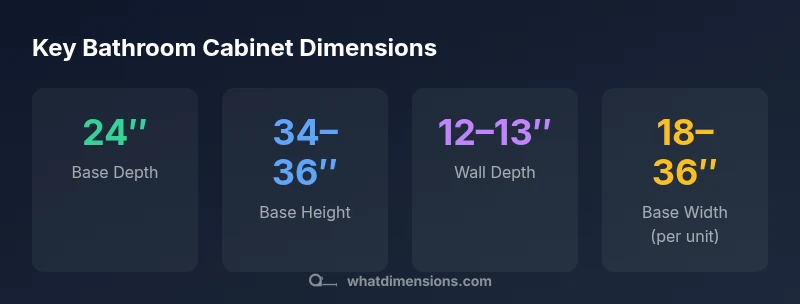
Understanding bathroom cabinet dimensions helps you plan layouts, avoid fitting issues, and maximize storage. In general, base cabinets are about 24 inches deep with widths from 18 to 36 inches and heights around 34 to 36 inches. Wall cabinets typically sit 12 to 13 inches deep, with widths from 12 to 42 inches and heights from 30 to 42 inches.
Measuring for bathroom cabinet dimensions
Accurate bathroom cabinet dimensions start with precise measurements of the space and the constraints around it. Begin by mapping the room: measure the full width and depth where you plan to place the vanity or wall cabinet, and note any obstructions such as radiators, outlets, or plumbing lines. Record ceiling height, doorway clearances, and any corner angles. When replacing an existing vanity, measure the current cabinet footprint, the sink width, and the plumbing footprint. Always verify how much countertop overhang you want and how much toe-kick room is available. For wall cabinets, measure the space between the countertop and the ceiling, and ensure adequate clearance for doors to open without hitting fixtures. Write measurements in a single sheet, repeat them on a separate line for cross-checking, and keep a rough sketch with labeled dimensions. This foundational step directly informs the actual bathroom cabinet dimensions you can safely install.
Understanding base vs wall vs tall pantry dimensions
Cabinets come in several types, each with typical depth, height, and width ranges. Base cabinets commonly run about 24 inches deep to host sinks and plumbing fixtures, with widths that can be configured per unit from roughly 18 to 36 inches. Wall cabinets are much shallower, usually 12 to 13 inches deep, and their heights are flexible, typically 30 to 42 inches to suit countertop height and ceiling clearance. Tall pantry cabinets offer deep storage verticality, often 12 to 24 inches deep with heights that can reach 84 inches or more, depending on ceiling height and the room layout. Medicine or feature cabinets tend to be shallower than base units, with depths around 3 to 6 inches and widths from 14 to 30 inches. Understanding these categories helps you design an overall layout that balances storage with traffic flow.
Accounting for plumbing, outlets, and fixtures
Plan for plumbing and outlets before finalizing any cabinet dimensions. Faucet clearance, sink width, and exposed plumbing can reduce usable cabinet footprint. If an outlet sits behind a base cabinet, you may need a deeper vanity or an alternate layout to conceal wiring safely. Consider the depth of toe-kicks and any under-sink plumbing when choosing base cabinet depth; if the plumbing is chunky or the sink apron is wide, you may require a shallower base or an adjustable toe-kick design. Likewise, wall cabinets should respect electrical box locations and any venting near the cabinet area. Always double-check with your installer or plumber before cutting or ordering units.
Overhangs, toe kicks, and countertop integration
Countertop overhangs affect effective cabinet width and the space visible beneath the countertop. A typical countertop overhang is around 1 to 1.5 inches, but this varies with edge profiles and the sink style. Toe kicks commonly run 3.5 to 4.5 inches high, allowing comfortable space for feet while standing at the vanity. When measuring, include the countertop thickness and edge profile because they influence the overall outside dimensions of base cabinets. Ensure the final cabinet width aligns with the sink and any backsplash details to prevent crowding and ensure doors and drawers can operate smoothly.
Small bathrooms: maximizing storage with smart cabinet sizing
In compact baths, every inch counts. Favor shallow wall cabinets (12-13 inches deep) mounted higher to maximize floor area, and pair them with narrower base units (18-24 inches wide each) to fit through doors and around plumbing. Use vertical pantry cabinets where possible to gain storage without consuming floor space. Consider swing doors and recessed panels that don’t intrude on walkway width. For mirrors and medicine cabinets, opt for slim options that reflect light and visually enlarge the room without committing to bulky hardware. These decisions can dramatically improve storage density while maintaining a open feel.
Common mistakes and how to avoid them
Common errors include assuming standard widths will fit without measuring, ignoring plumbing footprints, and failing to account for toe kicks and countertop thickness. Always measure at three points across the wall (top, middle, bottom) to confirm straight walls and identify any bowing. Check vertical clearances above and below the countertop, and confirm that doors won’t collide with nearby fixtures or windows. Before ordering, verify that the cabinet depth aligns with the countertop thickness and available toe-kick space. Finally, confirm the final dimensions with your contractor to prevent misfits on installation day.
How to select material and door style given dimensions
Dimension constraints often steer material choices. If you have tight depth, consider slimmer door profiles or frameless designs to maximize interior space. For wider bases, think about durable cabinet materials like plywood boxes and solid wood or engineered wood doors. If space is tight but storage is abundant, you can stagger depths or use partial overlay doors to create a lighter visual feel while maintaining usable storage. Matching door style to the overall bathroom aesthetic helps ensure that the dimensions feel intentional rather than bulky.
Planning a remodel: step-by-step sizing workflow
Start with a space audit: measure width, depth, and height where cabinets will go. List plumbing, electrical, and outlet locations. Sketch a floor plan with scaled dimensions and place proposed base and wall cabinets to test traffic flow. Then verify door swing clearances and drawer accessibility. Obtain quotes from at least two suppliers to compare how each unit’s actual dimensions line up with your plan. Finally, confirm lead times, delivery, and installation requirements before finalizing the order.
Dimension ranges for common bathroom cabinet types
| Cabinet Type | Typical Depth | Common Width Range | Typical Height |
|---|---|---|---|
| Base cabinet | 24 inches (23-25) | 18-36 inches | 34-36 inches |
| Wall cabinet | 12-13 inches | 12-42 inches | 30-42 inches |
| Tall pantry cabinet | 12-24 inches | 18-36 inches | 84 inches (varies) |
| Medicine cabinet | 4-6 inches | 14-30 inches | 24-36 inches |
Quick Answers
What are standard bathroom cabinet dimensions?
There is no single standard. In practice, base cabinets are typically around 24 inches deep with 18-36 inch widths and 34-36 inch heights, while wall cabinets are about 12-13 inches deep with a wide range of widths and 30-42 inch heights.
Base cabinets are usually about 24 inches deep with widths from 18 to 36 inches and about 34 to 36 inches tall; wall cabinets are shallower, around 12 to 13 inches deep.
How do I measure for a replacement cabinet?
Measure the footprint of the existing cabinet, including width, depth, and height, and check clearances around plumbing and outlets. Confirm countertop overhang and toe-kick space, then verify door swing clearance in your space.
Measure width, depth, and height, then check clearances for plumbing and outlets before ordering.
Should I account for plumbing when sizing cabinets?
Yes. Plumbing footprints and supply lines can reduce usable cabinet space. Discuss sink width and faucet clearance with your plumber to avoid surprises and ensure sufficient room for drawers and doors.
Plumbing reduces usable space, so plan around sink width and supply lines.
What should I do in small bathrooms?
In tight spaces, favor shallow wall cabinets and slim base units, use vertical storage, and consider recessed or floating options to maximize floor area and maintain an open feel.
Choose shallow wall cabinets and vertical storage to save space.
Are medicine cabinets included in depth measurements?
Yes. Medicine cabinets are typically shallower (about 3-6 inches) but should be measured against wall depth and available clearance to avoid crowding.
Yes, include medicine cabinet depth in overall planning.
Do cabinet heights differ by style or countertop height?
Cabinet heights vary to align with countertop heights and ceiling clearance. Base cabinets commonly match countertop height, while wall cabinets vary to fit above the counter and beneath lighting or soffits.
Height choices depend on countertop height and ceiling space.
“Precise measurements are the cornerstone of a functional bathroom. Without accurate cabinet dimensions, doors may rub, drawers won’t clear fixtures, and space is wasted.”
Main Points
- Measure twice, buy once
- Base depth aligns with plumbing and countertop
- Use wall cabinets to save floor space
- Account for toe kicks and countertop thickness
- Plan for door swing and drawer accessibility