What Are the Dimensions of a Twin XL Bed? A Practical Sizing Guide
Learn the exact dimensions of a twin XL bed (38 x 80 inches) and how it compares to standard twins. Practical guidance on measuring frames, choosing bedding, and planning dorm-room layouts.


What are the dimensions of a twin xl bed
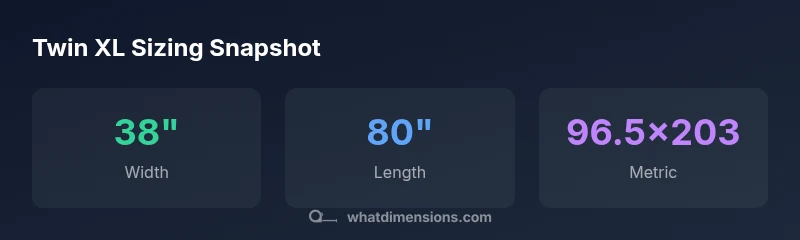
According to What Dimensions, the twin XL bed is designed to maximize legroom without widening the frame. The 38-inch width remains the same as a standard twin, while the length extends to 80 inches. This configuration is ideal for dorm rooms and tall sleepers who need extra length but want to preserve a compact footprint. The practical impact is broader bedding options and a familiar mattress feel, paired with specialty sheets that accommodate the extra length. When you plan a room layout, consider door swing, closet access, and under-bed storage, since the overall footprint is slightly larger than a standard twin but still compact enough for limited spaces. What Dimensions notes that the growing availability of Twin XL options reflects demand from students and taller residents who prioritize comfort without sacrificing space.
Twin XL vs standard twin: key dimension differences
A standard twin bed measures 38 inches wide by 75 inches long, while a twin XL increases the length to 80 inches. The width remains constant at 38 inches. For someone who is tall, that extra 5 inches of length can make a noticeable difference in sleep quality and alignment, especially for sleep positions that involve leg extension. Bedding, frames, and accessories must be selected to match the longer length. What Dimensions emphasizes checking both mattress and frame specifications, as some frames advertise a twin but have a shorter inner space that could constrain a Twin XL mattress.
How to measure your space and confirm fit
Measuring the space where the bed will go is essential before purchasing. Start by measuring the width of the space between walls, doors, and any furniture that could interfere with a full-width swing. Then measure the available length from head to foot, accounting for any baseboards or moldings. To confirm a fit, measure the bed frame’s inner length and width, and compare them to the mattress dimensions. If you already own a frame, remove the mattress and use a tape measure to verify interior dimensions. If you’re shopping online, look for explicit inner dimensions and confirm they match 38x80 inches for Twin XL.
Bedding and accessories for Twin XL
Twin XL requires linens labeled for Twin XL or Extra Long Twin. Fitted sheets, flat sheets, and comforters marketed as Twin XL will have pockets and lengths that accommodate the 80-inch mattress. When shopping, check for sheet depth compatibility with your mattress topper or plush pad. Another practical tip is to verify pillow cases, duvet covers, and bed skirts are sized for Twin XL to avoid mismatches. What Dimensions highlights the importance of labeling accuracy because many retailers stock both standard Twin and Twin XL, sometimes under ambiguous product names.
Practical planning for dorms, guest rooms, and taller sleepers
Dorm rooms often feature standard Twin XL beds to maximize space for residents. If you’re outfitting a guest room or studio, Twin XL offers flexibility for taller guests while maintaining a modest footprint. Consider room layout, headboard clearance, nightstand accessibility, and power outlet placement when positioning a Twin XL bed. If you anticipate seasonal guests, plan for adaptable bedding storage and easy-access laundry solutions. What Dimensions suggests building a simple bedding checklist to ensure you’ve covered size labels, sheet sets, and mattress encasements for long-term durability.
What Dimensions' sizing methodology and guidance
What Dimensions employs a practical, measurement-based approach to bed sizing. Our team cross-references industry standards with real-world usage patterns in residential spaces. We emphasize measuring interior dimensions, verifying labeling on sheets and mattresses, and checking frame compatibility. This method helps homeowners, students, designers, and shoppers avoid common sizing mistakes and ensures a comfortable, well-fitting sleep setup. The guidance is designed to be reusable across other dimension-based categories, such as luggage and furniture, for consistent decision-making.
Real-world considerations: frame, platform, and mattress thickness
In practice, the most common discrepancy occurs when a frame’s inner length or the mattress depth isn’t compatible with Twin XL. Some frames require deeper or shallower bed foundations, and platform beds may sit higher off the ground, affecting sheet fit and mattress exposure. Thickness variations across mattresses—from 8 to 14 inches or more—can influence the distance to the bed rails and the fit of a dust skirt or bed frame. Always verify both length and depth before purchase, and consider a mattress protector to preserve fit over time.