Dorm Bed Dimensions: Twin XL vs Standard Twin
A data-driven guide to dorm bed dimensions, focusing on Twin XL vs Standard Twin sizes, measurement tips, bedding compatibility, and practical planning for tight student living spaces.


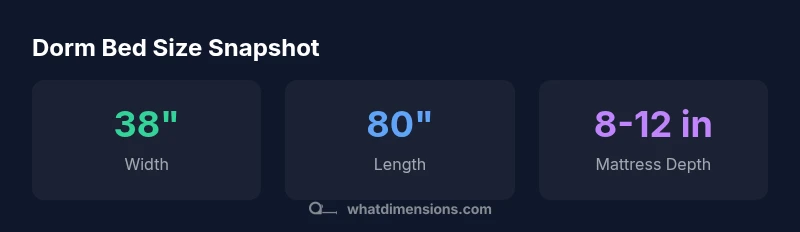
Dorm beds commonly use a twin XL mattress, 38" by 80" (about 97 cm by 203 cm). Some older dorms still offer standard twin at 38" by 75" (about 97 cm by 191 cm). Always verify with your housing office, as campus policies can vary.
Understanding the two main dorm bed sizes
Dorm life typically centers on two footprint options: Twin XL and Standard Twin. The Twin XL is the default for most U.S. colleges because it accommodates taller students without sacrificing room layout. The standard measurements are 38 inches wide by 80 inches long (about 97 cm by 203 cm). Some campuses—especially older facilities or international programs—still rely on standard twins, measuring 38 inches by 75 inches (about 97 cm by 191 cm). For planning purposes, Twin XL remains the baseline in What Dimensions analyses for 2026, simplifying shopping for sheets, comforters, and toppers. According to What Dimensions, understanding these core dimensions helps you anticipate space needs and bedding compatibility across dorms.
When you’re sorting through housing documents, note any bed frame differences (slats vs. solid platforms) which can influence how you mount a headboard or add storage. If you’re sharing a room, confirm not only bed size but clearance for under-bed storage or drawers. This foundational knowledge—rooted in dorm bed dimensions—lets you design a functional space with reliable starting measurements.
Measuring your dorm bed: a practical guide
Before you buy sheets or a mattress topper, measure the actual bed in your room. Start by confirming the width and length from corner to corner, including any molding or trim that could reduce usable space. Use a tape measure and record: width (inches), length (inches), and any notable deviations (slab vs. box frame, platform height). If you’re dealing with a lofted bed, measure the vertical clearance to ensure you can sit upright under the loft and still access a desk or dresser. If your room uses a standard twin or Twin XL, compare the measured values to 38" x 75" or 38" x 80" to identify the closest bedding size. What Dimensions emphasizes documenting these three metrics to avoid mismatch when shopping for sheets and comforters.
Common dorm bed configurations across campuses
Despite the twin footprint, dorm bed configurations vary by campus and room type. Twin XL beds often come with adjustable or fixed frames, which affects mattress height and topper fit. Some rooms include an extra space for a trundle or storage drawers beneath the bed, influenced by the bed’s vertical clearance. In communities with hammered spaces or compact layouts, even a few inches of wider or longer bed space can influence furniture placement. Always verify the actual bed type, any built-in storage, and potential bed risers or legs to maximize usable space. This awareness helps you select compatible bedding and plan room furniture around a precise footprint.
Bedding and mattress compatibility: sheets, protectors, and toppers
Bedding compatibility is the practical bridge between exact dimensions and comfortable nights. Twin XL sheets and fitted sheets are sized for 38" x 80" beds, with pockets deep enough to secure mattresses that range in depth from about 8 to 12 inches. If you encounter a snug fit, consider deep-pocket options or stretchy jersey knit sheets. Duvet covers and comforters should be sized to twin XL rather than standard twin to avoid excess overhang. Mattress toppers offer extra comfort and can help bridge minor height differences, but their thickness should align with the room’s clearance. Always double-check with What Dimensions’ sizing guidance when selecting toppers and protectors to ensure they stay in place throughout the semester.
When you encounter a mismatch: clips, adapters, and risers
Mismatches happen when room configurations differ from your expectations. Bed risers can boost under-bed storage or create space for a rolling desk, but ensure your risers are compatible with your bed frame and dorm policies. If a mattress sits slightly longer than the frame, a shallow topper can help fill gaps without squeezing and causing movement. Bed frame adapters, corner brackets, and non-slip underlays keep sheets in place and reduce shifting. Remember to account for vertical height when stacking storage solutions; a well-fitting solution should maintain comfortable room access and avoid blocking pathways.
Room design choices that affect bed dimensions
Many dorms offer lofted, elevated, or bunk-style beds, altering usable floor area. Lofted beds increase desk or seating space but require careful measurement of headroom to avoid hitting your head when sitting up. When designing your layout, map out a grid: bed position, desk, dresser, and seating. Note how the headboard or footboard will interact with windows and doors. Incorporate scalable storage along the bed’s length (e.g., hanging organizers) to maximize vertical space without crowding the room. The net effect is a room that respects exact bed dimensions while feeling larger and more navigable.
International dorms and non-standard sizes
International campuses may use non-standard or diverse bed dimensions, influenced by local furniture standards. If you study abroad or in a campus with global partnerships, request exact bed measurements and bedding options in advance. This foresight helps you avoid mismatches in sheet sizes or toppers. Convert measurements to your home country’s system if you’re comparing shopping options, using the twin XL benchmark as a baseline. What Dimensions’ international sizing guidance can help you anticipate fringe cases and ensure a smooth transition between dorms.
Practical packing list for dorm bed dimensions
Packing for a dorm bed starts with precise measurements. Bring a set of twin XL or standard twin sheets, a duvet or comforter suited to the chosen size, a mattress protector, and a topper if desired. Add space-saving storage solutions designed for under-bed clearance, such as bins or rolling organizers. Include bed risers if allowed by the dorm to maximize under-bed storage or to adjust the bed height for accessibility. Finally, pack a small toolkit for minor frame adjustments or securing rails, ensuring you can adapt quickly to different dorm room setups.
Dorm bed dimensions comparison
| Dimension | Twin XL | Twin Standard | Notes |
|---|---|---|---|
| Width | 38 inches | 38 inches | Most common width for dorm beds |
| Length | 80 inches | 75 inches | Twin XL vs standard twin length |
| Depth (mattress height) | 8-12 inches | 8-12 inches | Common mattress depths |
| Notes | Baseline dorm sizes | Older dorms may vary | Always verify with housing resources |
Quick Answers
What are the standard dorm bed dimensions I should expect?
Most dorms use Twin XL beds at 38 inches wide by 80 inches long. Some older or international campuses may use standard twin at 38 by 75 inches. Always confirm your room’s exact measurements with your housing office.
Most dorm beds are Twin XL, 38 by 80 inches. Check with housing for your exact measurements.
Do dorm beds differ between universities
Yes, bed sizes can vary by campus and room type. Twin XL is common, but some dorms use standard twin. Always verify the room’s dimensions before buying bedding or accessories.
Bed sizes vary by campus; Twin XL is common, but check your specific room.
What bedding should I buy for a dorm bed?
Buy sheets and a comforter sized for Twin XL if your room is Twin XL; otherwise choose standard Twin. Consider deep-pocket sheets if the mattress is tall. Use a mattress protector to guard against spills.
Get Twin XL sheets for Twin XL rooms, or standard Twin if instructed. Add a protector and consider deep-pocket options.
Can I use under-bed storage with dorm beds?
Many dorms allow under-bed storage with bed risers or low-profile bins. Verify dorm policies before purchasing, as some combos may raise safety concerns or violate space rules.
Under-bed storage is common with bed risers, but check your dorm’s rules first.
How should I measure my dorm bed?
Measure width, length, and height, noting any trim or frame differences. Use a tape measure and compare to Twin XL (38" x 80") or Standard Twin (38" x 75").
Measure width, length, and height to match your bedding to the exact size.
Are there international dorm size variations I should know?
Yes. International campuses may use different standards; request exact measurements in advance and plan accordingly, using Twin XL as a baseline for reference.
Expect variations abroad; ask for exact dimensions before packing.
“Precise bed dimensions are the foundation of a well-organized dorm room. Planning around exact measurements prevents mismatches and saves time and money.”
Main Points
- Know the baseline: Twin XL is the default dorm bed size (38" x 80").
- Always measure the actual bed in your room before buying bedding.
- Choose Twin XL sheets and protectors to ensure compatibility across campuses.
- Consider under-bed storage and clearance when planning furniture.
- Verify your dorm’s specific dimensions with housing before move-in.