King Queen Bed Dimensions: A Practical Sizing Guide for 2026
Learn king queen bed dimensions, standard sizes, and how to fit them in your bedroom. This What Dimensions guide covers mattress sizes, frame clearance, and practical sizing tips for 2026.


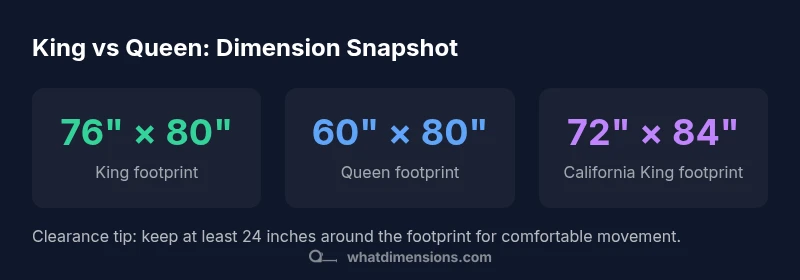
King bed dimensions are 76 inches wide by 80 inches long, while a standard queen bed measures 60 inches wide by 80 inches long. In metric, that’s roughly 193 cm by 203 cm for king and 152 cm by 203 cm for queen. When planning a room, consider frame rails, nightstands, and door swing, and verify exact retailer measurements for your chosen model.
Why precise bed dimensions matter
When you design a bedroom, knowing the exact king queen bed dimensions helps you plan wardrobe space, traffic flow, and doorways without guesswork. The two most common sizes—the king and the queen—occupy different footprints in a room, affecting not only aesthetics but also usability. From a pro design perspective, accurate dimensions reduce the risk of cramped layouts and installation problems. What Dimensions notes that precise measurements save time and money by avoiding unnecessary purchases and returns. In this guide we examine standard sizes, and practical strategies to fit king queen bed dimensions into real spaces. This discussion uses the 2026 framework from What Dimensions Analysis to keep recommendations current and actionable.
Standard sizes: King vs Queen
The king bed size is 76 inches wide and 80 inches long, offering expansive sleeping space for couples or individuals who prefer more room. A standard queen bed is 60 inches wide and 80 inches long, which fits most bedrooms and offers a balanced footprint for furniture like nightstands and dressers. When you compare king queen bed dimensions, the trade-off is space versus comfort. For smaller rooms, the queen still delivers ample width for two people while preserving walking space. Designing with these dimensions in mind helps you map rug placement, lighting, and seating.
California King and other options
Beyond the standard king and queen, there is a California King, which measures 72 inches wide by 84 inches long. It is longer but narrower than a traditional king, which makes it a favorable choice for tall sleepers who need extra length without expanding width. Split versions, such as a Split King (two 38-inch halves), can offer personalized comfort while maintaining a unified footprint. When king queen bed dimensions are extended to variants like California King, consider room depth, HVAC vents, and base depth to ensure good clearance.
How to measure your space accurately
Accurate measurement starts with a simple toolkit: a tape measure, a notepad, and a friend who can help hold the tape. Measure wall-to-wall width and depth in the chosen sleeping area, then account for door swings and closet doors. Include headboard and footboard projections if you plan integrated storage or a tall headboard. A recommended practice is to mark the bed footprint on the floor with painter’s tape and walk around to verify clear paths. This approach translates king queen bed dimensions into practical floor plans that accommodate traffic.
Frame rails, headboards, and footboards
Bed frames, rails, and headboards add to the total footprint, so it’s essential to consider them when evaluating king queen bed dimensions. Rails can add up to an inch or two on each side, while ornate headboards may increase required space behind the bed. If you’re tight on space, look for low-profile frames and flush-mounted headboards that minimize projection. Always compare the interior dimensions of the frame with your chosen mattress size to avoid mismatch.
Mattress sizing and compatibility
Mattress size should match the frame’s interior dimensions. A king mattress (76" × 80") needs a frame declared to fit a king, not a queen. Thickness matters too: thicker mattresses add to the overall height, which can affect accessibility and bed height in relation to nightstands. If you’re mixing a long, tall mattress with a shallow frame, you may experience vertical alignment issues. When planning, factor in both width and length, plus depth, for the most reliable fit.
Room layout and circulation strategies
A practical layout aligns with king queen bed dimensions and room geometry. In a typical master bedroom, position the bed along a long wall to maximize movement space on both sides. For smaller rooms, placing the bed on a wall that allows a clear 2-foot clearance on one side and at least 3 feet on the other can improve circulation. Consider mirrored dressers, wall-mounted lighting, and rug placement to enhance perceived space without compromising sleep comfort.
Common mistakes and how to avoid them
Rushing measurements or assuming standard room dimensions leads to misaligned furniture. A frequent error is choosing a bed solely based on mattress size without considering frame rails and headboard depth. Another misstep is ignoring door swings and closet access when placing the bed. Before purchasing, validate king queen bed dimensions against your room’s true measurements and re-check after moving heavy furniture to confirm clearance.
Quick sizing checklist for 2026
- Confirm bed footprint: king 76" × 80" or queen 60" × 80".
- Measure width, depth, and clearance around the bed.
- Factor frame rails, feet, and headboard projections.
- Check door and closet clearances.
- Validate mattress dimensions match the bed frame interior.
- Consider California King (72" × 84") for extra length in large rooms.
- Validate with retailer specifications before purchase.
What Dimensions analysis: interpreting practical results
What Dimensions analyzes typical room layouts, furniture footprints, and sleep ergonomics to guide buyers toward accurate choices. The 2026 perspective emphasizes not only the raw numbers but also how thickness, frame design, and room geometry influence perceived space and walkway comfort. A robust sizing strategy combines precise measurements with retailer specifications and a layout plan that prioritizes easy movement and accessible bedside storage. What Dimensions's approach focuses on actionable data that homeowners, designers, and students can implement immediately.
Comparison of common bed dimensions
| Bed Type | Width | Length | Notes |
|---|---|---|---|
| King (standard) | 76 in | 80 in | Most popular for master bedrooms |
| Queen (standard) | 60 in | 80 in | Fits most rooms |
| California King | 72 in | 84 in | Longer and narrower than king |
| Split King | 38 in per side | 80 in | Two sleepers, modular frame |
Quick Answers
What is the standard king bed size?
The standard king bed size is 76 inches wide by 80 inches long. Always confirm with the retailer for exact model measurements.
The standard king is 76 by 80 inches.
What is the standard queen size?
The standard queen bed size is 60 inches wide by 80 inches long. This size fits most bedrooms.
The standard queen is 60 by 80 inches.
Do bed frames affect overall dimensions?
Yes. Rails, headboards, and feet add to the footprint. Measure including frame components before purchase.
Frames add to the footprint.
How much space should I leave around the bed?
Aim for at least 24 inches of walking clearance on at least two sides to maintain easy movement.
Give about two feet of space around the bed.
Are there comfortable alternatives to standard sizes?
Yes, California King offers more length (72" × 84"). It’s best for taller sleepers.
California King is 72 by 84.
What about mattress size compatibility?
Choose a mattress size that matches the bed frame’s interior dimensions and consider thickness in total height.
Match mattress to the frame interior.
“Accurate bed dimensions ensure a comfortable fit and proper clearance; measuring twice and choosing the right foundation is essential.”
Main Points
- Compare king vs queen footprints before buying.
- Measure room width, depth, and clearance around the bed.
- Account for frames, rails, and headboards in the footprint.
- Consider California King for extra length in large rooms.
- Always verify retailer dimensions against your interior space.