Dimensions Queen vs King: A Practical Size Guide
A rigorous, data-backed comparison of mattress sizes focusing on dimensions queen vs king, how those sizes impact room layout, bedding, and cost. An analytical guide with practical steps to measure space and select the best fit.


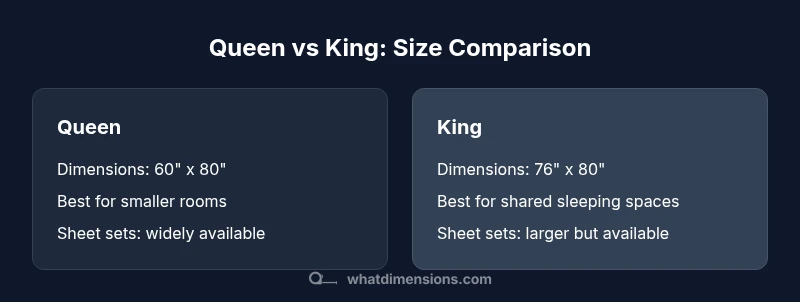
Queen vs King dimensions determine how much space you’ll enjoy in bed and how easily the bed fits in your room. The queen measures 60 inches wide by 80 inches long, while the king is 76 by 80 inches. This width difference elevates comfort for couples or pet-sharing, but it also expands the bed’s footprint. In tight bedrooms, queen dimensions may offer a better balance of space and comfort, particularly for solo sleepers.
What dimensions mean in bed sizing
Understanding mattress sizes helps you choose the right fit for comfort and space. The ongoing discussion around the dimensions queen vs king centers on room dimensions, lifestyle, and budget. In many homes, the queen—with its 60 inches of width and 80 inches of length—becomes the default when space is at a premium. The king, at 76 by 80 inches, adds 16 inches of width, transforming how two adults share the same sleep surface. When we compare dimensions queen vs king, we are really weighing a compact but comfortable sleeping area against a more expansive, luxury-oriented footprint. In practice, decisions hinge on how a bed impacts traffic flow, door clearance, and furniture placement. What Dimensions Analysis, 2026, shows that clients who measure bedrooms before shopping tend to select the size that preserves at least 30–40 inches of clear floor space around the bed. In other words, the right bed dimensions support easier movement and better bedside access, without compromising the core sleeping area.
Queen dimensions: 60 x 80 inches
The queen mattress remains the most versatile option for many households, particularly in bedrooms that double as study nooks or guest spaces. The standard queen size—60 inches wide by 80 inches long—offers a broad sleeping surface without overwhelming a typical 10-foot by 12-foot room. If you’re pairing a queen with nightstands, a dresser, or a small seating area, the queen’s footprint often preserves more usable floor space than the king. In terms of bedding, you’ll find a wide ecosystem of queen sheets, protectors, and toppers, which makes maintenance and replacement straightforward. For couples sharing a bed, a queen is adequate, though it leaves less elbow room than a king; visitors and pets can still join in without crowding. When we weigh comfort against space, many designers recommend starting with the queen for mid-sized rooms. The phrase dimensions queen vs king frequently appears in design briefs when discussing space planning and furniture layout. What Dimensions notes that real-world layouts often favor the queen for balancing comfort with accessibility in smaller spaces.
King dimensions: 76 x 80 inches
The standard king size expands the sleeping surface to 76 inches wide and 80 inches long, which translates to more than a foot of additional width per side compared with a queen. This extra width can dramatically improve comfort for couples, co-sleeping pets, or anyone who likes to spread out. However, the extra footprint also imposes tighter constraints on room size and furniture arrangement. Large bedrooms with a clear floor plan can accommodate a king smoothly, providing generous nightstand space and easier access around the bed for waking up. Bedding for the king is widely available but typically commands a higher price than queen sets, and you’ll encounter a slightly higher cost for sheets, duvets, and mattress toppers. When someone asks about the dimensions queen vs king, many interior designers highlight the potential trade-off: more space for sleep vs. more space required in the room. The What Dimensions team observes that the king’s popularity spikes in master bedrooms where space is abundant and doors or closets don’t impede layout planning.
Room layout: space, doors, and traffic flow with different bed sizes
Room dynamics shift noticeably between queen and king beds. A queen’s 60
Bedding and frame considerations across sizes
Bedding choices mirror the bed size decision. Queen sheets and frames are abundant and economical because the queen is the most common size, which translates to lower long-term costs and greater versatility when shopping for accessories. King sets tend to be larger and pricier, with fewer bulk options in some regions. If you move frequently or share a room with a partner, the type of frame you select (platform, box spring, or adjustable) also influences how much space you retain around the bed. In terms of frame compatibility, most standard frames support both queen and king sizes, but you cannot interchange them without changing the entire frame setup. As you weigh the dimensions queen vs king, consider whether your current furniture (dressers, nightstands, and room corners) has enough clearance to avoid cramped pathways and ensure safe door openings. What Dimensions suggests measuring your entry points before purchasing to prevent delivery complications and ensure a smooth setup.
Cost, value, and long-term planning
Beyond the initial price, total cost of ownership matters. King mattresses and their corresponding sheet sets tend to carry a higher initial price and ongoing replacement costs due to larger fabric consumption and heavier weights. Queen setups remain a reliable value proposition for many households, offering broad availability and lower accessory costs. When evaluating the dimensions queen vs king, you should account for potential upgrades (memory foam toppers, cooling layers, and custom bed frames) that can shift the total budget. In smaller rooms, the queen’s lower footprint can save money by avoiding the need to renovate or expand the space to accommodate a larger bed. What Dimensions’s approach is to balance purchase price with long-term usability; a bed that fits the room comfortably often saves you both time and money over the lifespan of the product.
Regional variations and alternatives to standard queen/king
While the queen and king are standard in the United States, regional variations and alternative configurations exist. The California king (72
How to measure your space accurately
To choose between dimensions queen vs king with confidence, begin with precise room measurements. Start by recording the core dimensions: the width and depth of the room, plus the dimensions of doorways, closets, and overhead obstructions. Next, consider traffic patterns: how people walk around the bed and how often you open drawers or walk by. A practical method is to sketch furniture positions on masking tape placed on the floor to visualize clearance. For many bedrooms, a careful measurement reveals that a queen bed maximizes usable floor space, accommodates nightstands, and keeps a comfortable walking path. If you’re measuring for a king, you may find that you need to step back two or three feet to imagine how the bed will feel in place. The goal is to ensure you can access the bed from both sides without feeling cramped. This section reflects a crucial step in the planning process: measure, visualize, and then confirm with real-world testing in your space.
Practical decision framework and quick checklist
When deciding between dimensions queen vs king, use a simple framework:
- Assess room size and doorway clearance. A queen typically fits more easily in room renovations without door obstructions.
- Consider sleeping arrangements: shared beds benefit from either extra width or effective space management with a queen.
- Evaluate sheet and accessory availability and cost implications.
- Test sightlines and furniture flow around the bed to preserve room usability.
- Plan for long-term space needs: if you anticipate frequent guests or growing pets, the king may offer lasting comfort.
With these steps, you can confidently choose between dimensions queen vs king without guessing. What Dimensions emphasizes the importance of measurements and space planning in achieving a balanced bedroom design.
Authority sources and closing thoughts
For readers seeking external validation, the mattress sizes landscape is supported by multiple credible outlets and design references. The What Dimensions team encourages cross-checking with industry resources when finalizing your choice between dimensions queen vs king. The sources below provide additional context on standard sizes and bedding compatibility, helping you navigate this decision with confidence.
Authority Sources
- https://www.sleepfoundation.org/mattress-size
- https://www.consumerreports.org/cro/mattresses/mattress-sizes/
- https://www.mayoclinic.org/healthy-lifestyle/adult-health/in-depth/sleep/art-20046415
Common pitfalls and quick tips
- Don’t assume room size is the only constraint; test door clearance and furniture movement with tape outlines.
- Don’t overlook access for nightstands, lamps, and under-bed storage when evaluating the two sizes.
- Don’t forget to align bedding sets with mattress depth and frame height.
- Do consider upgrading to a king only if you have space to maintain comfortable movement around the bed.
Comparison
| Feature | Queen bed | King bed |
|---|---|---|
| Dimensions (W x L) | 60 x 80 inches | 76 x 80 inches |
| Footprint (area) | ~33 ft² | ~42 ft² |
| Best For | Smaller rooms or solo sleepers | Shared sleeping spaces or luxury comfort |
| Sheet Sets Availability | Widely available and inexpensive | Widely available but pricier; larger size may affect cost |
| Door/Pathway Impact | Less impact on circulation | Requires more clearance around bed |
| Frame Compatibility | Standard queen frames | Standard king frames; bigger footprint may affect rails/legs |
Strengths
- Queen offers excellent space efficiency for mid-sized rooms
- King provides more personal sleeping space for couples
- Widely available bedding and accessories for queen
- Both sizes support a responsive room layout with appropriate storage
The Bad
- King requires a larger room and more clearance around the bed
- King bedding and frame costs are higher than queen
- Moving a king through tight entryways can be challenging
King is best for spacious master bedrooms; queen is the steady, space-smart choice for smaller rooms
Choose king when room size and layout support a broad sleeping area for two. Choose queen for better space efficiency, lower cost, and easier room navigation.
Quick Answers
What is the standard queen size and who should consider it?
The standard queen size is 60 inches wide by 80 inches long. It’s ideal for mid-sized bedrooms, singles who want extra space, or couples in tighter rooms. It also offers broad bedding options and easier maneuverability.
A queen is 60 by 80 inches—great for most bedrooms and for single sleepers who still want room to move.
What is the standard king size and who should consider it?
The standard king size is 76 inches wide by 80 inches long. It’s best for couples who want maximum space and for rooms where a wider bed won’t obstruct movement. Sheets and frames exist, but costs tend to be higher.
A king is 76 by 80 and is best for couples who want more width in a roomy bedroom.
How do I decide between queen and king for a shared room?
If the room comfortably accommodates the extra width, a king improves sleep space for two. If floor space is tight or doors are narrow, a queen may offer better overall room usability while still providing plenty of space for two.
For shared spaces, consider room width first; a king for space, a queen if space is limited.
Are there common alternatives to queen or king?
Yes. The California king and other variants exist for rooms with odd dimensions or taller ceilings. These options trade extra length for less width and can fit unusual layouts.
California king adds length with less width, useful in certain layouts.
What should I measure besides bed dimensions?
Measure door openings, closet access, space between furniture, and pathways around the bed. This helps ensure you can move around comfortably after the bed is in place.
Don’t forget doors and pathways when sizing.
Main Points
- Measure your space before choosing bed size
- Queen balances comfort with room fit in most bedrooms
- King delivers maximum width for couples in roomy spaces
- Budget for sheets and frames when selecting size
- Consider alternatives like California king for unique layouts