Full Queen Bed Dimensions: Size, Space, and Setup
This guide explains the exact dimensions for full and queen beds, how they fit in typical rooms, and practical tips for frames, bedding, and space planning in 2026.


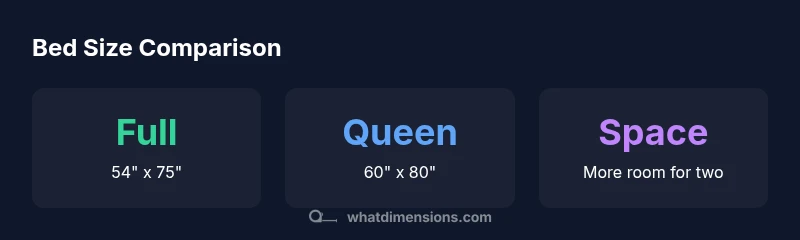
The key sizes you need are 54 x 75 inches for a full (double) bed and 60 x 80 inches for a queen. In 2026, many households choose queen for couples, while smaller rooms may opt for full. Understanding these measurements helps you plan space, sheets, and frames without guesswork.
Bed Size Basics: Full vs Queen
When planning a bedroom, knowing the precise dimensions of the two most common adult sizes matters for comfort and layout. A standard full bed, often called a double, measures 54 inches wide by 75 inches long (about 137 by 191 cm). A standard queen bed measures 60 inches wide by 80 inches long (about 152 by 203 cm). This difference translates to roughly 6 inches of extra width and 5 inches of extra length. For many people, that extra width means more space to move, while the longer length guarantees space for taller sleepers. In 2026, What Dimensions notes that the majority of couples opt for queen because it balances space and bed sharing. The term full queen bed dimensions is sometimes used in product catalogs to describe beds designed to bridge the two sizes, but true standard sizes remain 54 x 75 and 60 x 80.
Dimensions in Practice: Room Scenarios
Room size largely drives the best choice between full and queen. In a compact bedroom around 9 by 10 feet (roughly 2.7 by 3.0 meters), a full bed can leave enough space for a dresser and narrow walkway if placed along a long wall. A 10 by 12 foot room (about 3 by 3.6 meters) typically handles a queen with comfortable clearance on both sides and at the foot of the bed. If a room is square or rectangular with a single large wall, you can optimize layout by pairing the bed with a low-profile frame and floating nightstands. In general, aim for a minimum of 24 inches (61 cm) of open space on each side of the bed, and more if you want easy access from both sides. These guidelines align with What Dimensions Analysis, 2026, which emphasizes practical space planning over strict room size alone.
Practical Implications for Bedroom Layout
The choice between full and queen directly impacts layout decisions beyond the bed itself. With a full bed in a smaller room, you’ll often need to minimize bulky furniture or consider wall-mounted storage to save floor space. A queen bed allows larger nightstands and sometimes a second dresser, but it also demands more floor area and a longer wall for balance. When arranging furniture, consider pathways that maintain a minimum clearance of 2 to 3 feet (60–90 cm) around the bed. This keeps movement fluid and reduces the chance of bumping into corners. For couples, queen beds are a practical compromise between personal space and storage accessibility, a point echoed by many designers in What Dimensions’ 2026 guidance.
Mattress Compatibility and Bedding Considerations
Sheet sets, comforters, and protectors are frequently sized to standard bed dimensions. A queen mattress requires 60 x 80 inches of fabric space, and a full uses 54 x 75 inches. When shopping for bedding, verify that fitted sheets stay taut and do not pop off corners; check elastic depth for deep-pocket mattresses if you have a platform frame or pillow-top add-ons. Duvet covers and comforters sized for queen can still fit full mattresses if you prefer a lighter cover on a shorter bed, but the bed’s footprint will affect the drape and warmth. Remember to account for any toppers or memory foam layers, which can slightly change the overall outline of the bed at the corners.
Choosing a Frame, Platform, or Box Spring
Bed frames come in many configurations: traditional box springs, wooden platform frames, metal frames, and hybrid designs. For a full bed, ensure the frame matches the 54 x 75 inch footprint. For a queen, confirm it accommodates 60 x 80 inches and offers thickness compatibility with your mattress and any headboard. Platform beds often provide a built-in slatted support system, reducing the need for a box spring. If you use a box spring, make sure the base height aligns with your nightstands and overall room height. In 2026, the balance between frames and foundations remains a key consideration for durability and aesthetics, as highlighted by What Dimensions’ ongoing analysis.
Sleep Space, Comfort, and Boundaries
Comfort is highly personal, but space around the bed influences sleep quality. A queen bed offers more personal space, which many sleepers equate with better quality sleep, while a full bed can deliver a cozier, snug feel in smaller rooms. If you share a bed with a partner or pet, the queen’s extra width supports movement without compromising access to storage. Consider how much space you want for habit changes—reading, working with a laptop, or late-night beverages—before selecting your size. What Dimensions emphasizes balancing comfort with room geometry to avoid cramped layouts that impede airflow and circulation.
Measuring Your Space: A Step-by-Step Guide
To measure for a full or queen bed, start with the room’s length and width. Subtract door swing clearance and any fixed furniture to identify the usable footprint. Then measure the wall where the bed will sit, the distance to windows, and the location of outlets or lighting fixtures. Use painter’s tape to outline the bed’s footprint on the floor; this helps visualize clearance. Finally, factor in curtains, baseboards, and rug edges. While a simple tape measure suffices, a laser measure can speed up accuracy for complex layouts. These steps translate into practical decisions about whether a full or queen bed best fits your space and lifestyle.
Common Pitfalls and How to Avoid Them
Avoid assuming that more space automatically equates to better sleep. In some rooms, a queen can overwhelm a floor plan if paired with oversized dressers or corner desks. Conversely, a full bed in a large room can look lonely or impractical if paired with multiple bulky pieces. Always test-fit using floor plans or cardboard cutouts to avoid undersized or oversized configurations. Don’t neglect doorways and vent placements; a bed that blocks airflow or creates a cramped entry can diminish comfort. Finally, verify that all components—mattress, foundation, frame, and sheets—are compatible with the bed’s exact dimensions.
Maintenance and Longevity Tips for Full and Queen Beds
Protect your investment with a sturdy frame, solid mattress foundation, and regular turning and rotation of your mattress (when applicable). Use a breathable mattress protector to guard against stains and dust mites, especially if you have pets or allergies. Keep the bed’s height aligned with your nightstands and lighting to preserve ergonomic comfort. If you plan a room refresh, re-evaluate bed dimensions first to ensure the new layout remains functional. What Dimensions’ method emphasizes routine checks and proactive measures to maximize durability and comfort over many years.
Common mattress sizes and their typical room fit
| Bed Size | Dimensions (inches) | Dimensions (cm) | Common Uses |
|---|---|---|---|
| Twin | 38 x 75 | 96 x 191 | Kids rooms, single sleepers |
| Twin XL | 38 x 80 | 96 x 203 | College dorms, taller sleepers |
| Full (Double) | 54 x 75 | 137 x 191 | Small master bedrooms, guest rooms |
| Queen | 60 x 80 | 152 x 203 | Most couples, master bedrooms |
| King | 76 x 80 | 193 x 203 | Spacious master bedrooms |
| California King | 72 x 84 | 183 x 213 | Tall sleepers, wide rooms |
Quick Answers
What are the standard dimensions of a full bed?
A standard full bed measures 54 inches wide by 75 inches long (about 137 x 191 cm). This size fits smaller master bedrooms and many guest rooms, but offers less sleeping space than a queen.
A full bed is 54 by 75 inches, suitable for single sleepers or compact rooms.
What are the standard dimensions of a queen bed?
A queen bed measures 60 inches wide by 80 inches long (about 152 x 203 cm). It’s the most popular choice for couples and master bedrooms, balancing space and comfort.
A queen bed is 60 by 80 inches, ideal for couples who want room to move.
Can I fit a queen bed in a small bedroom?
Yes, many small bedrooms accommodate a queen by careful layout, but you’ll want at least 24-36 inches of clearance on each side for access.
A queen can fit in many small rooms if you plan the layout to leave space to move.
Do I need a box spring with a queen bed?
Whether you need a box spring depends on your frame or platform. Some frames include a solid base; others require separate box springs or slats.
It depends on your bed frame; check the manufacturer's guidance.
How much clearance should I leave around the bed?
Aim for at least 24-36 inches of clearance on each side and at the foot of the bed to allow easy movement and access to nightstands.
Give at least 2 to 3 feet around the bed if possible.
Are there variations like full/queen sizes?
Some manufacturers offer 'full/queen' hybrids that fit both price points, but standard dimensions stay as full or queen unless noted.
Some brands sell hybrids labeled full/queen, but actual sizes follow standard full or queen.
“Choosing between full and queen sizes depends on room geometry and sleep habits; accurate measurements save space and predict comfort.”
Main Points
- Measure your space before buying a bed.
- Choose queen for couples; full for compact rooms.
- Know standard dimensions: Full 54 x 75; Queen 60 x 80.
- Check frame and sheet compatibility early.