Dimensions of Oversized King Comforter: A Bedding Guide
Explore precise oversized king comforter dimensions, learn how to measure for ideal overhang, and compare brand differences to help you pick a fit that covers deep mattresses gracefully.


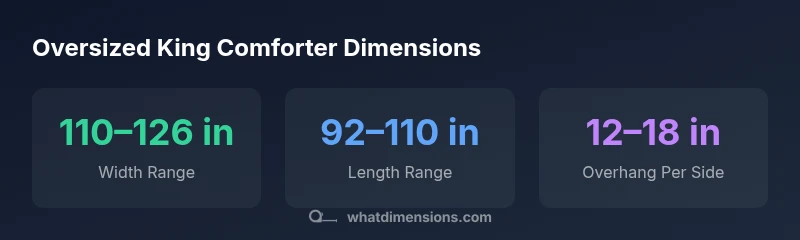
Oversized king comforters typically range in width from about 110 to 126 inches and length from about 92 to 110 inches, depending on brand. Most brands offer extra-overhang designs to cover deep mattresses or toppers. Because there is no single standard, measure your bed and desired overhang before choosing. This quick guidance helps you start shopping with realistic expectations.
Why precise dimensions matter for oversized king comforters
According to What Dimensions, sizing accuracy is essential because oversized king comforters are not standardized. The same nominal size can yield different actual coverage depending on mattress depth, frame thickness, and comforter construction. A misjudged fit can create a crumpled look, uneven drape, or a comforter that drags on the floor. For bedrooms seeking a balanced, tailored feel, knowing the typical width and length ranges helps you anticipate how the duvet will cover the bed. When you pair the right size with the right duvet style, you can achieve a clean, symmetrical look on both sides without excess bulk. This attention to detail matters not just for aesthetics but for practical use and layering with sheets, blankets, and decorative shams.
Key takeaway: Start by anchoring your choice to a width that provides comfortable side coverage and a length that ensures even hang across the sides, taking into account your mattress depth and bed frame features.
Defining ‘oversized’ in comforters
Oversized is a relative term. While standard king comforters commonly target a particular bed footprint, oversized versions aim to extend coverage beyond the mattress edges for a dramatic, luxurious fall. The result is more material to tuck or drape, which affects how the duvet sits when you sit up or lie down. The typical goals are generous side drape, symmetrical fall to the footboard, and minimal exposure of the mattress edge. Designers and retailers label products as oversize or oversized, but there is no universal rule. Expect variation in width and length across brands, and plan to compare product specs rather than rely on the nominal name alone.
Recommendation: Compare product sheets for actual dimensions, then factor in your mattress depth and any toppers or bed skirts that could influence the final look.
How brands define dimensions and common ranges
The landscape of oversized king comforters is brand-driven. Across many retailers, you’ll encounter a width range typically between 110 and 126 inches and a length range of about 92 to 110 inches. Some products push beyond these numbers to achieve floor-to-bed elegance, while others intentionally stay closer to standard king proportions for compatibility with standard sheets. Expect variations such as occasional extra-long options or wider silhouettes designed to cover deep mattresses. When evaluating options, read the exact product measurements, note the stated hang (how far the fabric drapes beyond the bed edges), and check customer photos to gauge true fit. Your goal is a balanced look with even drape on all sides, rather than too much pooling material in corners or slick, pulled sides.
Takeaway: A wider width may pair better with broader nightstands or platform bases, but always verify the actual numbers instead of relying on the label alone.
Practical steps to measure your bed for the right fit
Begin by measuring the mattress: width, length, and depth. Then determine how much overhang you want on each side and at the foot. Subtract the mattress width from the comforter width to estimate how much cloth will hang past the edge. If you use a bed skirt or a high footboard, factor that into your overhang calculation, since these features can reduce visible fabric. Finally, review the dimensions in product specs and compare with your own measurements. If you’re between sizes, choose the larger one to achieve the lush, enveloping look associated with oversized bedding. This method minimizes guesswork and reduces the likelihood of returns.
Tip: For deep mattresses, target an overhang of at least 12 inches per side to ensure a graceful fall over the sides.
Case studies: common room setups and recommended sizes
In a bedroom with a high profile platform bed and a deep mattress, an oversized king comforter in the 120–126 inch width range tends to create a dramatic, cinematic drape that covers the frame nicely while maintaining a tidy edge. If the room features narrow nightstands and a lean, minimal aesthetic, a slightly narrower option (around 110–114 inches) can still achieve generous coverage without overwhelming the space. For smaller bedrooms with footboards and dressers nearby, you may prefer a longer length (110 inches) to maintain proportion from top to bottom. Remember that these are guidelines: assess your mattress depth, bed design, and personal preference for overhang when selecting a size.
Perspective: Use real-world room measurements and test with floor-length drapes or extra cushions to visualize the effect before committing to a purchase.
Care, shrinkage, and maintenance to preserve fit
Because comforters are washed and dried, they can shrink slightly over time. Check care labels for washing temperature and drying cycles. If you anticipate shrinkage, you might select a bed cover with a little extra width or length. Pre-wash tests on a spare piece of fabric or off-cut can help you gauge how much the duvet will shrink. Regularly rotating and fluffing the comforter during laundering helps maintain uniform drape and prevents uneven wear on the fabric. When storing or folding, keep the comforter flat to avoid creases that alter the look once you refit it.
Practical tip: If your comforter includes a textured or napped surface, air-dry to reduce strain on the fibers and minimize shrinkage.
How to shop: what to look for in product specs
Focus on three elements: the exact width and length, the hanging distance (if provided), and the depth compatibility with your mattress. Some product pages include a synthetic fill weight, which can influence how the comforter drapes. Compare multiple brands side-by-side to identify consistent patterns in dimensions, as brand variability is common. If you are between sizes, consider the heavier, wider option for a more sumptuous look, and verify return policies in case the fit isn’t right for your bed. Finally, examine customer photos and questions for real-world insights into how the blanket lays on similar bed configurations.
Strategy: Build a short list of the top three dimensions you want and test the look with a virtual room planner or by laying a similar-sized fabric at home before purchasing.
Visualization: creating the perfect look with overhang and duvet style
The visual impact comes from the balance between overhang and bed frame features. An oversized king comforter that hangs evenly on both sides creates a symmetrical silhouette, while too much overhang can obscure nightstand access. Consider the duvet style—box-stitched, channel-quilted, or chunky knit—since the texture affects how the fabric drapes and settles. For an editor-worthy bed, pair the comforter with matching shams and a neutral sheet or throw to ensure the layers read cleanly from across the room. In short, match the dimension choices to your room proportions, mattress depth, and the overall ambience you want to achieve.
format”:“markdown”},
dataTable
keyTakeaways
expertQuote
faqSection
mainTopicQuery
Oversized king vs standard king bedding sizes for comforter fit
| Bed Size | Mattress Dimensions (inches) | Typical Comforter Fit (approx) |
|---|---|---|
| Standard King | 76 x 80 | 106 x 92 |
| California King | 72 x 84 | 110 x 96 |
| Oversized King (varies) | varies widely | 110–126 x 92–110 |
Quick Answers
What does ‘oversized’ mean for a king comforter?
In bedding, oversized typically means wider and sometimes longer than a standard king comforter, with the goal of greater side drape. There is no universal standard, so exact measurements vary by brand.
Oversized means wider and often longer than standard king comforters, but check the exact numbers on product pages.
How should I measure for an oversized king comforter?
Measure your mattress width, length, and depth, then decide how much overhang you want on each side and at the foot. Compare these with the product’s stated dimensions to ensure a proper fit.
Measure your bed and compare with the product specs to pick the right size.
Will an oversized king comforter fit a California king bed?
A CA king is narrower but longer than a standard king. Some oversized king comforters will fit with generous overhang on the sides and foot, but always compare exact dimensions.
Some will fit, but always compare the numbers to your bed.
What’s the difference between oversized and extra-long comforters?
Oversized generally refers to wider dimensions and longer length for drape, while extra-long specifies extra length only. Read the product specs to know which dimension is extended.
Oversized can mean wider and long; extra-long is about length only.
How do I care for an oversized king comforter to avoid shrinkage?
Follow the care label, use cold water if possible, and avoid high-heat drying. Consider air-drying to preserve size and fabric integrity.
Care as the label says, avoid high heat.
Do I need to worry about overhang hitting furniture?
Yes. Measure room layout, including nightstands and dressers, to ensure the drape doesn’t interfere with furniture or access to storage.
Measure your room to avoid drape interference.
“Accurate sizing reduces buying mistakes and helps designers plan bedding more effectively. The right dimensions make a room feel balanced and polished.”
Main Points
- Measure for overhang first
- Expect width and length variation across brands
- Choose larger size if between options
- Check exact product specs before buying
- Consider room and bed frame when selecting overhang