King Comforter Dimensions: A Practical Sizing Guide
Learn king comforter dimensions, compare standard vs California king, and master measurement tips to pick the perfect fit for your bed. Practical, data-driven guidance from What Dimensions.


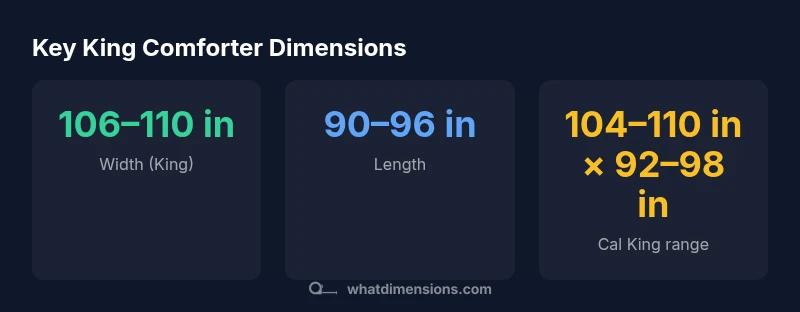
Typically, a standard king comforter is about 106–110 inches wide and 90–96 inches long, while a California king runs roughly 104–110 inches wide by 92–98 inches long. Because brands vary, measure your mattress width, length, and depth first, then compare exact product specs. According to What Dimensions, sizing can differ by fabric and fill, so verify exact numbers before purchase.
What king comforter dimensions mean in bedding
When people refer to king comforter dimensions, they are talking about the overall width and length of the cover that encases the mattress. In practice, a comforter should drape over the sides with a balanced overhang and should not pull tight against the box spring. The term “king” commonly includes two formats: standard king and California king. Although these categories are standard in many bedding catalogs, there is no universal industry-wide specification; measurements vary by brand, fabric, and quilt construction. For homeowners and designers, knowing these baselines helps prevent under- or over-sized purchases. If you already know your mattress measurements, start with a target width around the mattress width plus two times the desired overhang (commonly 6–12 inches per side). What Dimensions emphasizes that thoughtful sizing is essential for a polished bed aesthetic and functional comfort.
Size comparisons: King vs California King and beyond
A standard king comforter typically aims for about 106–110 inches in width and 90–96 inches in length. A California king is usually slightly narrower but longer, commonly around 104–110 inches wide and 92–98 inches long, to cover its longer mattress. Queen comforters (roughly 88–92 inches wide by 90–96 inches long) illustrate how brand tolerances can shift. When evaluating listings, pay attention to whether the listed dimensions are flat measurements or include extra padding and fill, which can add inches. If your mattress depth exceeds 12 inches, you may want to opt for a longer option or a bed-specific design. Verify exact numbers with the retailer rather than relying solely on bed size labels, as variation is common across brands.
How to measure your bed for the right king comforter
To ensure a proper fit, use a simple measurement workflow: (1) measure mattress width and length; (2) decide on the preferred side overhang (6–12 inches per side is typical); (3) consider pillow stacking and any bed skirt that alters visible length; (4) check product specs for width and length; (5) account for bed frame depth and mattress topper thickness; (6) compare spec sheets across brands; (7) review the retailer’s return policy in case the fit isn’t right. Carry a tape measure and note whether the comforter is designed for standard or deep mattresses, and remember that fill weight can influence the final feel and drape.
Depth and toppers: why mattress thickness matters for fit
Mattress depth and toppers add notable height, which can push the comforter up or down the bed edges. If you use a thick topper, select a longer comforter (or one labeled for deep mattresses) to maintain the desired drape. Conversely, shallow mattresses with low-profile toppers might look oversized if you choose the longest option. In both cases, always cross-check the product’s exact measurements and the stated drop (the distance from the top edge to the bottom edge) to avoid an overly short or overly long fit.
Brand variation and how What Dimensions helps shoppers
Brand-to-brand variation is common in king comforter dimensions. The same bed size may be listed with different widths and lengths depending on construction, quilting, and fill. What Dimensions recommends using product sheets rather than relying on the category label alone. A few inches of tolerance are typical, but unusual packaging or marketing terms should not substitute for precise numbers. By compiling a reference you can rely on, shoppers can quickly compare options and select a comforter that matches the bed’s proportions.
Shopping checklist and fit verification
Before purchasing, create a short checklist: (1) confirm the exact width and length from the retailer; (2) confirm whether margins or overhangs are included in the spec; (3) verify mattress depth compatibility; (4) read the care instructions to anticipate any shrinking after washing; (5) check the return policy in case the fit isn’t right; (6) compare similar products to understand the typical range of dimensions across brands. If you have a taller bed, consider a king-size comforter designed for deeper mattresses to preserve the intended drape.
Care and maintenance to preserve fit over time
Even well-fitting king comforters can change after washing due to fabric shrinkage and fill distribution. Follow the care label precisely, avoid high-heat drying when possible, and consider air-drying bulky quilts to prevent fiber compression. A small amount of post-wash reshaping and a line-drying routine can help maintain the intended dimensions. If shrinkage is a concern, test wash a sample fabric swatch before laundering the entire comforter.
Comparison of common bed sizes and typical comforter dimensions
| Bed size | Typical comforter dimensions (W x L) | Notes |
|---|---|---|
| King | 106–110 in × 90–96 in | Most common king format; varies by brand |
| California King | 104–110 in × 92–98 in | Wider variation across brands; longer bed |
| Queen | 88–92 in × 90–96 in | Reference point for smaller bedrooms |
Quick Answers
What is the difference between a standard king and a California king comforter?
A standard king comforter is usually wider but shorter than a California king, which is longer to cover a longer mattress. The width difference is generally small, but the length varies more. Always compare exact product specs instead of relying on bed size alone.
A king is wider; a California king is longer. Always check the exact measurements.
How should I measure for a king comforter?
Measure the mattress width and length, decide your preferred overhang (commonly 6–12 inches per side), and compare those numbers to the retailer’s spec. Include depth if you use a topper and verify fit with the product's stated drop.
Measure width, length, and depth; compare with product specs.
Do toppers or pillows affect comforter fit?
Yes. A thick topper or deep pillow stack adds height, reducing the visible overhang. Account for this when selecting a size and consider a longer option if needed.
Toppers add height, so plan for more overhang or a longer comforter.
Are there standard king comforter dimensions across brands?
There is no universal standard across brands. Dimensions can vary by fabric, padding, and construction. Always read the exact specs listed by the retailer.
Brand sizes vary—check exact specs.
What is the recommended overhang for a king comforter?
A common target is 6–12 inches of overhang per side, adjusted for bed skirts and personal preference. If you prefer a neat, tailored look, aim closer to the lower end of the range.
Aim for about 6–12 inches per side, depending on taste.
“Sizing for king comforters isn't one-size-fits-all; always check actual product specs and measure your bed, since brands vary.”
Main Points
- Measure your bed before buying.
- Expect brand variation; verify exact specs.
- Account for mattress depth to ensure proper overhang.
- Use product sheets, not just bed size labels.
- Carefully follow washing instructions to prevent shrinkage.