Dimensions for Twin Bed Quilt: A Practical Sizing Guide
A data-driven guide to choosing twin bed quilt dimensions, covering standard sizes, measurement tips, drape considerations, and care strategies for accurate results.


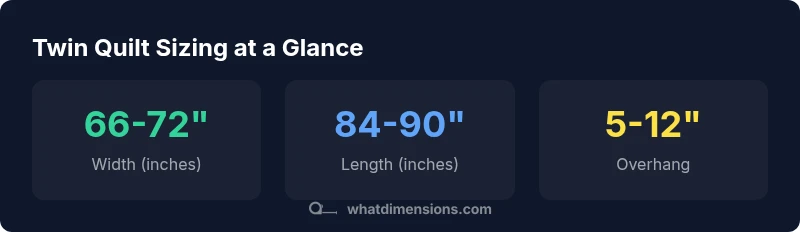
To size a twin bed quilt, target a width of about 66-72 inches and a length of about 84-90 inches to ensure balanced drape on both sides. For Twin XL beds, add 4-6 inches to the length. Always account for fabric thickness and your preferred overhang when choosing dimensions for a twin bed quilt.
Understanding the purpose of quilt dimensions
When designing or buying a quilt for a twin bed, the fundamental goal is to achieve a balanced, functional wrap that looks intentional rather than skimpy or bulky. The phrase dimensions for twin bed quilt captures this balance by focusing on two key measurements: width (how wide the quilt sits across the bed and drapes over the sides) and length (how far it runs toward the foot of the bed). For readers of the What Dimensions catalog, these measurements translate into fabric choices, pattern alignment, and future compatibility with different bed setups. A well-sized twin quilt should skim the mattress edges with a deliberate overhang and should still clear the pillow stack when the bed is made. In practice, most twin quilts target a width in the mid-to-upper 60s inches and a length in the mid-80s to low-90s inches, with variations based on mattress depth and personal taste.
How quilt dimensions relate to mattress and bed frame
Quilt sizing does not exist in isolation—it must accommodate the underlying mattress width and length, plus any frame projections, skirting, or headboard depth. For standard twin mattresses (roughly 38 inches wide by 75 inches long), a quilt in the 66-72 inch width range and 84-90 inch length range provides comfortable drape on both sides and a neat finish at the foot. If you’re using a Twin XL, the longer length is essential to prevent a tight look when you sit up in bed. The What Dimensions team recommends checking whether your bed has a platform with a tall skirt or a low frame that could alter perceived size. The goal is clear: the quilt should look intentional and not pull tight across any edge.
Standard twin quilt size ranges and what they imply
There is no universal standard that fits every mattress, but practical ranges help shoppers compare options quickly. For most twin beds, widths of 66-72 inches and lengths of 84-90 inches work well for typical bedding configurations and ensure generous drape along the sides. If you want extra coverage for a particular aesthetic or a heavier fabric, you might push toward the upper end of the range. Conversely, a lighter quilt or a smaller pattern might tolerate the lower end. If you’re shopping for a Child or Teen room with a bunk or loft setup, or if the bed sits under a lower ceiling, consider slightly shorter lengths for ease of movement. Always plan for seam allowances and potential fabric shrinkage after washing, as these can slightly alter final dimensions.
Measuring for a twin quilt: a step-by-step guide
To measure for a twin quilt accurately, start with the mattress dimensions and frame details. Step 1: Measure mattress width and length; Step 2: Decide desired drape and overhang (5-12 inches is typical); Step 3: Select a quilt size in the 66-72 by 84-90 inch range as your baseline; Step 4: If you use a Twin XL, add 4-6 inches to the length; Step 5: Account for batting thickness and quilting pattern, which can affect overall finished size. When in doubt, buy a size at the looser end of the range and tailor later. These steps help ensure the quilt fits the space and remains comfortable for daily use.
Variations: oversized and specialty twins
Some rooms benefit from an oversized twin quilt that drapes more freely, especially if your bed sits high or you favor a dramatic draped look. Oversized twin sizes typically extend toward the 70-inch width and beyond the standard 90 inches in length. For children’s rooms or compact spaces, a shorter length may be desirable to prevent excess bulk. The key is to maintain proportional harmony with the bed’s width, the mattress depth, and any headboard or footboard elements. If you are unsure, compare a few sample quilts against your bed, measuring how each option wraps and drapes.
Fabric, batting, and how they affect sizing
Fabric choice and batting thickness influence the finished size after quilting. Heavier fabrics and thicker batting tend to shrink minimally during quilting and washing but can still alter final dimensions by a small margin. Lighter fabrics with thin batting tend to hang more softly and can appear larger on the bed. When selecting materials, consider how a particular fabric will drape: a heavyweight quilt may read as slightly smaller in width due to stiffness, while a lighter quilt might appear larger because of a looser drape. Planning for these factors helps you maintain a consistent look across seasons.
Real-world scenarios: skirts, pillows, and headboards
If your bed uses a skirt or has a high headboard, you may want a slightly longer length to ensure a clean hang beyond the frame. The same applies when you like pillows showing at the head of the bed; you’ll want to account for pillow height and the stacking distance. For beds without skirting, you can opt for a modest overhang on the sides to emphasize symmetry. The overarching principle is to align the quilt’s edges with the bed’s visible frame while preserving comfortable movement around the bed.
Maintenance and shrinkage: keeping sizing accurate
After washing, natural fibers may shrink slightly, altering the final dimensions. The What Dimensions guidance suggests washing a new quilt once or twice before use to gauge shrinkage and then adjusting accordingly in future purchases. Pre-washing or pre-shrinking instructions on fabric can help set expectations. If you notice significant post-wash shrinkage, you may need to adjust the size in subsequent purchases, selecting the looser end of the size range for the initial fabric, especially with cotton blends. Regularly checking the quilt’s fit as seasons change helps maintain the intended look and comfort.
Twin quilt sizing reference
| Dimension | Twin Quilt Size (approx.) | Notes |
|---|---|---|
| Width | 66-72 inches | Includes seam allowances |
| Length | 84-90 inches | Measured from top edge to bottom edge |
| Drop/Overhang | 5-12 inches | Depends on mattress depth and frame |
Quick Answers
What are typical dimensions for a twin bed quilt?
Most twin quilts fall in the 66-72 inch width and 84-90 inch length range, designed to cover the sides and foot of a standard twin mattress. Twin XL beds require added length (about 4-6 inches).
Most twin quilts are about 66 to 72 inches wide and 84 to 90 inches long, with Twin XL needing a longer length.
How should I measure my bed to choose the right quilt size?
Measure the mattress width and length, decide desired drape (overhang), and pick a quilt around 66-72 by 84-90 inches. For Twin XL, add 4-6 inches to the length. Always check for fabric thickness that could affect finished size.
Measure width, length, and drape, then choose a 66-72 by 84-90 quilt, adding length for Twin XL as needed.
What is the difference between a quilt and a duvet in sizing?
Quilts are typically sized to fit the bed with a defined drape, while duvets may come in slightly different dimensions. Always verify the exact measurements on product pages to ensure a proper fit for a twin bed.
Quilts are sized to fit the bed with the right drape; always check measurements for twins.
Should I account for pillow shams or bed skirts when sizing?
If you want the quilt to drape behind pillows, factor a little extra length at the head or foot. Skirts can hide edge gaps, but ensure the quilt still looks proportional when the bed is made.
Yes, consider pillows and skirts; you may want a bit more length for a clean, draped look.
Can shrinkage affect quilt size after washing?
Cotton and some blends shrink modestly after washing. Plan for this by choosing the looser end of the size range or pre-shrinking fabrics before construction.
Shrinkage happens; account for it by sizing looser or pre-washing fabrics.
“Accurate quilt dimensions are the foundation of comfortable, cohesive bedding. When you size for a twin bed, you’re setting the stage for proper drape and long-lasting satisfaction.”
Main Points
- Use 66-72 inch width for balanced twin quilt drape
- Aim for 84-90 inch length for standard twin mattresses
- Twin XL requires +4-6 inch length
- Consider fabric thickness and shrinkage when sizing