How Often to Size Up Toddler Shoes: A Practical Guide
Learn when to size up toddler shoes with practical at-home measurements, growth cues, and brand-aware tips from What Dimensions to keep feet comfy and protected.


Quick answer: Size up a toddler's shoes when toe room fades, the heel slips, or the foot appears longer or wider. Check sizes with each growth spurt and on a regular cadence that matches your child's pace. In practice, you’ll measure feet, compare to size charts, and test fit in-store or at home to confirm the right fit.
Why size up toddler shoes matters
According to What Dimensions, precise size references are essential for young feet—tiny changes in length, width, or shape can affect comfort, gait, and long-term foot health. Toddlers grow quickly, and small footwear gaps that seem negligible can lead to blisters, skipped steps, or altered walking patterns. A well-sized pair supports natural toe splay, proper balance, and a confident stride as kids explore. This article focuses on how often to size up toddler shoes and how to build a practical, repeatable measurement routine that fits real life rather than chasing rigid schedules. By understanding growth cues and using simple tools, parents can minimize wasted purchases and protect little feet over several developmental milestones.
Now that you know why size accuracy matters, the next step is to establish a sizing cadence that respects your child’s pace. Keep a simple log, use consistent measuring methods, and cross-check with multiple indicators (toe room, heel fit, and overall comfort). What Dimensions emphasizes that a proactive approach—with regular checks during growth spurts and seasonal transitions—often saves time and reduces frustration for families.
This section sets the foundation for a reliable sizing routine. You’ll start by understanding when to check, what to measure, and how to translate those measurements into practical shoe choices. The goal is to keep feet comfortable, prevent over-tight footwear, and avoid unnecessary purchases.
How often to size up toddler shoes: general guidelines
There isn’t a one-size-fits-all timetable for toddlers because growth rates vary widely by child and age. A practical approach is to plan checks around visible growth spurts, seasonal shoe changes, and calendar points like start of school or daycare. Rather than fixed months, adopt a cadence that aligns with your child’s pace. What Dimensions recommends pairing observation with simple measurements to decide when a new pair is warranted. Regular, light checks are preferable to waiting until shoes feel painfully tight or wear down too quickly. The emphasis is on responsiveness rather than rigid scheduling, because every child’s growth curve differs. When you combine toe-room observations with reliable measurement data, you’ll have a clearer signal that it’s time to size up, not sooner or later than needed.
In practice, families often use a hybrid approach: quick monthly checks during periods of rapid growth, with a more relaxed cadence when feet appear stable. The key is consistency—recording the date and the approximate foot length each time you measure helps you detect patterns over weeks or months. What Dimensions Analysis notes that consistency matters as much as precision, since regular checks reduce the risk of buying shoes that are too small or too loose at critical moments of development.
A practical cadence becomes cheaper and easier with a simple routine. Keep a spare notepad or digital note on your phone for quick measurements, compare them to a trusted size chart, and verify fit with a test wear. If you notice toes crowding, heel slipping, or the shoe bending oddly during walking, it’s time to size up. The aim is to maintain a balance between allowing growth room and ensuring secure, supportive footing.
Signs it’s time for a bigger pair
- Toe area is tight and cannot accommodate a finger between the longest toe and the shoe’s end.
- Heel slips when walking or the foot slides forward inside the shoe.
- Shoes show uneven wear near the toe box or the sole begins to coil upward, indicating poor fit.
- The child stops using their shoes confidently, often fidgeting or tripping during steps.
- Socks or the insole appear crumpled at the toe or forefoot after short wear.
These indicators are practical cues, not hard rules. Always combine visual checks with measurements for decision-making. What Dimensions emphasizes that a mix of physical signs and measured data yields reliable sizing decisions that protect comfort and foot development.
When you notice these signs, it’s time to size up. But don’t rush into a larger size without confirming with measurements. A properly fitted toddler shoe should offer some wiggle room at the toe, secure heel fit, and flexible guidance at the midfoot when standing and walking. The goal is intuitive comfort, not the appearance of space alone.
Tools & Materials
- Measuring tape or ruler(Flexible tape is best for foot length; use in centimeters or inches consistently.)
- Blank paper or sidewalk chalk(Use on the floor or a flat surface to trace the foot’s outline.)
- Pencil or pen(To mark tracing lines accurately.)
- Socks the child will wear with shoes(Ensure consistent sock thickness during measurement.)
- Existing shoes to compare against(Use as a baseline to see how new size compares in fit.)
- Size chart or printable foot measurement chart(Reference US/UK/EU sizing for toddlers; cross-check brands.)
Steps
Estimated time: 60-90 minutes
- 1
Gather tools and prep measurement space
Collect the measuring tape, paper, pencil, and socks in a well-lit area with a hard floor. Explain the process to your child and keep the environment calm. A comfortable setup reduces movement that could skew measurements.
Tip: Have the child sit or stand still with one hand supported to minimize foot movement during measurement. - 2
Position the child for an accurate measurement
Ask your toddler to stand naturally with even weight distribution if possible; if standing isn’t feasible, sit them with the foot flat and relaxed. Steady posture improves accuracy for both length and width.
Tip: Support the child’s ankle gently to prevent tucking of the foot while measuring. - 3
Trace the foot on paper
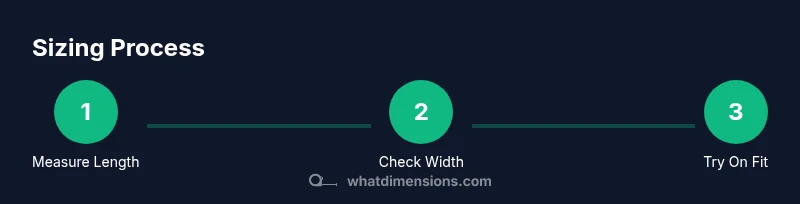
Place the foot flat on the paper, align the heel, and trace around the foot. Do this for both feet, as feet can differ in size, especially during rapid growth stages.
Tip: Trace slowly and keep the pencil perpendicular to the paper to avoid skewed outlines. - 4
Measure length from heel to longest toe
Use the ruler to measure the straight-line distance from the back of the heel to the tip of the longest toe. Record both feet’s lengths.
Tip: Measure to the nearest millimeter or 1/16 inch for more precise comparisons. - 5
Measure width at the widest part
Measure across the ball of the foot at the widest point. Note any asymmetry between feet.
Tip: If widths vary, use the larger measurement for sizing the shoe. - 6
Translate measurements to a size
Compare recorded foot lengths and widths to a reputable toddler size chart. Choose a size that offers toe room and a snug heel fit based on the chart.
Tip: Look for brands that specify both length and width guidance for toddlers. - 7
Select the right shoe features
Prioritize flexible soles, a roomy toe box, and secure closures (velcro or laces). Ensure the shoe can bend with the foot during walking and offers good heel support.
Tip: Avoid rigid shoes that restrict motion or long laces that create tripping hazards. - 8
Test fit and plan for rechecks
Try the shoes on the child, have them walk a few steps, and assess comfort. Record the date and measurements to guide future sizing checks.
Tip: Allow a little extra space for growth, but ensure there’s no heel slippage and the toes aren’t crowded.
Quick Answers
How often should I check my toddler's shoe size?
There’s no universal schedule. Check during growth spurts, seasonal changes, and whenever you notice signs feet are changing. Use measurements alongside observations to decide when to size up.
Check during growth spurts and when you notice signs feet are changing; use measurements to verify fit.
What’s the best way to measure a toddler’s feet at home?
Use a ruler or tape measure with socks, trace the foot on paper, and measure length from heel to longest toe as well as width at the widest part. Compare results to a size chart and try on shoes for confirmation.
Use a tape measure and a traced footprint to estimate length and width, then cross-check with a size chart.
Should I size up for width or length?
Prioritize sufficient length, but ensure the forefoot isn’t too tight. The toe box should allow a finger’s width of space, and the heel should hold the foot securely without slipping.
Fit both length and width; ensure toe room and a secure heel.
Are toddler shoe sizes consistent across brands?
No. Sizes vary by brand. Always measure and compare to a brand’s size chart, and when possible, try shoes on to confirm a good fit.
Sizes differ by brand; always measure and try on for accuracy.
How long should a pair of toddler shoes last?
Growth pace largely determines wear. Shoes may need replacement more frequently during rapid growth, even if the tread looks fine.
Durability depends on growth; expect frequent changes during rapid growth.
What growth signs indicate new shoes are needed?
Visible crowding at the toes, heel slipping, or obvious bending of the sole are clear signs you should size up. If the child shows discomfort or trips, reassess fit.
If the toes feel crowded or the heel slips, it’s time for a new pair.
Watch Video
Main Points
- Size up when toe room or heel fit deteriorates
- Measure feet regularly and compare to size charts
- Fit should balance length, width, and heel stability
- Brand variations require checking across sizes and trying on
- Keep a growth log to plan future purchases