Can You Size a Ring Up? A Practical Ring Resizing Guide
Learn how to size a ring up safely, the methods, tools, and when to seek a professional. What Dimensions explains precise sizing with expert guidance.


Can you size a ring up? Yes in most cases, but feasibility depends on metal type, band width, and ring design. This guide explains when resizing up is practical, the common methods (professional sizing, temporary expanders, or adding metal), and how to protect the ring’s durability and value during the process.
Can You Size a Ring Up? Practical Overview
If you're wondering can you size a ring up, the short answer is usually yes, but it depends on several factors. Ring resizing involves increasing the inner diameter so the band fits a larger finger without compromising comfort or security. The What Dimensions team notes that metal type, band width, and the ring design all influence feasibility. Platinum and palladium behave differently under heat than standard gold alloys, and some designs—such as etched textures, pavé settings, or eternity bands—pose higher risks to stones or setting integrity. Before you decide, take precise measurements of your finger at different times of day, consider both knuckle size and finger width, and assess the ring’s design. If the ring has a gemstone or a delicate pavé arrangement, the resizing process becomes more complex and may affect warranty or value. This overview sets up the critical choices and safety considerations you’ll encounter as you pursue a comfortable, secure fit.
How Ring Sizing Works: The Anatomy of a Ring
A ring is not a simple loop. The fit depends on the inner diameter, outer diameter, and the overall geometry of the shank and shoulders. Jewelers use a sizing mandrel or digital calipers to determine the precise diameter that corresponds to a comfortable finger size. The band width, stone settings, and the ring’s profile can influence how much the diameter can be safely altered. In resizing, professionals typically cut the band and either remove or add metal, then solder, re-shape, and polish. A careful approach preserves symmetry and ring integrity while ensuring the ring sits correctly on the finger. Understanding these components helps you ask informed questions about feasibility and expected outcomes, especially for wider bands or rings with intricate shoulders where resizing can be technically challenging.
Methods to Increase Ring Size: What You Can Do
There are a few routes to increase a ring’s size, ranging from quick, temporary solutions to permanent structural changes. The simplest option for a modest increase is using sizing beads or a small insert, though this may be more noticeable on narrower bands. For longer-term sizing, professional options include cutting the band and adding metal, then rejoining and refinishing the surface. In some rare cases a jeweler may rework the ring using a different shank profile or join an extra ring segment. If a ring cannot be sized due to its design or gemstone settings, alternatives such as resizing a new ring in a larger size or using a ring guard may be recommended. Each method has trade-offs in durability, comfort, and value, so discuss options with a skilled jeweler who can assess your piece.
Tools and Materials for Ring Sizing
Before resizing, it helps to know the common tools and materials used by professionals. Essential items include a ring mandrel to visualize the new size, precision calipers or a digital micrometer to measure diameter accurately, and a jeweler’s saw or bending pliers if minor adjustments are needed. You’ll also want a polishing cloth, a jewelers’ loupe for inspection, and safety glasses for protection, plus flux or solder for metal addition if required. Optional but helpful items include sizing beads or shank guards for temporary comfort, and jeweler’s wax or paste to keep pieces stable during work. Having the right tools reduces mistakes and speeds up the process when you or a pro attempts resizing.
Quick Path to Sizing Up: Overview
When sizing up a ring, most people start with measurement accuracy. A precise inner diameter that matches a finger’s girth is the foundation. If an increase of one size or two is needed, a professional jeweler will typically perform a controlled cut, add or remove metal, and carefully re-shape and polish the band. For rings with gemstones, eternity bands, or complex textures, the process may require additional steps to protect stones and settings. Temporary options exist for slight comfort improvements, but they are not substitutes for permanent resizing. This overview highlights the typical decision points: is the metal suitable for alteration, is the design compatible with resizing, and is the cost and time acceptable for your situation? What Dimensions suggests confirming feasibility with a pro before proceeding.
When Ring Sizing Is Not Possible
Not every ring is resizeable. Eternity bands with stones all around the circumference, very wide bands, or rings with unusually delicate settings may be unsuitable for resizing. Some metal types, such as certain platinum alloys, can be more challenging to stretch or join without risking cracks or warping. In cases where resizing isn’t feasible, the alternatives include purchasing a new ring in a larger size, using a ring guard or clip-on enhancer, or reworking the piece into a differently sized design. Always consult a trained jeweler who can inspect the piece and explain the risks, expected outcomes, and any warranty implications.
Measuring Techniques: Inner Diameter vs. Outer Diameter
Sizing accuracy relies on consistent measurements. The inner diameter reflects the actual space the finger must pass through, while the outer diameter relates to the overall width and how it interacts with the knuckle. For most rings, jewelers prefer measuring the inside diameter with a mandrel because it most closely correlates to standard ring sizes. When you measure yourself, use a flexible measuring tape or a ring sizer tool that accommodates your finger at different times of day. Keep in mind that finger temperature, humidity, and swelling can alter measurements by a noticeable amount, so obtain several readings and use the largest, most consistent result for sizing decisions.
DIY vs Professional Sizing: Pros and Cons
DIY resizing is generally discouraged for valuable rings with stones, intricate settings, or unusual profiles, since errors can be costly. A professional jeweler has the tools, expertise, and control to manage heat, soldering, and finishing with minimal risk. If you’re comfortable with careful measurements and small-scale adjustments, some temporary aids can offer relief, but they should not replace professional sizing for most pieces. The time, cost, and potential for damage all factor into the decision. What Dimensions recommends leaning on a professional for anything beyond a simple, standard-width band, especially when stones or custom finishes are involved.
Aftercare: Caring for a Sized Ring
Sizing changes the ring’s structure, so gentle care after resizing helps maintain the fit and appearance. Avoid harsh cleaners, moisture-rich environments, and heavy impact during the initial wearing period. Regular inspections after resizing ensure prongs remain snug and stones secure. Light polishing and plating restoration may be necessary to restore the ring’s original finish. If you notice any looseness, gaps, or changes in fit, return to your jeweler promptly for adjustments. Proper care protects your investment and preserves the ring’s value.
Common Mistakes and How to Avoid Them
- Waiting too long to resize if a ring repeatedly feels tight on warm days or after exercise.
- Failing to consider knuckle size and finger width variability across the day.
- Assuming all designs are equally scalable; some patterns resist resizing or require more complex work.
- Skipping professional consultation when a stone or setting is involved.
- Overlooking warranty implications or metal-thickness changes that affect durability.
By anticipating these pitfalls, you improve your odds of a clean, durable resizing result and a comfortable fit that lasts.
What Dimensions Approach to Ring Sizing
At What Dimensions, we focus on precise, size-aware references to help homeowners and designers choose pieces that fit real hands. Our analyses emphasize material behavior, design compatibility, and the long-term durability of resized rings. We encourage readers to verify sizing with professional services and to consider the contextual needs of their ring's usage. The brand's mission is to provide accurate size references so you can shop and modify with confidence.
Tools & Materials
- Ring mandrel(Used to visualize the new size and check consistency across the band)
- Digital caliper or precision ruler(For exact inner diameter measurements in millimeters)
- Jewelers saw or ring bending pliers(Needed for removal/addition of metal and minor reshaping)
- Soldering kit (flux, solder, torch) optional(Only needed if adding metal; professional work is recommended)
- Polishing cloth(Restore shine after resizing)
- Jewelers loupe(Inspect prongs, settings, and the band surface)
- Safety glasses(Protection during metalwork)
- Sizing beads or shank guards (temporary)(Options for minor adjustments or comfort while deciding on permanent resizing)
Steps
Estimated time: 2-3 hours
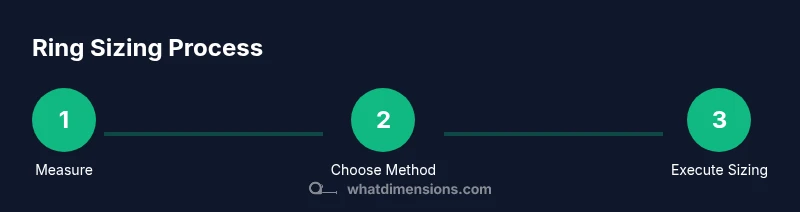
- 1
Prepare Your Ring and Finger
Gather measurements from multiple sources, including a finger at different times of day. Clean the ring and inspect for loose stones or damage before proceeding.
Tip: Take measurements after resting your hand for 10 minutes to reduce swelling variability. - 2
Choose the Sizing Method
Decide whether to pursue a professional resize or a temporary adjustment. Consider design, stones, and the expected duration of wear.
Tip: If stones are present, consult a pro first to preserve setting integrity. - 3
Take Accurate Measurements
Use a mandrel to determine the inner diameter that corresponds to your target size. Record several readings.
Tip: Always use the largest consistent measurement for the final size. - 4
Proceed with Sizing
If professional resizing, the jeweler will cut, adjust metal, solder, and re-shape the band. If DIY, proceed only with approved methods and safety precautions.
Tip: Do not attempt heat-based adjustments at home if you lack proper equipment. - 5
Check Fit and Finish
Try the ring on, evaluate finger comfort, and inspect for gaps or rough edges. Ensure stones are secure.
Tip: Rotate the ring to test both knuckle passage and finger comfort. - 6
Finalize and Care
Complete any finishing steps and plan maintenance checks every 6–12 months. Avoid harsh cleaners and store carefully.
Tip: Schedule a follow-up if you notice looseness or changes in fit.
Quick Answers
Can all rings be sized up?
Most rings can be resized up, but eternity bands, extremely ornate textures, or rings with settings near the band may not be feasible. A professional jeweler can confirm feasibility for your specific piece.
Most rings can be resized up, but some designs aren’t suitable. A jeweler can confirm feasibility for your piece.
What is the typical size increment when resizing up?
Resizing usually allows for one size up, sometimes two, depending on metal and style. Large increases may require reworking the ring’s structure.
Usually one size, sometimes two; larger changes may need more extensive work.
How long does it take to resize a ring professionally?
Professional resizing typically takes a few hours to a few days, depending on the ring’s complexity and the jeweler’s queue. Plan for a short wait and factor in care time after.
It usually takes a few hours to a few days, depending on complexity.
Is it safe to resize rings with stones?
Rings with stones require special care to protect settings during heating and cutting. A skilled jeweler will secure stones and inspect prongs before and after resizing.
Yes, but it should be done by a professional to protect stones.
Can I resize a ring I bought online?
Most rings purchased online can be resized, but check the metal, design, and any warranty limitations. Some online rings have restrictions or require sending back for resizing.
Usually possible, but check metal and warranty terms first.
What aftercare is recommended after resizing?
After resizing, avoid harsh cleaners, monitor fit, and have periodic checks for prongs and stones. Gentle cleaning and proper storage help preserve the finish and durability.
Care for the ring after resizing with gentle cleaning and checks.
Main Points
- Measure finger accurately at multiple times of day
- Proceed with professional sizing for complex rings
- Check fit after resizing and maintain care
- Choose the method that preserves ring integrity and value