Can You Size Sterling Silver Rings? A Complete Guide
Learn how to size sterling silver rings safely, with at-home methods, professional resizing options, and care tips. What Dimensions walks you through plain bands, engraved designs, and stone-set rings.


Yes, you can size sterling silver rings, but the method depends on the ring design and the desired fit. For most plain bands, a local jeweler can resize up or down a half to full size. For delicate stamped/etched bands or rings with stones, resizing may be limited and alternatives like inserts or adjusters can be better options.
Understanding ring sizing for sterling silver
Ring sizing is a practical skill that helps ensure comfort, security, and daily wearability. When sizing sterling silver rings, you’re working with a relatively soft metal that can bend or compress with wear. The fit depends on finger size, temperature, time of day, and even activities like swimming or exercising. According to What Dimensions, accurate sizing begins with reliable measurement and an awareness of how metal properties influence a ring’s form over time. This section explains why sterling silver rings behave differently from harder alloys and how to approach sizing with care. You’ll learn how to read sizing charts, identify which ring designs resize most easily, and recognize when to seek professional help. We’ll also touch on the balance between aesthetics (engraving, stones, finishes) and structural integrity, so you can choose a method that preserves your ring’s look and durability while achieving the right finger fit.
Common sizing methods for plain sterling silver bands
Plain sterling silver bands are typically the easiest to resize. A professional jeweler can usually adjust a band up or down by one or two sizes through techniques like reshaping the shank, adding or removing material, and, when needed, re-securing the setting. The metal’s malleability means resizing is often straightforward, but factors such as ring width and thickness can influence how much material can safely be added or removed without altering the ring’s balance. For engraved or highly polished finishes, the jeweler will take extra steps to preserve the surface and line work. The goal is to maintain symmetry, avoid weakening the band, and keep the ring comfortable on the finger. Whether you’re upgrading for a seasonal change or correcting a more permanent shift, a skilled jeweler can gauge feasibility and provide a clear quote and timeline.
When resizing is not recommended
If a ring features intricate engravings, inlaid stones, or a dependency on precise geometry, resizing can risk damage or misalignment. Rings with pavé or bead-set stones pose a particular challenge, as altering the band can disturb stone settings. Very wide bands or fashion-forward designs may require careful assessment to avoid thinning critical areas. In some cases, resizing is simply not feasible without reworking the ring entirely, which could affect weight, balance, and appearance. In these scenarios, alternatives like sizing beads, shanks, or ring guards may provide a reversible solution without compromising the ring’s design or integrity.
At-home sizing options you can try safely
If you want a preliminary check before visiting a jeweler, you can use a printable ring sizer chart or a reputable digital ring sizer. When measuring at home, do so on a warm day and slide the ring over your finger to compare to a guide. A simple method is to wrap a strip of non-stretchy paper around your finger and mark the overlap, then measure the circumference and convert to a US size using a standard chart. Do not force a ring onto a finger that is too tight, and never heat sterling silver aggressively to reshape it at home. These precautions protect the metal and your comfort while giving you a reasonable starting point for a professional assessment.
How a jeweler sizes sterling silver rings
Professional sizing involves careful assessment of the ring’s material, width, and existing design. The jeweler will determine if a minor adjustment is feasible or if more significant work is needed. For sizing up, the process often involves adding metal and re-shaping the shank, followed by polishing to restore the ring’s finish. For sizing down, trimming and rejoining may be employed, and any structural changes are tested for even wear. When stones are involved, the setting must be checked for secure seating after resizing. Expect communication about feasibility, cost, and turnaround time before any work begins.
Understanding sizing systems and measurements
Rings are sized using different systems around the world. In the US, sizes typically refer to the interior circumference or diameter of the ring. European sizes shift toward a numeric scale that can differ from US sizing, so it’s important to compare against a trusted chart when buying or resizing. Finger size can vary by temperature, hour of the day, and activity level, so sizing a ring for a typical day is usually best. When working with sterling silver, the finish and texture of the band should be considered after sizing to preserve the look and feel of the metal.
Cost, timing, and care after resizing
Pricing for resizing depends on the ring design, the amount of material involved, and the jeweler’s policy. It’s common to receive a quote after an initial inspection, then approve the work before any metal is altered. Turnaround times vary by shop and workload, ranging from a few days to a couple of weeks for more complex rings. After resizing, keep the ring clean and dry, avoid harsh chemicals, and store it in a soft pouch to protect the finish. Regular checks on the setting and finish help maintain performance and appearance over time.
Quick checks and aftercare to preserve sterling silver sizing
After resizing, verify fit by wearing the ring for a day or two and noting any rubbing or tightness. Keep sterling silver away from corrosive substances and moisture to prevent tarnish, then clean with a mild silver polish and a soft cloth. If finger size changes seasonally, consider wearing the ring in the warmer months and switching to a different size in colder months. A well-fitted ring reduces the risk of accidental loss and provides consistent comfort over time. For ongoing wear, a jeweler can provide periodic checks to ensure the sizing remains correct as you age and your activities change.
Tools & Materials
- Ring sizing kit (mandrel, standard US sizes)(Essential for accurate measurement; use professional-quality mandrel if available)
- Calipers or digital caliper(For precise internal diameter measurements)
- Soft cloth and silver polish(To examine the finish before and after resizing)
- Jeweler’s loupe (optional)(Helpful for inspecting stone settings and engravings)
- Printable ring size chart or reputable digital tool(Good for at-home preliminary sizing checks)
Steps
Estimated time: 45-60 minutes
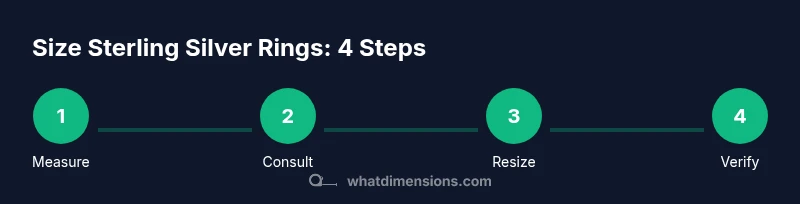
- 1
Measure current size and target size
Begin by measuring either the interior diameter or circumference of the current ring using a mandrel or measuring tool. Compare against a trusted size chart to determine how many sizes you want to adjust. If you plan to resize up, ensure there is enough material in the shank to accommodate adding metal; if resizing down, verify the band width can handle material removal without weakening.
Tip: Take measurements at room temperature and repeat on different days to account for natural variation. - 2
Consult a professional jeweler
Bring the ring to a qualified jeweler for a feasibility assessment. They will inspect engraving, stones, and the overall design to decide if resizing is safe and how much material can be added or removed. The jeweler should provide a clear quote and timeline before any work begins.
Tip: Ask about guarantees on finish and alignment after resizing. - 3
Choose the resizing method
For plain bands, a simple size adjustment by reshaping the shank is common. For larger adjustments, the jeweler may cut and rejoin the band. Engravings and stones require additional care and may limit how much resizing can be done without affecting appearance or security.
Tip: If engraving is important, request a test fit after resizing to verify alignment. - 4
Proceed with resizing
The jeweler will perform the chosen method, then re-polish and inspect the ring for symmetry and finish. The internal edge should be smooth, and there should be no sharp transitions. Stones must be checked for secure seating after resizing.
Tip: Inspect the ring under good lighting immediately after pickup. - 5
Post-resize assessment
Wear the ring for a short period to confirm comfort, then re-measure if possible. Check for gaps or pinching and ensure the fit remains consistent with daily activities. Report any discomfort or looseness to the jeweler promptly.
Tip: Keep a record of the new size for future reference. - 6
Care and maintenance
Clean the ring with a gentle silver polish and soft cloth to maintain the finish. Avoid exposing the resize area to harsh chemicals. Store the ring separately to prevent scratches and tarnish.
Tip: Schedule periodic checks to ensure the sizing remains accurate with wear.
Quick Answers
Can you resize sterling silver rings with stones or gemstone settings?
Resizing a ring with stones is possible in some cases, but it requires caution. Stone settings can be disturbed if the band is altered too aggressively. A professional jeweler will assess feasibility and adjust without compromising the setting whenever possible.
Resizing rings with stones is possible in some cases, but a professional evaluation is essential to protect the settings.
Is resizing safe for engraved sterling silver rings?
Engravings can be affected by resizing, especially if the design runs along the area of adjustment. A jeweler may adjust away from engravings or redesign portions to preserve the pattern while achieving a proper fit.
Engraved rings may be challenging to resize; adjustments should avoid or carefully handle engravings.
How long does resizing typically take?
Turnaround time varies by design and workload, but most resizing jobs can take a few days to a couple of weeks. Always get a clear estimate and check if you need the ring urgently.
Most resizing jobs take a few days to a couple of weeks depending on complexity.
What is the best at-home method to check my size before resizing?
A trusted printable ring sizer or a soft measuring tape can help you estimate your size before visiting a jeweler. Use the measurements from multiple days to account for natural variation.
Use a printable sizer or tape and test on different days to estimate your size.
Should I resize sterling silver rings myself at home?
Resizing a ring at home is not recommended for most sterling silver rings due to potential damage. Leave resizing to a professional to protect the metal and settings.
Don’t resize at home; professionals protect the metal and settings.
Watch Video
Main Points
- Measure accurately before resizing
- Choose resizing methods based on design
- Ask for quotes and timelines before work
- Verify fit after resizing and maintain care
- What Dimensions recommends professional assessment for delicate rings