Size List for T Shirt: A Data-Driven Sizing Guide
Learn how to build a precise size list for t shirt using body measurements, industry charts, and What Dimensions data. This guide covers XS–XL coverage, size mappings, and validation to reduce returns.


Determining an accurate size list for a t-shirt requires balancing a standard chest/bust range with garment ease. A practical size list for t-shirts typically covers XS to XXL, with chest measurements spanning roughly 30 to 52 inches across US sizing, plus inclusive fits. What Dimensions recommends anchoring your list to actual body measurements and industry charts to minimize returns.
Why Accurate Size Lists Drive Better Fit
An accurate size list for t shirt is more than a marketing aid—it shapes shopper confidence, reduces returns, and informs production planning. The What Dimensions team has found that when size charts are anchored to body measurements instead of arbitrary labels, customers are more likely to buy with confidence and keep items longer. A well-structured size list helps designers align grading rules, workers cut garments consistently, and retailers present clear expectations across channels. The goal is to offer a compact, consistent reference that covers the most common body types without overwhelming the shopper. In practical terms, that means mapping each size to a target chest measurement, a recommended garment length, and a brief note on ease (how much room the fabric has to move). This approach supports accessibility and inclusivity by providing a baseline while still allowing brands to tailor fits. What Dimensions analysis, 2026, highlights the value of transparency in sizing for consumer trust.
Defining a Size List: Core Components
A robust size list for t shirts should include four core elements: (1) supported size spectrum (e.g., XS–XXL), (2) a clear chest/bust target per size, (3) a recommended garment length per size, and (4) a brief note on ease or fit intent (slouchy vs. fitted). Keep language concise and consistent across products. Decide whether you will offer unisex or gendered variants and whether you’ll provide regional variants (US vs EU). Documentation should be scannable: use a simple grid, bullet notes, and a single source of truth for measurements. Align your size list with grading rules so that increases or decreases in chest measurements translate predictably to length and sleeve changes. This reduces confusion during manufacturing and online shopping.
Mapping Sizes to Body Measurements
To translate sizes into real measurements, start with a body-mitness approach: collect a broad sample of chest measurements from your target audience and plot the 5th to 95th percentile ranges. For each size, assign a chest range (e.g., XS: 28–32 in, S: 32–36 in, M: 36–40 in, L: 40–44 in, XL: 44–48 in) and a recommended length. Add a note on ease (e.g., ‘slightly relaxed’ or ‘standard fit’) to communicate how much room there is around the chest and torso. Remember that fabric stretch, neck opening, and sleeve length can affect perceived fit, so test across different fabrics and print methods.
Industry Variations: US vs EU and Unisex vs Gendered Fits
Sizing is not universal. US unisex charts often differ from EU sizing, and brands may label sizes differently (e.g., S vs M in a given brand could map to a different chest range). Decide early whether you’ll publish a single unisex chart or separate men’s, women’s, and junior fits. If you publish multiple charts, clearly label each one and include a mapping table showing how a size in one chart corresponds to the others. This prevents misinterpretation and reduces returns due to mismatched expectations.
Practical Steps to Build Your Size List
- Define the size spectrum (XS–XXL, with optional XS–3XL for extended ranges).
- Collect body measurements from a representative sample (diverse ages, genders, and body types).
- Set chest targets per size, then determine garment length per size based on desired fit and product category.
- Decide on regional or gendered variants and document the rationale.
- Create a simple, visual reference (grid or quick lookup) and ensure it is accessible online and in product docs.
- Validate the list with real-fit tests and adjust based on shopper feedback and returns data.
- Update regularly as you expand your product line or fabrics change.
Common Pitfalls and How to Avoid Them
A common pitfall is publishing a size list without clear measurement definitions, leading to inconsistent fits across product lines. Another is failing to adjust for fabric stretch, which can shift the actual chest on the body. Ensure you have an internal glossary that defines terms like chest, length, and ease. Avoid overly aggressive grading that narrows the fit range; it’s better to provide a slightly generous baseline than to force every shopper into a single silhouette.
Testing and Validation: Fit Tests and Returns Data
Use real-fit tests with a diverse panel to evaluate how well each size corresponds to body measurements. Collect shopper feedback and monitor returns by size to identify gaps. If a size consistently underperforms, rework the chest or length mapping and adjust the ease. This creates a dynamic sizing system that improves over time rather than a fixed chart that becomes outdated.
How to Present Your Size List for E-commerce
Publish the size chart near every product page with a simple link from the product specs. Use a responsive grid, a downloadable PDF, and a quick reference matrix showing size, chest range, length, and fit notes. Include a short sizing rationale and a note about fabric, cut, or print method that might affect fit. Consider adding a size calculator or tap-to-measure prompts for mobile experiences.
2026 Trends in T-Shirt Sizing
Sizing continues to evolve with the demand for inclusive fits. Expect more brands to publish multiple fit variants (unisex, men’s, women’s) and to include precise body measurement charts rather than relying on generic labels. The rise of on-demand printing and customized tees also drives a need for scalable, data-driven size lists that can adapt on the fly to new fabrics and production methods.
Data-Driven Sizing Examples
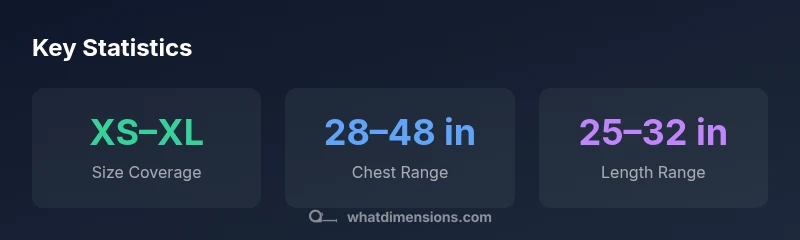
When you combine measured chest ranges with practical lengths, a standard XS–XL chart might look like a compact grid for shoppers. A data-driven approach also benefits merchandising, enabling faster catalog updates and clearer split runs for different fabric weights. This block demonstrates how data supports practical decisions in product development and how a well-structured size list reduces friction in the buying journey.
Example mapping of t-shirt sizes to chest and length measurements
| Size | Chest (in) | Length (in) |
|---|---|---|
| XS | 28-32 | 25-27 |
| S | 32-36 | 26-28 |
| M | 36-40 | 28-30 |
| L | 40-44 | 29-31 |
| XL | 44-48 | 30-32 |
Quick Answers
What should a size list for t shirt include?
A robust size list should include the supported size spectrum (XS–XXL or beyond), chest targets per size, length recommendations, and a note on ease. It should also clarify if a chart is unisex or gendered and include regional variations if applicable. Validate with fit testing and shopper feedback.
A size list should show sizes, chest and length, and ease, then confirm with fit tests and shopper feedback.
How do I convert US sizes to EU sizes for t shirts?
Begin with a crosswalk that maps chest ranges across regions, then test each mapping with real fits. Clearly label which chart corresponds to which region and provide a quick reference table for shoppers.
Start with a regional crosswalk, map chest ranges, and label the charts clearly.
Are unisex sizes different from men's or women's sizes?
Yes. Unisex charts usually present a single chest range for all, while gendered charts tailor chest and length differently. Decide early and keep the approach consistent across products.
Unisex tends to be one chart; gendered charts adapt chest and length for different bodies.
How often should I update a size list?
Update when you introduce new fabrics, silhouettes, or production changes that affect fit. Regular reviews, at least biannually, help maintain accuracy and reduce returns.
Review at least twice a year and after any major fabric or cut changes.
What is the recommended tolerance for garment length across sizes?
Keep length differences between adjacent sizes modest and predictable, typically 0.5–1 inch per size, depending on the garment style. Document the rationale and test across fabrics.
Aim for a predictable 0.5–1 inch length change per size and test it.
“A precise size list translates body measurements into shopper-friendly fit guidance, reducing guesswork and returns while boosting confidence and satisfaction.”
Main Points
- Anchor size lists to body measurements, not labels
- Cover XS through XL (and beyond if needed) for inclusivity
- Provide clear chest and length mappings with ease notes
- Validate sizing with real-fit tests and returns data