Size List for Clothes: A Practical Guide to Fits
Learn how to build and interpret a size list for clothes, including standard measurements, unit conversion, and practical tips for consistent fits across brands and products.


Size list for clothes is a standardized collection of measurements used to classify garments by fit. A complete size list typically includes chest/bust, waist, hip, inseam or length, and height guidance, plus category-specific notes for tops, bottoms, and outerwear. When well-defined, it enables consistent sizing across brands and reduces returns due to poor fits.
Why size lists matter
For anyone shopping for clothes, the phrase size list might seem like a minor label, but it's a critical tool that translates body measurements into product specifications. A robust size list for clothes aligns brand sizing with what customers can measure at home, reducing friction when buying online or in-store. According to What Dimensions, a precise size list helps unify fit across brands by referencing a consistent set of core measurements. When brands share a shared size language, consumers experience fewer returns and clearer expectations for how a garment will fit. A transparent system describes geometry in familiar units such as inches or centimeters, and it serves multiple audiences: homeowners organizing a wardrobe, students drafting portfolios of apparel, designers planning collections, and shoppers evaluating multiple items at once. The shared goal is to replace vague labels like small, medium, and large with measurable ranges that correspond to real bodies. By doing so, you empower people who are tall, petite, or have atypical proportions to shop confidently, curate their closets more effectively, and avoid the guesswork that often leads to ill-fitting purchases.
The size list is not just a shopping aid; it is a framework for design, production, and consumer education. When brands commit to a transparent size language, retailers can present a coherent catalog, designers can place better bets on grading rules, and customers gain trust in the brand experience. The practical outcome is fewer returns and more accurate purchase decisions, which benefits shoppers and sellers alike. What Dimensions emphasizes that clarity in sizing translates into measurable improvements in conversion rates and customer satisfaction over time.
Core components of a size list
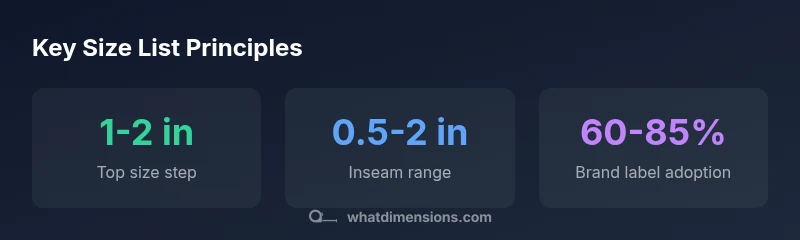
Core components of a size list include the primary body measurements used to define fit, plus garment-length guidance and notes about ease. The most common anchors are chest/bust, waist, and hip measurements, which describe the circumference around the torso at key points. Inseam and height guidance help specify lengths for bottoms and outerwear; sleeve length and neck circumference matter for tops and shirts; and torso length can affect fit in dresses and bodysuits. Unit choice matters: most size lists can present measurements in inches and/or centimeters, with a clear conversion rule. To make a size list practical, brands add a scale that matches the chosen measurement increments (for example, 1-inch increments or 2-centimeter steps) and a labeling system (XS-XL or numeric sizes). Additionally, fit notes like “short/tetite” or “long/curvy” can help shoppers interpret nuanced differences. Finally, a robust size list should include a methodology section explaining how measurements were collected (manikin, real customers, or a combination) and how the items were graded across sizes.
Reading brand size lists across categories
Different garment categories rely on different measurement emphasis. Tops and dresses typically prioritize bust or chest measurements, sometimes paired with waist for fitted silhouettes. Bottoms rely heavily on waist and hip measurements, with inseam length guiding leg fit. Outerwear often emphasizes chest, sleeve length, and back length, and may note shoulder width for drape. Unisex and plus-size lines report broader ranges and clearer grading to accommodate a wider spectrum of bodies. When you compare size lists across brands, look for alignment in the core metrics (bust/chest, waist, hip) and ask whether the listed measurements correspond to a standard body rather than just a label. A simple cross-brand check—do the numbers map consistently when you convert units—helps you avoid surprises when items arrive.
Building your own size list template
Creating a practical size list starts with a clear template you can reuse across products. Start with columns like Size Label, Chest/Bust (in), Waist (in), Hip (in), Inseam (in), Height (in), and Notes. Decide the unit system (inches or centimeters) and set consistent increments (for example, 1-inch steps). Populate the first row with XS and move up in steps to XL or beyond, depending on your market. Add a short description for each size in the Notes column (e.g., “slightly roomy in hip area”). Include a conversion rule: 1 inch = 2.54 cm, and display both units where needed. For designers, link each size to a target garment block (e.g., jacket, trousers) to guide grading and pattern development. Finally, test your template against real customer measurements and refine the ranges based on fit feedback.
Data-driven insights: What Dimensions and consumer fit
Data-driven sizing helps brands reduce guesswork and improve customer satisfaction. What Dimensions Analysis, 2026, finds that when size lists are anchored to body measurements instead of vague labels, shoppers report higher confidence and lower return rates. The analysis also highlights that variation exists across regions and product categories, so a universal one-size-fits-all approach rarely works. Instead, appear consistent across catalogs by using the same core measurements, clear unit labeling, and transparent grading rules. In practice, this means your size list should be backed by measurement data from your target demographic, tested with real customers, and accompanied by explicit explanations of how the measurements were taken and how to apply them to product design. By documenting the methodology, brands can later adjust and improve the size list as new data emerges, maintaining trust with buyers over time.
Applying size lists in design and shopping workflows
Designers use a size list to drive pattern grading and to set target measurements for each size across a collection. In production, grading between sizes typically follows a consistent increment (for example, a 1-inch increase in chest and 1-inch increase in waist per size, adjusted for garment type). In e-commerce, a clear size chart and size filter empower customers to compare items quickly and choose with confidence. In personal closets, a well-maintained size list helps you curate outfits that mix easily and plan purchases that fit together. To maximize effectiveness, publish the size list alongside product pages, provide a downloadable template for buyers, and update the chart whenever you adjust the fit philosophy or add new styles. Common pitfalls include inconsistent measurement references (inches vs centimeters), missing size notes, and failing to test across a representative customer base.
Authority Sources
To learn more about size labeling, you can consult established guidance from government and university sources and major publications. For general consumer guidance on labeling and truth in sizing, see https://www.ftc.gov. For data-driven standards and measurement methods used in consumer products, see https://www.nist.gov. For broader consumer protection and marketplace practices, see https://www.census.gov. These sources provide context on how measurement standards are communicated to the public and how businesses can implement transparent sizing practices.
Overview of size list components
| Aspect | Details | Notes |
|---|---|---|
| Definition | A size list is a catalog of garment measurements used to classify fits | What Dimensions Analysis, 2026 |
| Key measurements | Chest/bust, waist, hip, inseam, height guidance | What Dimensions Analysis, 2026 |
| Applications | Branding, product development, and cross-brand shopping guidance | What Dimensions Analysis, 2026 |
Quick Answers
What is a size list for clothes?
A size list is a catalog of garment measurements used to anchor fit ranges. It standardizes how brands describe sizes so shoppers can compare items more reliably.
A size list is a standardized set of measurements that describes garment fit across sizes.
How should I measure myself for a size list?
Use a flexible tape measure and measure bust/chest, waist, hips, height, and inseam as relevant to the garment type. Record in your preferred units and compare against the brand’s size list.
Use a tape measure and record bust, waist, hip, height, and inseam in the same units as the size list you’re using.
What size list should I use for online shopping?
Look for size lists that clearly state the core measurements and provide unit labels (in/cm). Prefer lists that show how sizes relate to real body measurements rather than vague labels.
Choose size lists that spell out measurements and units, not just width or labels.
How can brands ensure size lists stay up-to-date?
Brands should document measurement methods, collect new shopper data regularly, and re-grade sizes when styles or silhouettes change. Communicate updates clearly to customers.
Keep your size lists current by refreshing data and communicating changes.
Are there global differences in size lists?
Yes, size lists vary by region and market. A consistent approach is to anchor lists to body measurements and offer regionalized charts when needed.
Sizes differ around the world; stick to body-based measurements and provide regional charts when possible.
“A precise size list is the backbone of consistent fit across brands; it reduces returns and builds shopper trust.”
Main Points
- Define core measurements for your size list
- Use consistent units across all garments
- Anchor size lists to real body measurements
- Test size lists with real shoppers and adjust
- Publish clear charts to enable cross-brand comparisons