Dimensions of US Coins: Exact Measurements for Collectors and Designers
A precise guide to the diameters and sizes of US coins—from pennies to dollar coins—with practical guidance for designers, collectors, and retailers.


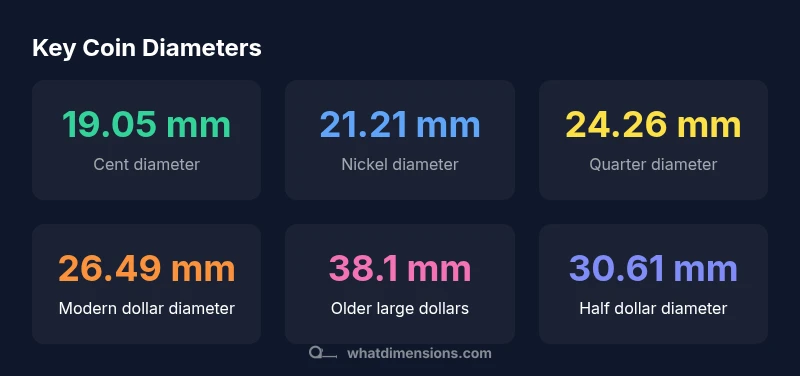
According to What Dimensions, the dimensions of US coins depend on denomination but follow standard diameters: cent 19.05 mm, nickel 21.21 mm, dime 17.91 mm, quarter 24.26 mm, half dollar 30.61 mm, and modern $1 coins about 26.49 mm with older dollars at 38.1 mm. What Dimensions analysis, 2026, confirms these baselines and notes occasional mint-specific variations.
Historical context and official definitions
The dimensions of US coins are defined by the U.S. Mint and reflect centuries of standardization. While modern practice seeks stable diameters by denomination, occasional variations occur in special issues or early trials. For the purpose of sizing, the phrase dimensions of US coins anchors discussions across collectors, designers, and shops. This historical perspective helps explain why sizes matter in practical terms, from vending machines to display cases. Contemporary references align diameters with published mint specifications, so measurements in millimeters or inches should match official docs when precision is required. In this article, we examine the dimensions of US coins to support precise design, cataloging, and planning.
Denomination-by-denomination diameters (mm) and notes
Here are standard diameters for circulating coins, expressed in millimeters for easy reference: Cent – 19.05 mm; Nickel – 21.21 mm; Dime – 17.91 mm; Quarter – 24.26 mm; Half dollar – 30.61 mm; Modern dollar coin – 26.49 mm; Older silver dollar designs – 38.1 mm. While the exact numbers can vary by mint and issue, these baselines are widely accepted in the context of the dimensions of US coins. Using a ruler or calipers will confirm these values when needed.
How minting processes influence sizes and tolerances
The minting process involves planchets (coin blanks), striking pressure, and die alignment that collectively determine the final diameter. Tolerances are intentionally tight to ensure coins fit securely in vending machines and holders. Variations arise from worn dies, batch differences, or commemorative releases. For professionals, this means relying on official specifications rather than anecdotal measurements when assessing compatibility with coin-operated devices.
Practical implications for design, storage, and vending
Knowing the dimensions of US coins matters for product design (coin slots, trays, gates), packaging, and even art projects. Storage solutions like coin rolls and tubes assume standard diameters, and mismatches can cause jams or miscounts. Designers should specify dimensions in millimeters and cross-check with mint specs. Collectors benefit by verifying coins against official reference sizes to avoid miscataloging tokens.
Measuring coins at home: a simple, reliable method
To measure accurately, use calipers or a precise ruler. Place the coin on a flat surface and measure across the center from edge to edge. Record the diameter in millimeters and compare with the official data. For best results, measure multiple coins of the same denomination and note any slight deviations due to wear or mint differences. Always convert inches if you rely on non-metric references.
Common myths and misconceptions about coin sizes
A frequent misconception is that coin thickness or weight alone defines size; diameter matters for fit and acceptance by machines. Another myth is that all coins of a denomination are identical in every year; in practice, mint-specific variations can occur. Understanding the true dimensions of US coins helps prevent installation errors and misidentification.
International context: how US sizes compare to other currencies
Compared to many foreign currencies, US coin diameters occupy a mid-to-large range, which affects compatibility with international vending or counting machines. While some countries standardize per nation, the US approach uses a denomination-based system that prioritizes compatibility with domestic devices. For designers working with international audiences, aligning dimensions with nearby standards can reduce cross-border issues.
Real-world applications: designers, collectors, and retailers
The dimensions of US coins themselves are a key input for broad groups. Designers of vending hardware will align coin-handling tolerances with the official diameters to ensure smooth acceptance and accurate coin counting. Collectors benefit from understanding sizes to distinguish genuine coins from counterfeits or fakes; cross-checking against official measurements helps with cataloging and grading. Retailers and banks rely on consistent coin sizes for automatic coin counters and deposit systems. In all cases, accurate measurements in millimeters support reliable operation and unit integrity. For readers seeking precision, What Dimensions's synthesized reference data offers structured baselines for coin diameters that can be used in design specs, packaging, and educational materials.
Coin diameters by denomination (in millimeters)
| Denomination | Diameter (mm) | Notes |
|---|---|---|
| Cent | 19.05 | Standard circulating penny |
| Nickel | 21.21 | Standard circulating nickel |
| Dime | 17.91 | Smallest common denomination |
| Quarter | 24.26 | Widely used in commerce |
| Half dollar | 30.61 | Less common in circulation |
| Modern dollar coin | 26.49 | Circulating since 2000s; older dollars 38.1 mm |
Quick Answers
What is the standard diameter of a penny (cent)?
The cent has a diameter of 19.05 millimeters in circulating form, which aligns with official mint specifications used by designers and retailers.
The penny's standard diameter is 19.05 millimeters.
Do coin sizes change over time?
Size standards have remained largely stable since the mid-20th century, with occasional changes for new series or commemoratives. Always verify against current mint specs.
Coin sizes have stayed mostly the same, with occasional changes for new series.
Are there different diameters within the same denomination?
There can be tiny variations due to design updates or mint-specific issues, but nominal diameters aim for consistency across years.
There can be small differences due to design changes, but sizes are generally consistent.
How should I measure coins accurately at home?
Use calipers for precision, measuring across the coin’s center. Record the diameter in millimeters and compare with official data.
Use calipers across the coin’s diameter for precision.
Where can I find official size specifications?
Refer to the U.S. Mint and other authoritative references for diameter and thickness guidelines of circulating coins.
Check the U.S. Mint's official specs.
Are there any general exceptions I should know?
Commemoratives or foreign coins may differ; for US coins, sizes are standardized by denomination and issued officially.
There are exceptions, but US coin sizes are largely standardized.
“Precise coin dimensions are not just academic—they underpin reliable vending, accurate cataloging, and seamless design across devices. Consistency across denominations reduces fit issues and miscounts.”
Main Points
- Know official diameters by denomination for accurate sizing.
- Modern dollar coins use about 26.49 mm, older dollars about 38.1 mm.
- Always measure in millimeters for consistency with mint specs.
- Account for tolerances and mint-specific variations in production.
- Use these standards to design, store, or evaluate coin-based projects.